Cabul Cã
Cabul[2] (em mongol: Хабул ou Кабул; romaniz.:Ḫabul ou Kabul) foi um príncipe mongol do século XII. Era filho de Tumbinai e neto de Caidu Cã, a quem sucedeu antes de 1125 como cã dos mongóis. Teve sete filhos, cujos nomes e ordem de nascimento são sabidos: Oquim Burcague, Bartã, Cutuguetu, Cutula Cã, Culã, Cadã e Todoi.[3][4] Em seu reinado, se decidiu a consolidar o poder dos mongóis ao fazer raides na fronteira norte do Império Jim do norte da China.[1] Os Jins, por sua vez, foram obrigados a reconhecer sua posição como liderança mongol ao nomeá-lo "imperador original ancestral", mesmo que fosse nominalmente tido como vassalo. Também lhe deram muitos presentes.[5] Ao falecer, foi sucedido por seu sobrinho Ambagai Cã.[1]
| Cabul Cã | |
|---|---|
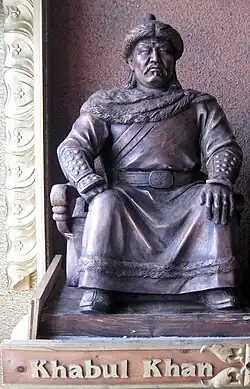 Cabul Cã | |
| Cã do Camague Mongol | |
| Reinado | Antes de 1125 - ca. 1147[1] |
| Antecessor(a) | Caidu Cã |
| Sucessor(a) | Ambagai Cã |
| Morte | Ca. 1147 |
| Descendência |
|
| Pai | Tumbinai |
Bibliografia
- Baumer, Christoph (2016). «VI. The Rise of the Mongols 2. Mongol Tribes in the Mid-twelfth Century and the Ancestors of Genghis Khan». The History of Central Asia: The Age of Islam and the Mongols. Londres: Bloomsbury
- Beckwith, Christopher I. (2009). Empires of the Silk Road: A History of Central Eurasia from the Bronze Age to the Present. Princeton, Nova Jérsei: Imprensa da Universidade de Princeton
- «Mongóis». Enciclopédia Brasileira Mérito [EBM] Vol. 13. São Paulo: Mérito S.A. 1960
- Onon, Urgunge (2001). The Secret History of the Mongols The Life and Times of Chinggis Khan Translated, Annotated, and with an Introduction by Urgunge Onon. Londres e Nova Iorque: Routledge
- Taube, Manfred (1989). Geheime Geschichte der Mongolen: Herkunft, Leben und Aufstieg Dschingis Khans. Munique: C.H.Beck
This article is issued from Wikipedia. The text is licensed under Creative Commons - Attribution - Sharealike. Additional terms may apply for the media files.