Ernst von Ihne
Ernst Eberhard von Ihne (Elberfeld, 23 de maio de 1848 – Berlim, 21 de abril de 1917)[1] foi um arquiteto alemão. Foi arquiteto oficial do Imperador Alemão Frederico III da Alemanha e de seu filho e sucessor Guilherme II da Alemanha. Dentre suas obras mais conhecidas estão o edifício da Biblioteca real Prussiana (atual Casa 1 da Biblioteca Estatal de Berlim), a Neuer Marstall e o Kaiser-Friedrich-Museum (atual Bode Museum).
_Ernst_von_Ihne.jpg.webp)
Sepultura no Antigo Cemitério da Catedral da Paróquia de St. Hedwigs em Berlim
| Ernst von Ihne | |
|---|---|
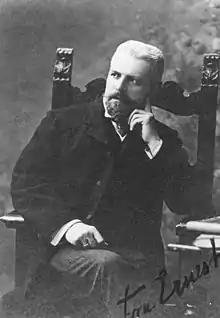 Ernst von Ihne | |
| Nascimento | Ernst Eberhard von Ihne 23 de maio de 1848 Elberfeld |
| Morte | 21 de abril de 1917 (68 anos) Berlim |
| Cidadania | Reino da Prússia |
| Progenitores |
|
| Alma mater |
|
| Ocupação | arquiteto |
| Obras destacadas | Basteistraße 18, Kaiserin-Friedrich-Haus, Schloss Friedrichshof |
Ernst von Ihne, 1900
Referências
- Standesamt Berlin III. Sterbeurkunde Ernst von Ihne. [S.l.: s.n.]
Galleria
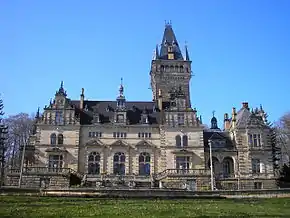 Neues Jagdschloss Hummelshain, Hummelshain (1880–85)
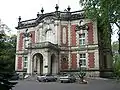 Kawalera Palace, Świerklaniec (1903–1906)
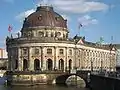 Bode Museum, Berlim (1904)
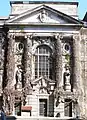 Prussian Royal Library, Berlim (1914)
Leitura adicional
- Hans Reuther, ed. (1974). «Ihne, Ernst von». Neue Deutsche Biographie (NDB) (em alemão). 10. 1974. Berlim: Duncker & Humblot. pp. 128 et seq..
- Oliver Sander: Die Rekonstruktion des Architektennachlasses von Ernst v. Ihne (1848–1917). Diss. Humboldt University of Berlin, Berlin 2000.
Ligações externas
 Media relacionados com Ernst von Ihne no Wikimedia Commons
- Entry for Ernst von Ihne on the Union List of Artist Names
- Entry on Ihne from historismus.net (em alemão)

This article is issued from Wikipedia. The text is licensed under Creative Commons - Attribution - Sharealike. Additional terms may apply for the media files.