Holomycota
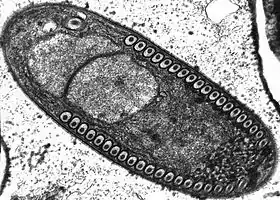
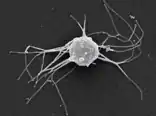
Holomycota é um clado monofilético que inclui os grupos-irmãos, Fungi e Cristidiscoidea.[1] O clado é baseado em análise de DNA mitocondrial e nuclear, que confirmaram a relação entre os dois grupos. Outros estudos já haviam demonstrado essa relação próxima.[2][3]
| Holomycota | |||||||
|---|---|---|---|---|---|---|---|
| Classificação científica | |||||||
| |||||||
| Grupos | |||||||
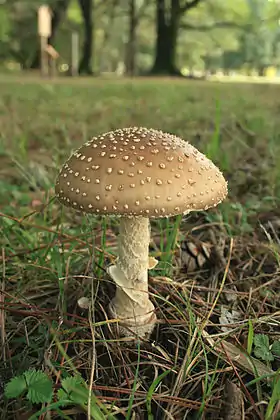
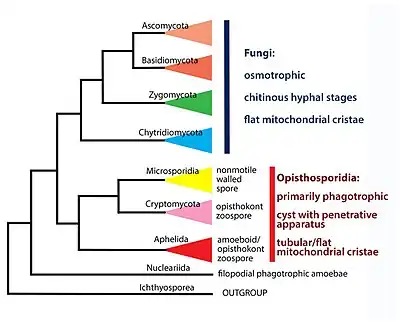
Estruturação filogenética dos Fungi
Filogenia
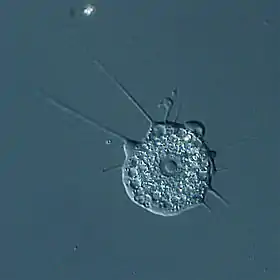
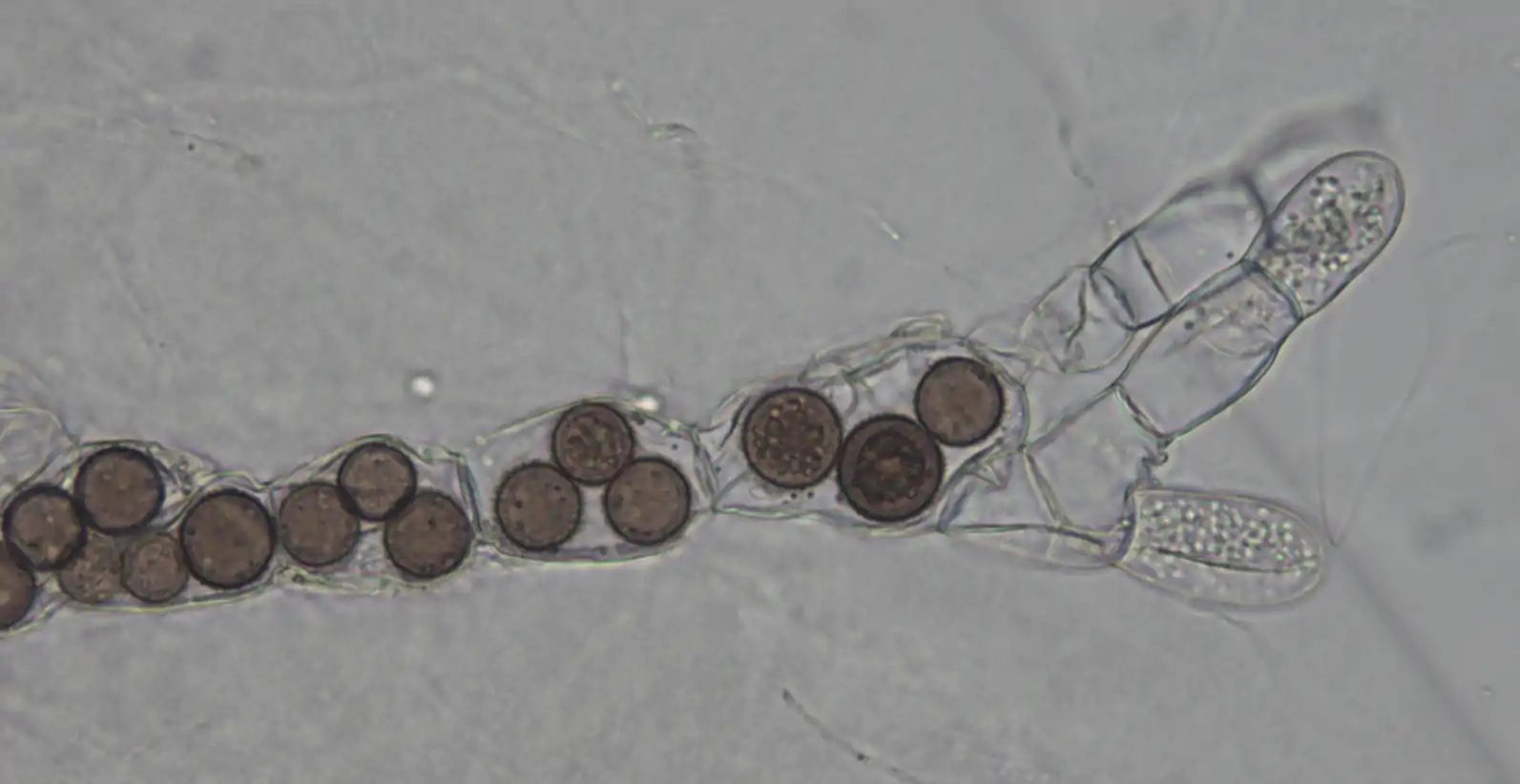
A árvore filogenética que se segue estabelece a relação do reino Fungi e sua estreita relação com outros organismos, com base no trabalho de Philippe Silar[4] e na obra The Mycota: A Comprehensive Treatise on Fungi as Experimental Systems for Basic and Applied Research.[5][6] The holomycota tree is following Tedersoo et al.[7][8][9] A estrutura filogenética do clado Holomycota é a seguinte:
| Opisthokonta |
| ||||||||||||||||||||||||||||||||||||||||||||||||||||||||||||||||||||||||||||||||||||||||||





Referências
- LIU, Y.; STEENKAMP, E.T.; BRINKMANN, H.; FORGET, L.; PHILIPPE, H.; LANG, B.F. (2009). «Phylogenomic analyses predict sistergroup relationship of nucleariids and Fungi and paraphyly of zygomycetes with significant support». BMC Evolutionary Biology. 9: 272e. PMID 19939264. doi:10.1186/1471-2148-9-272
- STEENKAMP, E.T.; WRIGHT, J.; BALDAUF, S.L. (2006). «The Protistan Origins of Animals and Fungi». Molecular Biology and Evolution. 23 (1): 93–106. PMID 16151185. doi:10.1093/molbev/msj011
- SHALCHIAN-TABRIZI, K.; MINGE, M.A.; ESPELUND, M.; ORR, R.; RUDEN, T.; JAKOBSEN, K.S.; CAVALIER-SMITH, T. (2008). «Multigene phylogeny of choanozoa and the origin of animals». PLoS ONE. 3 (5): e2098. PMID 18461162. doi:10.1371/journal.pone.0002098
- Silar P (2016). Protistes Eucaryotes: Origine, Evolution et Biologie des Microbes Eucaryotes. [S.l.]: HAL. p. 462. ISBN 978-2-9555841-0-1
- Esser K (2014). The Mycota VII A: Systematics and Evolution (2nd ed.). [S.l.]: Springer. p. 461. ISBN 978-3-642-55317-2
- Bass, David; Czech, Lucas; Williams, Bryony A. P.; Berney, Cédric; Dunthorn, Micah; Mahé, Frederic; Torruella, Guifré; Stentiford, Grant D.; Williams, Tom A. (28 de abril de 2018). «Clarifying the Relationships between Microsporidia and Cryptomycota». Journal of Eukaryotic Microbiology (em inglês). 65 (6): 773–782. ISSN 1066-5234. PMC 6282948
 . PMID 29603494. doi:10.1111/jeu.12519
 - Tedersoo, Leho; Sánchez-Ramírez, Santiago; Kõljalg, Urmas; Bahram, Mohammad; Döring, Markus; Schigel, Dmitry; May, Tom; Ryberg, Martin; Abarenkov, Kessy (2018). «High-level classification of the Fungi and a tool for evolutionary ecological analyses». Fungal Diversity (em inglês). 90 (1): 135–159. ISSN 1560-2745. doi:10.1007/s13225-018-0401-0
- Lopez-Garcia, Purificacion; Volcker, Eckhard; Sebe-Pedros, Arnau; Burns, John; Karpov, Sergey A.; Moreira, David; Grau-Bove, Xavier; Torruella, Guifre (17 de agosto de 2018). «The aphelid-like phagotrophic origins of fungi». bioRxiv (em inglês). 233882 páginas. doi:10.1101/233882
- Galindo, Luis Javier; Torruella, Guifré; López-García, Purificación; Ciobanu, Maria; Gutiérrez-Preciado, Ana; Karpov, Sergey A; Moreira, David (28 de julho de 2022). «Phylogenomics Supports the Monophyly of Aphelids and Fungi and Identifies New Molecular Synapomorphies». Systematic Biology
This article is issued from Wikipedia. The text is licensed under Creative Commons - Attribution - Sharealike. Additional terms may apply for the media files.