Robert Maillart
Robert Maillart (Berna, 6 de fevereiro de 1872 — Genebra, 5 de abril de 1940) foi um engenheiro civil suíço que revolucionou o uso do concreto armado estrutural com projetos como o arco de três dobradiças e o arco reforçado para pontes, e a laje sem vigas e o teto cogumelo para edifícios industriais. Suas pontes Salginatobel (1929-1930) e Schwandbach (1933) mudaram drasticamente a estética e a engenharia da construção de pontes e influenciaram décadas de arquitetos e engenheiros depois dele. Em 1991, a Ponte Salginatobel foi declarada Patrimônio Histórico Internacional da Engenharia Civil pela Sociedade Americana de Engenheiros Civis.[1][2][3][4]
| Robert Maillart | |
|---|---|
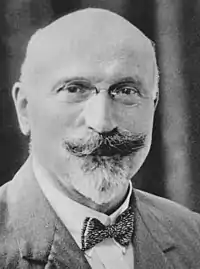 Robert Maillart | |
| Nascimento | 6 de fevereiro de 1872 Berna |
| Morte | 5 de abril de 1940 (68 anos) Genebra |
| Nacionalidade |  Suíço Suíço |
| Campo(s) | Engenharia civil |
Pontes
- Ponte Tavanasa
- Ponte Arve
- Ponte Zuoz
- Ponte Stauffacher
- Ponte Salginatobel
- Ponte Schwandbach
- Ponte Bohlbach
- Ponte Rossgraben
- Ponte Traubach
Referências
- Bill, Max, Robert Maillart Bridges and Constructions, Verlag für Architektur, Zurich, 1949
- Billington, David P., Robert Maillart’s Bridges: The Art of Engineering, Princeton University Press, 1978
- Billington, David P., The Art of Structural Design: A Swiss Legacy, Princeton University Press, 2003
- Laffranchi, Massimo and Peter Marti. "Robert Maillart's curved concrete arch bridges", Journal of Structural Engineering 123.10 (1997): 1280 Academic Search Elite
| Controle de autoridade |
|
|---|

This article is issued from Wikipedia. The text is licensed under Creative Commons - Attribution - Sharealike. Additional terms may apply for the media files.