Wen Cheng
Wencheng (em tibetano: Wylie: Mung-chang Kungco; chinês: 文成公主, pinyin: Wénchéng Gōngzhǔ, Wade–Giles: Wen-ch'eng Kung-chu; 628–680/2[1]) era uma princesa de um ramo menor da Dinastia Tang. Em 641, ela foi concedida pelo imperador Taizong ao imperador Songtsän Gampo do Tibete para o casamento, um ator involuntário da política heqin[lower-alpha 1] do imperador (a aliança por casamento).[2] Ela é popularmente conhecida no Tibete como "Gyasa", ou "esposa chinesa".[3]
| Wen Cheng | |
|---|---|
| Imperatriz do Império Tibetano | |
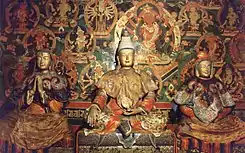 Wen Cheng | |
| Coroação | 641 |
| Nascimento | 628 |
| Tibete | |
| Morte | 680 (52 anos) ou 682 |
| Nome completo | |
| Pogong Mongza Tricham Gyasa Mung-chang (conhecido como Princesa de Wenchen, da Dinastia Tang) Mi-nyag-bza' Zhyal-mo-btsun (do grupo étnico Tangut) Ri-thig-man (de Zhangzhung) | |
| Cônjuge | Songtsen Gampo |
| Religião | budismo tibetano |
Referências
- Warner, Cameron David (2011). «A Prolegomenon to the Palladium of Tibet, the Jowo (Jo bo) Śākyamuni». In: Bue, Erberto Lo. Proceedings of the Tenth Seminar of the IATS, 2003. Volume 13: Art in Tibet: Issues in Traditional Tibetan Art from the Seventh to the Twentieth Century. [S.l.]: BRILL. pp. 3–17. ISBN 90-04-15519-8
- Slobodník, Martin (2006). «The Chinese Princess Wencheng in Tibet: A Cultural Intermediary between Facts and Myth». In: Gálik, M.; Štefanovičová, T. Trade, Journeys, Inner- and Intercultural Communication in East and West (up to 1250). Bratislava: Lufema. pp. 267–276
- Dowman, Keith (1988). The Power-places of Central Tibet: The Pilgrim's Guide. Londres e Nova Iorque: Routledge & Kegan Paul. ISBN 0-7102-1370-0
This article is issued from Wikipedia. The text is licensed under Creative Commons - Attribution - Sharealike. Additional terms may apply for the media files.