кошка
Belarusian
Alternative forms
- koszka, koška — Łacinka (Belarusian Latin alphabet)
Etymology
Inherited from Old Ruthenian ко́шка (kóška), from Old East Slavic ко́шька (kóšĭka), from unattested *ко́чька (*kóčĭka), from Proto-Slavic *kòťьka, from *kòťь, from *kòtъ. Cognate with Ukrainian кі́шка (kíška), Russian ко́шка (kóška).
Pronunciation
- IPA(key): [ˈkoʂka]
Audio (file)
Noun
ко́шка • (kóška) f animal (genitive ко́шкі, nominative plural ко́шкі, genitive plural ко́шак)
Declension
| singular | plural | |
|---|---|---|
| nominative | ко́шка kóška |
ко́шкі kóški |
| genitive | ко́шкі kóški |
ко́шак kóšak |
| dative | ко́шцы kóšcy |
ко́шкам kóškam |
| accusative | ко́шку kóšku |
ко́шак kóšak |
| instrumental | ко́шкай, ко́шкаю kóškaj, kóškaju |
ко́шкамі kóškami |
| locative | ко́шцы kóšcy |
ко́шках kóškax |
| count form | — | ко́шкі1 kóški1 |
1Used with the numbers 2, 3, 4 and higher numbers after 20 ending in 2, 3, and 4.
See also
- кот (kot)
References
- “кошка” in Belarusian–Russian dictionaries and Belarusian dictionaries at slounik.org
- “кошка”, in Skarnik's Belarusian dictionary (in Belarusian), based on Kandrat Krapiva's Explanatory Dictionary of the Belarusian Language (1977-1984)
Macedonian
Pronunciation
- IPA(key): [ˈkɔʃka]
Verb
кошка • (koška) third-singular present, impf
Conjugation
| l-participles | imperfect | aorist | non-finite forms | |||
|---|---|---|---|---|---|---|
| masculine | кошкал | — | adjectival participle | кошкан | ||
| feminine | кошкала | — | adverbial participle | кошкајќи | ||
| neuter | кошкало | — | verbal noun | кошкање | ||
| plural | кошкале | — | perfect participle | кошкано | ||
| present | imperfect | aorist | imperative | |||
| 1st singular | кошкам | кошкав | — | — | ||
| 2nd singular | кошкаш | кошкаше | — | кошкај | ||
| 3rd singular | кошка | кошкаше | — | — | ||
| 1st plural | кошкаме | кошкавме | — | — | ||
| 2nd plural | кошкате | кошкавте | — | кошкајте | ||
| 3rd plural | кошкаат | кошкаа | — | — | ||
| Compound tenses | ||||||
| perfect | сум кошкал | present of сум (except in the 3rd person) + imperfect l-participle | ||||
| има-perfect | имам кошкано | present of има + perfect participle | ||||
| pluperfect | бев кошкал | imperfect of сум + imperfect l-participle | ||||
| има-pluperfect | имав кошкано | imperfect of има + perfect participle | ||||
| има-perfect reported | сум имал кошкано | perfect of има + perfect participle | ||||
| future | ќе кошкам | ќе + present | ||||
| има-future | ќе имам кошкано | future of има + perfect participle | ||||
| future in the past | ќе кошкав | ќе + imperfect | ||||
| има-future in the past | ќе имав кошкано | future in the past of има + perfect participle | ||||
| future reported | ќе сум кошкал | ќе + imperfect l-participle | ||||
| има-future reported | ќе сум имал кошкано | future reported of има + perfect participle | ||||
| conditional | би кошкал | би + imperfect l-participle | ||||
| има-conditional | би имал кошкано | conditional of има + perfect participle | ||||
Old Ruthenian
Alternative forms
- ко́шъка (kóška), kószka — alternative spelling
Etymology
Inherited from Old East Slavic ко́шька (kóšĭka), from unattested *ко́чька (*kóčĭka), from Proto-Slavic *kòťьka, from *kòťь, from *kòtъ. Cognate with Russian ко́шка (kóška).
Noun
кошка • (koška) f anim (masculine котъ)
Further reading
- Bulyka, A. M., editor (1997), “кошка”, in Гістарычны слоўнік беларускай мовы [Historical Dictionary of the Belarusian Language] (in Belarusian), issue 16 (коржъ – лесничанка), Minsk: Belaruskaia navuka, →ISBN, page 71
- Chikalo, M. I., editor (2010), “кошка, кошъка”, in Словник української мови XVI – I пол. XVII ст. [Dictionary of the Ukrainian Language: 16ᵗʰ – 1ˢᵗ half of 17ᵗʰ c.] (in Ukrainian), issue 15 (конь – легковѣрны), Lviv: KIUS, →ISBN, page 61
Russian
Etymology
Inherited from Middle Russian ко́шка (kóška), from Old East Slavic ко́шька (kóšĭka), from unattested *ко́чька (*kóčĭka), from Proto-Slavic *kòťьka, from *kòťь, from *kòtъ. Cognate with Old Ruthenian ко́шка (kóška), Ukrainian кі́шка (kíška).
Pronunciation
- IPA(key): [ˈkoʂkə]
Audio (file)
Noun
ко́шка • (kóška) f anim or f inan (genitive ко́шки, nominative plural ко́шки, genitive plural ко́шек, relational adjective коша́чий, diminutive ко́шечка)
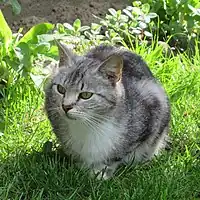
- cat
- жить как ко́шка с соба́кой ― žitʹ kak kóška s sobákoj ― to lead a cat-and-dog life
- игра́ть в ко́шки-мышки ― igrátʹ v kóški-myški ― play cat-and-mouse
- но́чью все ко́шки се́ры ― nóčʹju vse kóški séry ― at night all cats are gray
- у него́ ко́шки скребу́т на се́рдце ― u nevó kóški skrebút na sérdce ― he is sick at heart (very upset)
- (inanimate) cat-o'-nine-tails
- (technical, inanimate) grapnel, drag
- (technical, inanimate) grapple fork
- (cranes, inanimate) car, trolley, carriage
- (geology, inanimate) spit, bar
- (climbing, in the plural, inanimate) crampons, climbing irons, climbing grapplers