اونٹ
Urdu
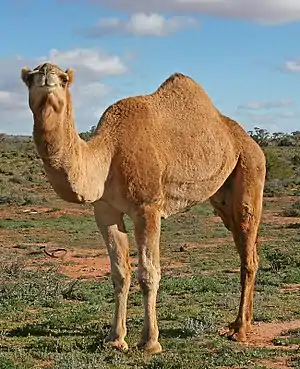
اونٹ
Alternative forms
- אוּנְתּ (ūnṭ) (Judeo-Urdu)
Etymology
Inherited from Sauraseni Prakrit 𑀉𑀝𑁆𑀝 (uṭṭa), from Sanskrit उष्ट्र (uṣṭra, “camel”). Cognate with Punjabi اُوٹھ (ūṭh) / ਊਠ (ūṭha), Saraiki اُٹھ (uṭh) and Sindhi اُٺُ (uṭhu). Also compare Pashto اُوښ (ūx̌) and Persian اُشْتُر (oštor).
Pronunciation
- (Standard Urdu) IPA(key): /ũːʈ/
Audio (PK) (file) - Rhymes: -ũːʈ
Noun
اُون٘ٹ • (ū̃ṭ) m (Hindi spelling ऊँट)
Declension
| Declension of اونٹ | ||
|---|---|---|
| singular | plural | |
| direct | اونٹ (ūnṭ) | اونٹ (ūnṭ) |
| oblique | اونٹ (ūnṭ) | اونٹوں (ūnṭō̃) |
| vocative | اونٹ (ūnṭ) | اونٹو (ūnṭō) |
Descendants
- → English: oont
Adjective
اُون٘ٹ • (ū̃ṭ) (indeclinable, Hindi spelling ऊँट)
Further reading
- “اونٹ”, in اُردُو لُغَت (urdū luġat) (in Urdu), Ministry of Education: Government of Pakistan, 2017.
- “اونٹ”, in ریخْتَہ لُغَت (rexta luġat) - Rekhta Dictionary [Urdu dictionary with meanings in Hindi & English] (in English), Noida, India: Rekhta Foundation, 2024.
- Qureshi, Bashir Ahmad (1971), “اونٹ”, in Kitabistan's 20th Century Standard Dictionary, Lahore: Kitabistan Pub. Co.
This article is issued from Wiktionary. The text is licensed under Creative Commons - Attribution - Sharealike. Additional terms may apply for the media files.