に
 | ||||||||
Japanese
| Stroke order | |||
|---|---|---|---|
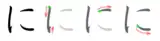 | |||
Pronunciation
- IPA(key): [ɲ̟i]
Etymology 1
Derived in the Heian period from writing the man'yōgana kanji 仁 in the cursive sōsho style.
Syllable
に • (ni)
- Lua error in Module:utilities at line 142: attempt to perform arithmetic on local 'h' (a nil value)
See also
- (Hiragana) 平仮名; あぁ, いぃ, うぅゔ, えぇ, おぉ, かゕが, きぎ, くぐ, けゖげ, こ𛄲ご, さざ, しじ, すず, せぜ, そぞ, ただ, ちぢ, つっづ, てで, とど, な, Lua error in Module:utilities at line 142: attempt to perform arithmetic on local 'h' (a nil value), ぬ, ね, の, はばぱ, ひびぴ, ふぶぷ, へべぺ, ほぼぽ, ま, み, む, め, も, やゃ, 𛀆, ゆゅ, 𛀁, よょ, らら゚, りり゚, るる゚, れれ゚, ろろ゚, わゎわ゙, ゐ𛅐ゐ゙, 𛄟, ゑ𛅑ゑ゙, を𛅒を゙, ん, ー, ゝ, ゞ, ゟ
Etymology 2
From Old Japanese, from Proto-Japonic *ni.
Particle
に • (ni)
- (with nouns)
- particle for indirect objects; to
- 俺に返せ。
- Ore ni kaese.
- Give it back to me.
- 俺に返せ。
- particle for location; in, at
- particle for direction; toward, into
- particle indicating a passive agent; by
- 蚊にさされた。
- Ka ni sasareta.
- I was bitten by a mosquito.
- 蚊にさされた。
- particle indicating a point in time; at
- 7時にね。
- Shichi-ji ni ne.
- It is at seven o'clock. (confirmation of when an event will take place)
- 7時にね。
- particle used occasionally to replace と when organizing and counting; and
- particle for indicating the emotional reason that one does something; in
- particle for indirect objects; to
- (with the stem form of verbs)
- (with な-adjectives)
Synonyms
- へ (e): to; toward
- In the sense indicating destination, the particles へ (e) and Lua error in Module:utilities at line 142: attempt to perform arithmetic on local 'h' (a nil value) are often interchangeable, though there is a slight difference of connotation or emphasis. へ (e) emphasizes the journey to the destination, while Lua error in Module:utilities at line 142: attempt to perform arithmetic on local 'h' (a nil value) emphasizes the arrival or entering it. The distinction is not quite the same as between English to and into; Lua error in Module:utilities at line 142: attempt to perform arithmetic on local 'h' (a nil value) is usually best translated as to because Lua error in Module:utilities at line 142: attempt to perform arithmetic on local 'h' (a nil value), unlike English into, can refer to the journey in addition to the arrival or entering the destination.
Etymology 3
| Alternative spelling |
|---|
| 似 |
Pronunciation
- IPA(key): [ɲ̟i]
This article is issued from Wiktionary. The text is licensed under Creative Commons - Attribution - Sharealike. Additional terms may apply for the media files.