See also: and 𠑊
U+513C, 儼
CJK UNIFIED IDEOGRAPH-513C

[U+513B]
CJK Unified Ideographs
[U+513D]

Translingual

Traditional
Shinjitai
(extended)
𠑊
Simplified

Han character

(Kangxi radical 9, +20, 22 strokes, cangjie input 人口口大 (ORRK), four-corner 26248, composition )

Derived characters

  • 𭍍

References

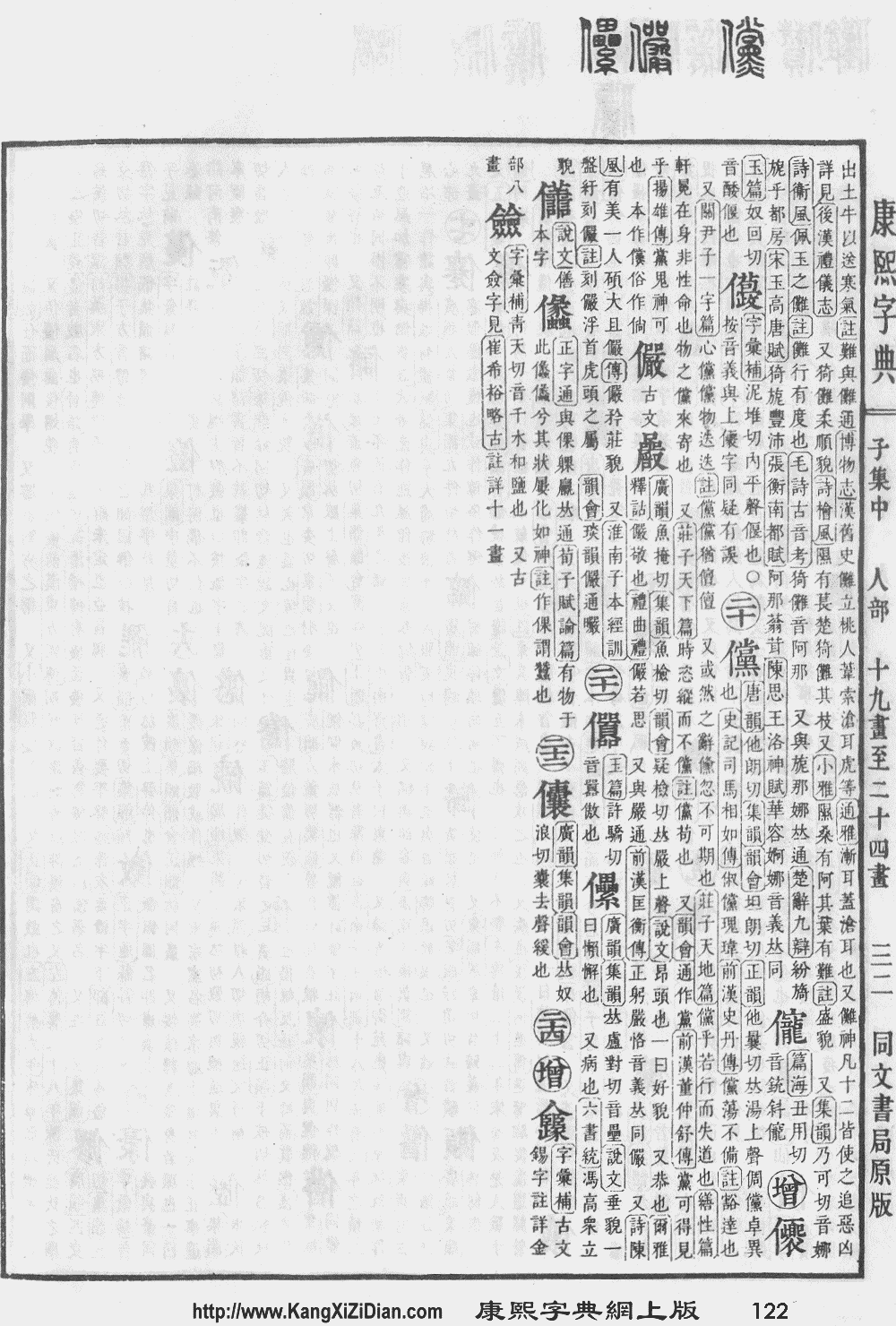
  • Kangxi Dictionary: page 122, character 5
  • Dai Kanwa Jiten: character 1324
  • Dae Jaweon: page 257, character 11
  • Hanyu Da Zidian (first edition): volume 1, page 240, character 2
  • Unihan data for U+513C

Chinese

trad.
simp.

Glyph origin

Historical forms of the character


References:

Mostly from Richard Sears' Chinese Etymology site (authorisation),
which in turn draws data from various collections of ancient forms of Chinese characters, including:

  • Shuowen Jiezi (small seal),
  • Jinwen Bian (bronze inscriptions),
  • Liushutong (Liushutong characters) and
  • Yinxu Jiaguwen Bian (oracle bone script).

Pronunciation


Note:
  • ngiêm2 - Chaozhou;
  • ngiam2 - Shantou;
  • ngiang2 - Chenghai.

Rime
Character
Reading # 1/1
Initial () (31)
Final () (145)
Tone (調) Rising (X)
Openness (開合) Open
Division () III
Fanqie
Baxter ngjaemX
Reconstructions
Zhengzhang
Shangfang
/ŋɨɐmX/
Pan
Wuyun
/ŋiɐmX/
Shao
Rongfen
/ŋiɐmX/
Edwin
Pulleyblank
/ŋɨamX/
Li
Rong
/ŋiɐmX/
Wang
Li
/ŋĭɐmX/
Bernard
Karlgren
/ŋi̯ɐmX/
Expected
Mandarin
Reflex
yǎn
Expected
Cantonese
Reflex
jim5
BaxterSagart system 1.1 (2014)
Character
Reading # 1/1
Modern
Beijing
(Pinyin)
yǎn
Middle
Chinese
‹ ngjæmX ›
Old
Chinese
/*ŋ(r)[a]mʔ/
English dignified

Notes for Old Chinese notations in the Baxter–Sagart system:

* Parentheses "()" indicate uncertain presence;
* Square brackets "[]" indicate uncertain identity, e.g. *[t] as coda may in fact be *-t or *-p;
* Angle brackets "<>" indicate infix;
* Hyphen "-" indicates morpheme boundary;

* Period "." indicates syllable boundary.
Zhengzhang system (2003)
Character
Reading # 1/1
No. 3693
Phonetic
component
Rime
group
Rime
subdivision
1
Corresponding
MC rime
Old
Chinese
/*ŋamʔ/
Notes

Definitions

  1. (literary) grave, respectful, majestic
  2. (literary) as if, seemingly, like
  3. to raise one's head
  4. neatly arranged

Compounds

Japanese

Kanji

(uncommon “Hyōgai” kanji)

  1. This term needs a translation to English. Please help out and add a translation, then remove the text {{rfdef}}.

Readings

Korean

Hanja

(eum (eom))

  1. This term needs a translation to English. Please help out and add a translation, then remove the text {{rfdef}}.

Vietnamese

Han character

: Hán Nôm readings: nghiễm

  1. This term needs a translation to English. Please help out and add a translation, then remove the text {{rfdef}}.
This article is issued from Wiktionary. The text is licensed under Creative Commons - Attribution - Sharealike. Additional terms may apply for the media files.