冚
| ||||||||
Translingual
Han character
冚 (Kangxi radical 14, 冖+3, 5 strokes, cangjie input 月山 (BU) or X月山 (XBU), composition ⿱冖山)
References
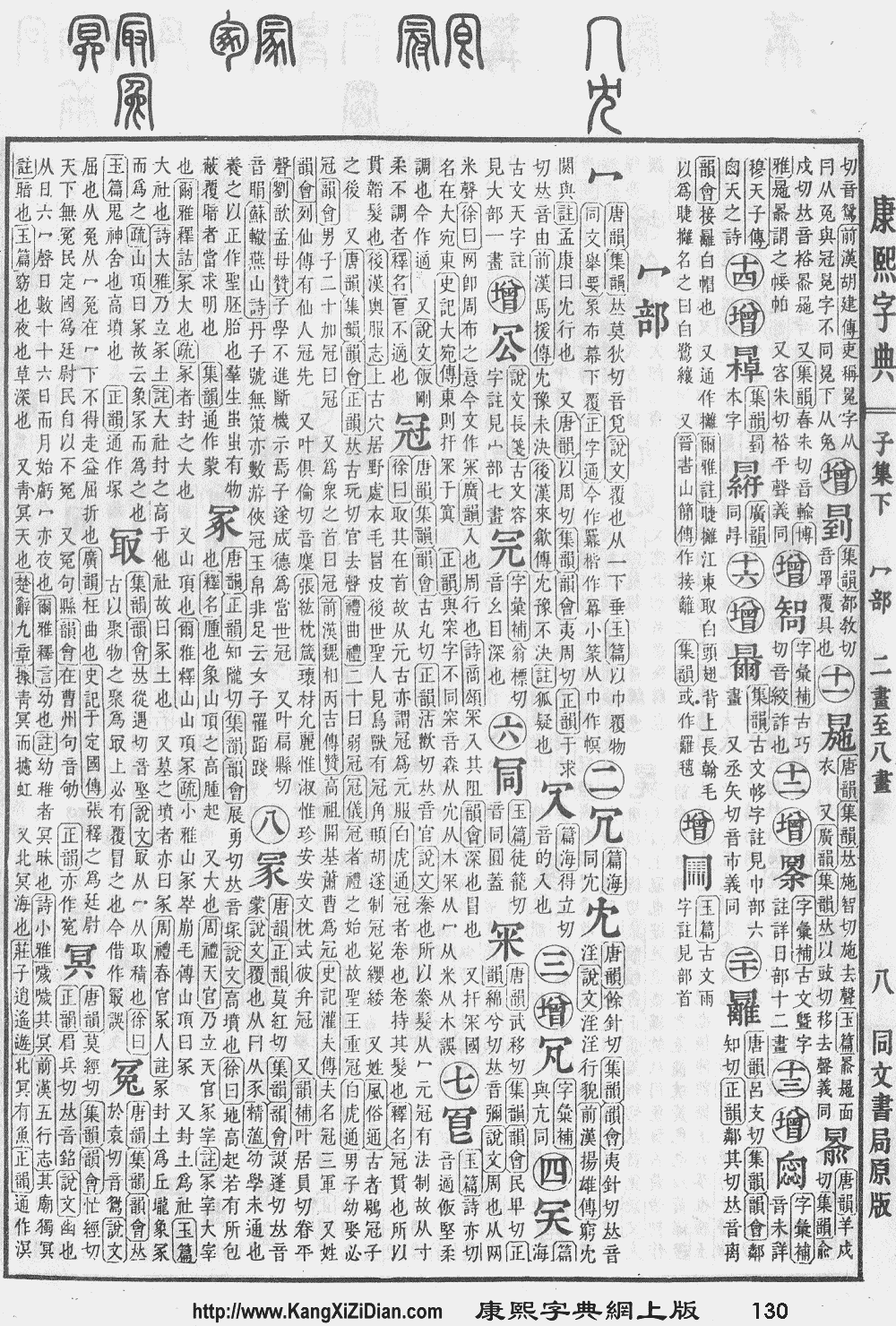
- Kangxi Dictionary: not present, would follow page 130, character 16
- Hanyu Da Zidian (first edition): volume 1, page 303, character 2
- Unihan data for U+519A
Chinese
Etymology 1
Lua error in Module:utilities at line 142: attempt to perform arithmetic on local 'h' (a nil value) Traditionally related to 𠖫 (gǎn, “to cover”) (Bai, 1980; You, 1992).
Bauer (1996) considers this to be part of an area word family in Southeast Asian languages: *khVm ~ *khVp ~ *kVm ~ *kVp ~ *k(h)l/rm/p. It is probably related to 扱 (kap1, “to cover; to imprint”). Compare Min Nan 崁 (khàm, “to cover”), Burmese ခြုံ (hkrum, “to cover; to wrap”), Proto-Tai *hɤmᴮ (“to cover (with cloth)”) (whence Zhuang hoemq and Thai ห่ม (hòm)). The root is found in many Sinitic dialects including Cantonese, Hakka, Hokkien and Wenzhounese.
Pronunciation
Definitions
冚
- (Cantonese, Hakka) to cover
- (Cantonese) to cover up; to conceal; to prevent something from being discovered
- (Cantonese, Teochew) cover; lid
- (Cantonese) to raid (an illegal den)
- (Cantonese) to slap (someone) in the face
- (Cantonese) to cover (to be enough money for)
- (Cantonese) to overshadow; to dominate over
Compounds
Etymology 2
Lua error in Module:utilities at line 142: attempt to perform arithmetic on local 'h' (a nil value)
Pronunciation
Etymology 3
Lua error in Module:utilities at line 142: attempt to perform arithmetic on local 'h' (a nil value)
Pronunciation
Definitions
冚 (Cantonese)