圦
| ||||||||
Translingual
Han character
圦 (Kangxi radical 32, 土+2, 5 strokes, cangjie input 土人 (GO), composition ⿰土入)
Further reading
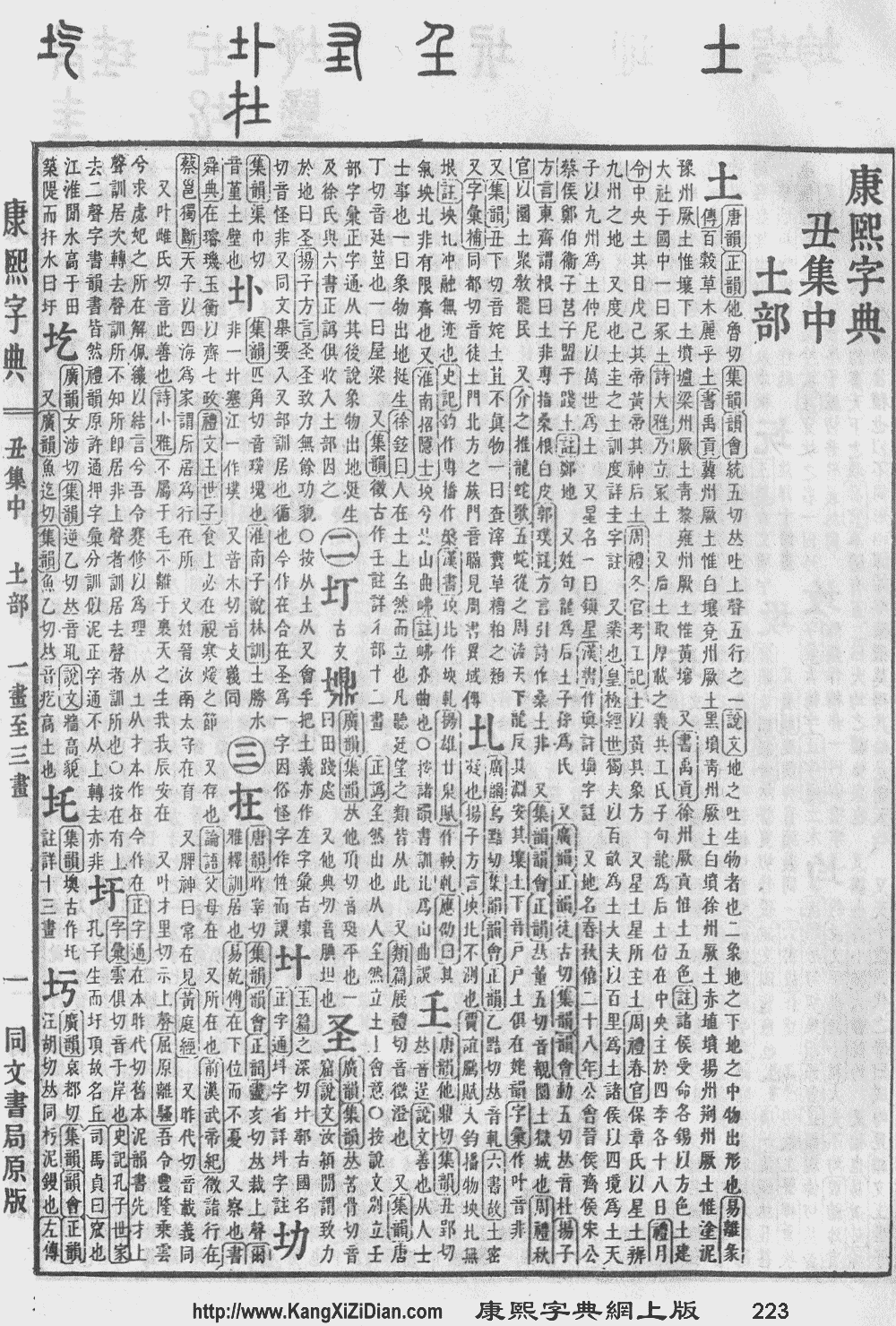
- Kangxi Dictionary: not present, would follow page 223, character 9
- Dai Kanwa Jiten: character 4879
- Dae Jaweon: page 455, character 11
- Hanyu Da Zidian (first edition): not present, would follow volume 1, page 417, character 10
- Unihan data for U+5726
Chinese
Lua error in Module:utilities at line 142: attempt to perform arithmetic on local 'h' (a nil value)
Glyph origin
Lua error in Module:utilities at line 142: attempt to perform arithmetic on local 'h' (a nil value).
Pronunciation
Definitions
圦
- Used in borrowings of Japanese words.
Japanese
Readings
Lua error in Module:utilities at line 142: attempt to perform arithmetic on local 'h' (a nil value)
Etymology 1
| Kanji in this term |
|---|
| 圦 |
| いり Hyōgaiji |
| kun’yomi |
Clipping of 圦樋 (irihi), from 入り (iri, “entering, entrance”) + 樋 (hi, “sluice gate”). Literally, “sluice gate underground (in the ground)”.
Pronunciation
Etymology 2
| Kanji in this term |
|---|
| 圦 |
| ふせ Hyōgaiji |
| nanori |
(This etymology is missing or incomplete. Please add to it, or discuss it at the Etymology scriptorium.)
Pronunciation
- IPA(key): [ɸɯ̟ᵝse̞]
This article is issued from Wiktionary. The text is licensed under Creative Commons - Attribution - Sharealike. Additional terms may apply for the media files.