奥
| ||||||||
Translingual
| Japanese | 奥 |
|---|---|
| Simplified | 奥 |
| Traditional | 奧 |
Han character
奥 (Kangxi radical 37, 大+9, 12 strokes, cangjie input 竹月大 (HBK) or X竹月大 (XHBK), composition ⿱⿵⿱丿冂米大)
Further reading
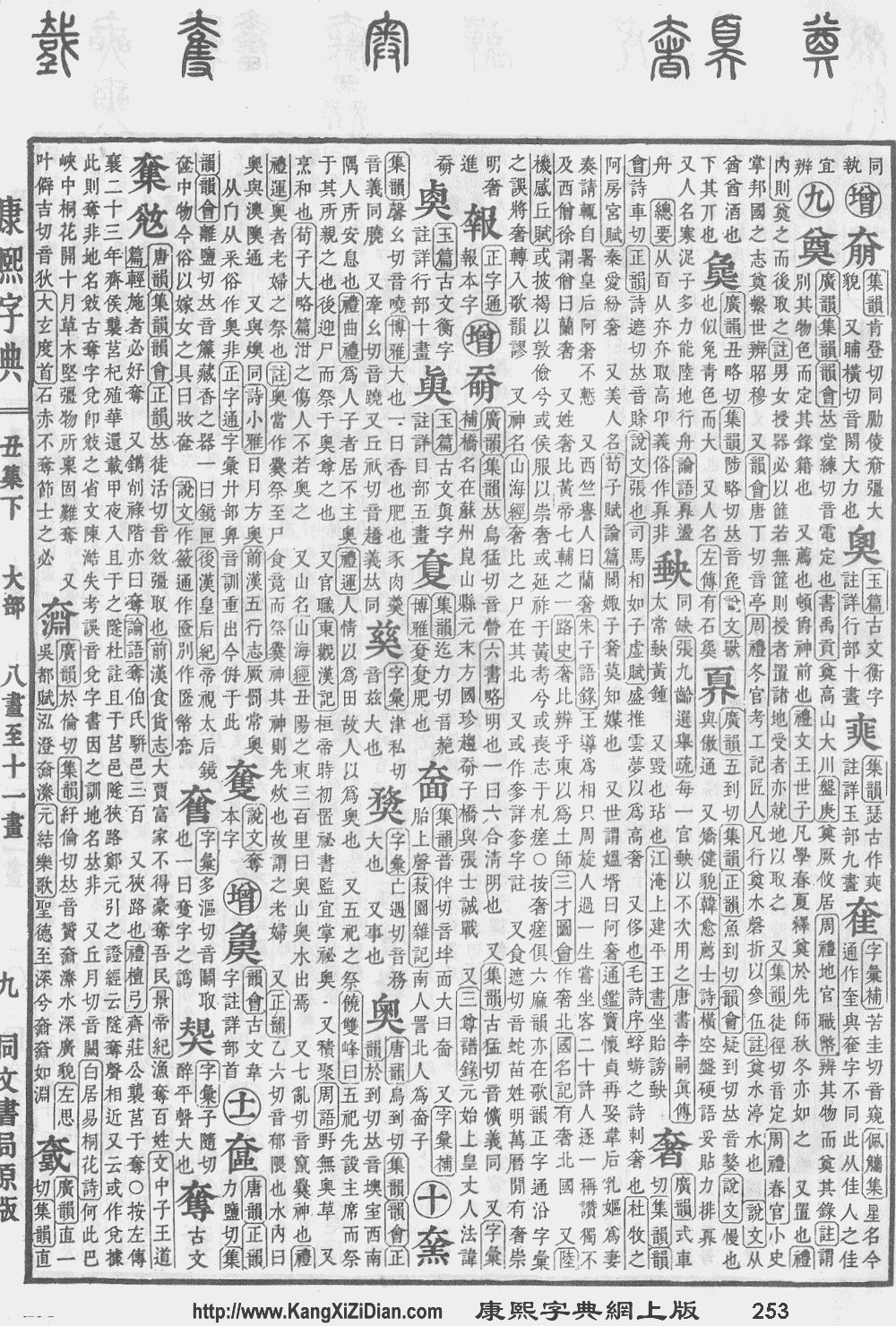
- Kangxi Dictionary: not present, would follow page 253, character 15
- Dai Kanwa Jiten: character 5981
- Hanyu Da Zidian (first edition): volume 1, page 545, character 7
- Unihan data for U+5965
Chinese
Lua error in Module:utilities at line 142: attempt to perform arithmetic on local 'h' (a nil value)
Japanese
| Lua error in Module:utilities at line 142: attempt to perform arithmetic on local 'h' (a nil value) | |
| 奧 |
Readings
Lua error in Module:utilities at line 142: attempt to perform arithmetic on local 'h' (a nil value)
Etymology
| Kanji in this term |
|---|
| 奥 |
| おく Grade: S |
| kun’yomi |
| Alternative spelling |
|---|
| 奧 (kyūjitai) |
Despite the apparent overlap with the modern goon reading of oku that is derived from Middle Chinese, this term is actually rooted in Old Japanese, appearing in the Man'yōshū collection of poetry dating to roughly 759 CE. Cognate with 沖 (oki, “the open sea, offshore”), originally in reference to “somewhere far removed, possibly out of sight”. While oki came to mean “far removed in the wide open → far off shore”, oku instead came to mean “far removed inside → inside, interior”.[1]
Derived terms
- 奥まる (okumaru): to have a deep recess, to be deeply recessed, to have a deep interior
References
- 1988, 国語大辞典(新装版) (Kokugo Dai Jiten, Revised Edition) (in Japanese), Tōkyō: Shogakukan
- 2006, 大辞林 (Daijirin), Third Edition (in Japanese), Tōkyō: Sanseidō, →ISBN
- 1997, 新明解国語辞典 (Shin Meikai Kokugo Jiten), Fifth Edition (in Japanese), Tōkyō: Sanseidō, →ISBN
- 1998, NHK日本語発音アクセント辞典 (NHK Japanese Pronunciation Accent Dictionary) (in Japanese), Tōkyō: NHK, →ISBN
Korean
References
Vietnamese
Han character
- This term needs a translation to English. Please help out and add a translation, then remove the text
{{rfdef}}.