学
See also: 學
| ||||||||
| ||||||||
Translingual
| Japanese | 学 |
|---|---|
| Simplified | 学 |
| Traditional | 學 |
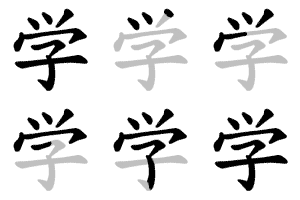
| Stroke order | |||
|---|---|---|---|
 | |||
Han character
学 (Kangxi radical 39, 子+5, 8 strokes, cangjie input 火月弓木 (FBND), composition ⿱𰃮子)
References
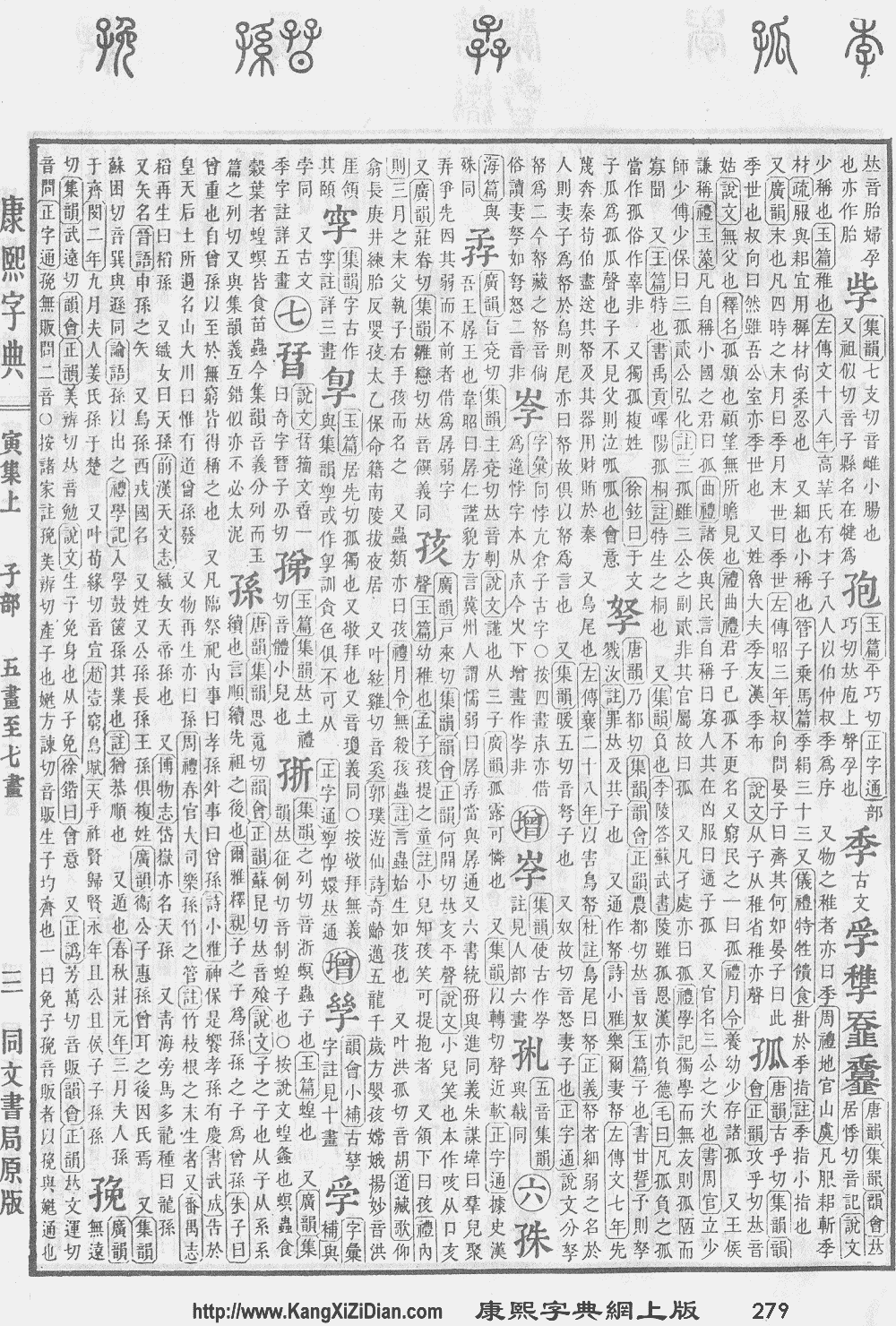
- Kangxi Dictionary: not present, would follow page 279, character 12
- Dai Kanwa Jiten: character 6974
- Dae Jaweon: page 548, character 6
- Hanyu Da Zidian (first edition): volume 2, page 1014, character 3
- Unihan data for U+5B66
Chinese
Etymology 1
Lua error in Module:utilities at line 142: attempt to perform arithmetic on local 'h' (a nil value)
Etymology 2
Lua error in Module:utilities at line 142: attempt to perform arithmetic on local 'h' (a nil value)
Japanese
| Lua error in Module:utilities at line 142: attempt to perform arithmetic on local 'h' (a nil value) | |
| 學 |
Readings
Compounds
- 学位 (gakui)
- 学科 (gakka)
- 学外 (gakugai)
- 学期 (gakki)
- 学業 (gakugyō)
- 学芸 (gakugei)
- 学級 (gakkyū)
- 学校 (gakkō)
- 学才 (gakusai)
- 学際 (gakusai)
- 学士 (gakushi)
- 学識 (gakushiki)
- 学術 (gakujutsu)
- 学食 (gakushoku)
- 学生 (gakusei)
- 学院 (gakuin)
- 学籍 (gakuseki)
- 学窓 (gakusō)
- 学僧 (gakusō)
- 学徒 (gakuto)
- 学内 (gakunai)
- 学年 (gakunen)
- 学閥 (gakubatsu)
- 学部 (gakubu)
- 学府 (gakufu)
- 学風 (gakufū)
- 学名 (gakumei)
- 学問 (gakumon)
- 学割 (gakuwari)
- 医学 (igaku)
- 科学 (kagaku)
- 化学 (kagaku), 化学 (bakegaku)
- 漢学 (kangaku)
- 気学 (kigaku)
- 経済学 (keizaigaku)
- 古学 (kogaku)
- 後学 (kōgaku)
- 光学 (kōgaku)
- 向学
- 工学 (kōgaku)
- 神学 (shingaku)
- 生物学 (seibutsugaku)
- 退学 (taigaku)
- 大学 (daigaku)
- 中学 (chūgaku)
- 停学 (teigaku)
- 哲学 (tetsugaku)
- 入学 (nyūgaku)
- 博学 (hakugaku)
- 美学 (bigaku)
- 物理学 (butsurigaku)
- 文学 (bungaku)
- 法学 (hōgaku)
- 夜学 (yagaku)
- 蘭学 (rangaku)
- 学らん (gakuran)
- 学蘭 (gakuran)
Etymology
From Middle Chinese 學 (MC haewk, “learning”).
Noun
学 • (gaku)
- scholarship; learning; knowledge
- 学がない
- gaku ga nai
- uneducated
- (literally, “without learning”)
- 学がない
Korean
References
- Supreme Court of the Republic of Korea (대한민국 대법원, Daehanmin'guk Daebeobwon) (2018). Table of hanja for personal names (인명용 한자표 / 人名用漢字表, Inmyeong-yong hanja-pyo), page 48.
This article is issued from Wiktionary. The text is licensed under Creative Commons - Attribution - Sharealike. Additional terms may apply for the media files.