宝
| ||||||||
Translingual
| Stroke order | |||
|---|---|---|---|
 | |||
| Japanese | 宝 |
|---|---|
| Simplified | 宝 |
| Traditional | 寶 |
Han character
宝 (Kangxi radical 40, 宀+5, 8 strokes, cangjie input 十一土戈 (JMGI), four-corner 30103, composition ⿱宀玉)
Related characters
- 寶 (Traditional form of 宝)
References
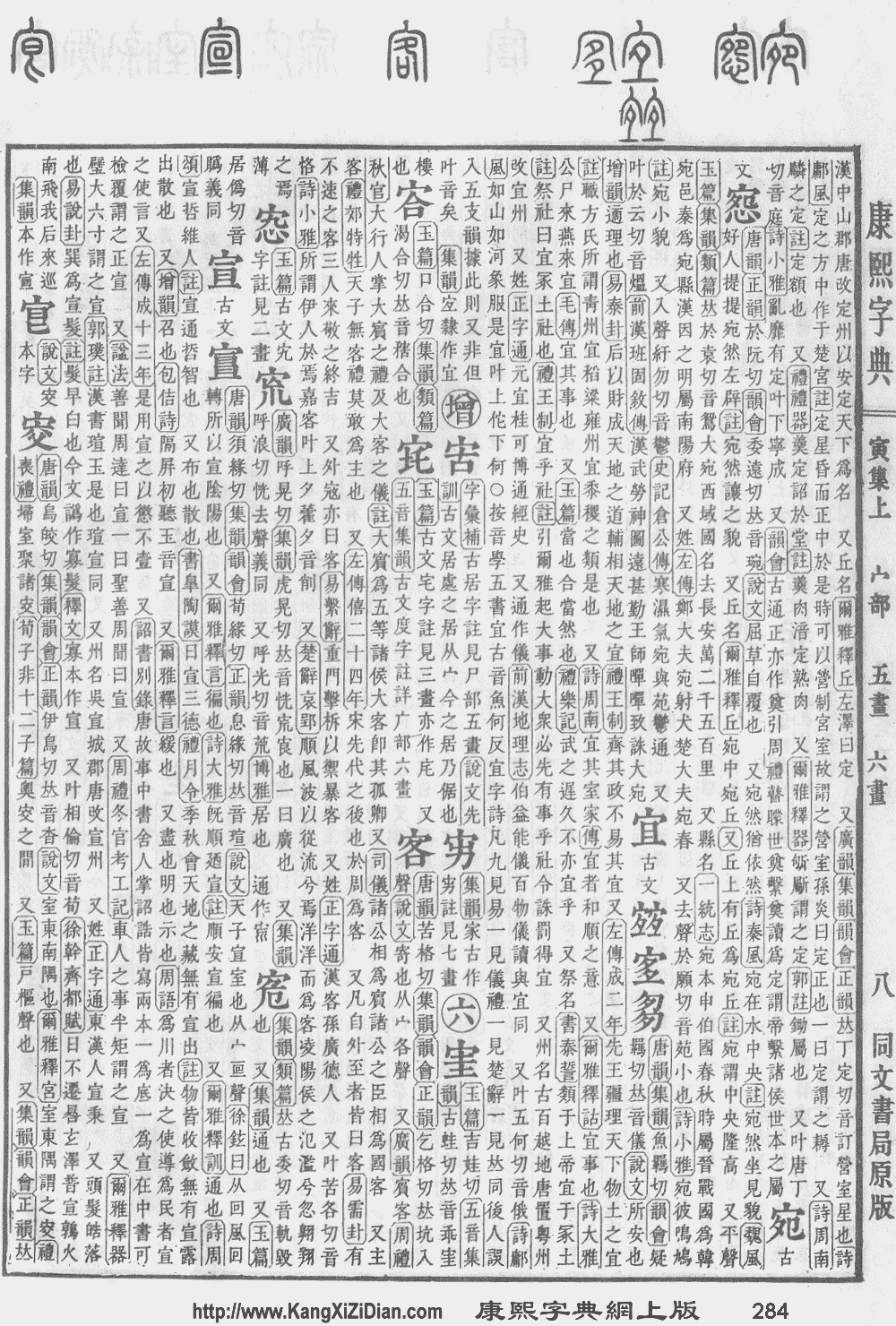
- Kangxi Dictionary: not present, would follow page 284, character 8
- Dai Kanwa Jiten: character 7122
- Dae Jaweon: page 561, character 8
- Hanyu Da Zidian (first edition): volume 2, page 917, character 10
- Unihan data for U+5B9D
Chinese
Glyph origin
Simplified from 寶 (⿱珤貝 → 玉). Officially adopted as the simplified form of 寶 in the Chinese Character Simplification Scheme (《漢字簡化方案》) in 1956.
Definitions
Lua error in Module:utilities at line 142: attempt to perform arithmetic on local 'h' (a nil value)
Japanese
| Lua error in Module:utilities at line 142: attempt to perform arithmetic on local 'h' (a nil value) | |
| 寶 |
Readings
Lua error in Module:utilities at line 142: attempt to perform arithmetic on local 'h' (a nil value)
Etymology
| Kanji in this term |
|---|
| 宝 |
| たから Grade: 6 |
| kun’yomi |
| Alternative spellings |
|---|
| 寶 (kyūjitai) 財 貨 |
From Old Japanese. First cited to the Man'yōshū of 759 CE.[1] From Proto-Japonic *takara.
Samuel Martin analyzes this as a compound of 高 (taka-, “high”) + 等 (-ra, pluralizing suffix).[2] However, this is semantically problematic, as such a compound would ordinarily refer to "the heights" as a location, and there is no clear means of deriving the sense of "treasure" from the proposed component parts.
Some sources derive this as a compound of 田 (ta, “paddy field”) + から (kara, “from”), literally “from the paddy fields”, from the way people value thriving paddy fields as a unique kind of treasure.[3] However, the sense of "from" for から (kara) does not appear until roughly the Heian period,[4] more recent than the first appearance of takara, making this a folk etymology.
References
- “宝・財・貨”, in 日本国語大辞典 (Nihon Kokugo Daijiten, “Nihon Kokugo Daijiten”) (in Japanese), concise edition, Tōkyō: Shogakukan, 2000
- Martin, Samuel E. (1987) The Japanese Language Through Time, New Haven, London: Yale University Press, →ISBN
- 宝は田から~私たちの原点~ | 宝酒造株式会社 - Treasure is from the rice fields -Our Beginning- | Takara Shuzo (In Japanese)
- “から”, in 日本国語大辞典 (Nihon Kokugo Daijiten, “Nihon Kokugo Daijiten”) (in Japanese), concise edition, Tōkyō: Shogakukan, 2000
- 2006, 大辞林 (Daijirin), Third Edition (in Japanese), Tōkyō: Sanseidō, →ISBN
- 1997, 新明解国語辞典 (Shin Meikai Kokugo Jiten), Fifth Edition (in Japanese), Tōkyō: Sanseidō, →ISBN
- 1998, NHK日本語発音アクセント辞典 (NHK Japanese Pronunciation Accent Dictionary) (in Japanese), Tōkyō: NHK, →ISBN
Vietnamese
Han character
宝: Hán Nôm readings: bảo, báu, bửu
- This term needs a translation to English. Please help out and add a translation, then remove the text
{{rfdef}}.