広
| ||||||||
Translingual
| Stroke order (Japan) | |||
|---|---|---|---|
 | |||
| Traditional | 廣 |
|---|---|
| Shinjitai | Lua error in Module:utilities at line 142: attempt to perform arithmetic on local 'h' (a nil value) |
| Simplified | 广 |
Han character
広 (Kangxi radical 53, 广+2, 5 strokes, cangjie input 戈戈 (II) or X戈戈 (XII), four-corner 00230, composition ⿸广厶)
References
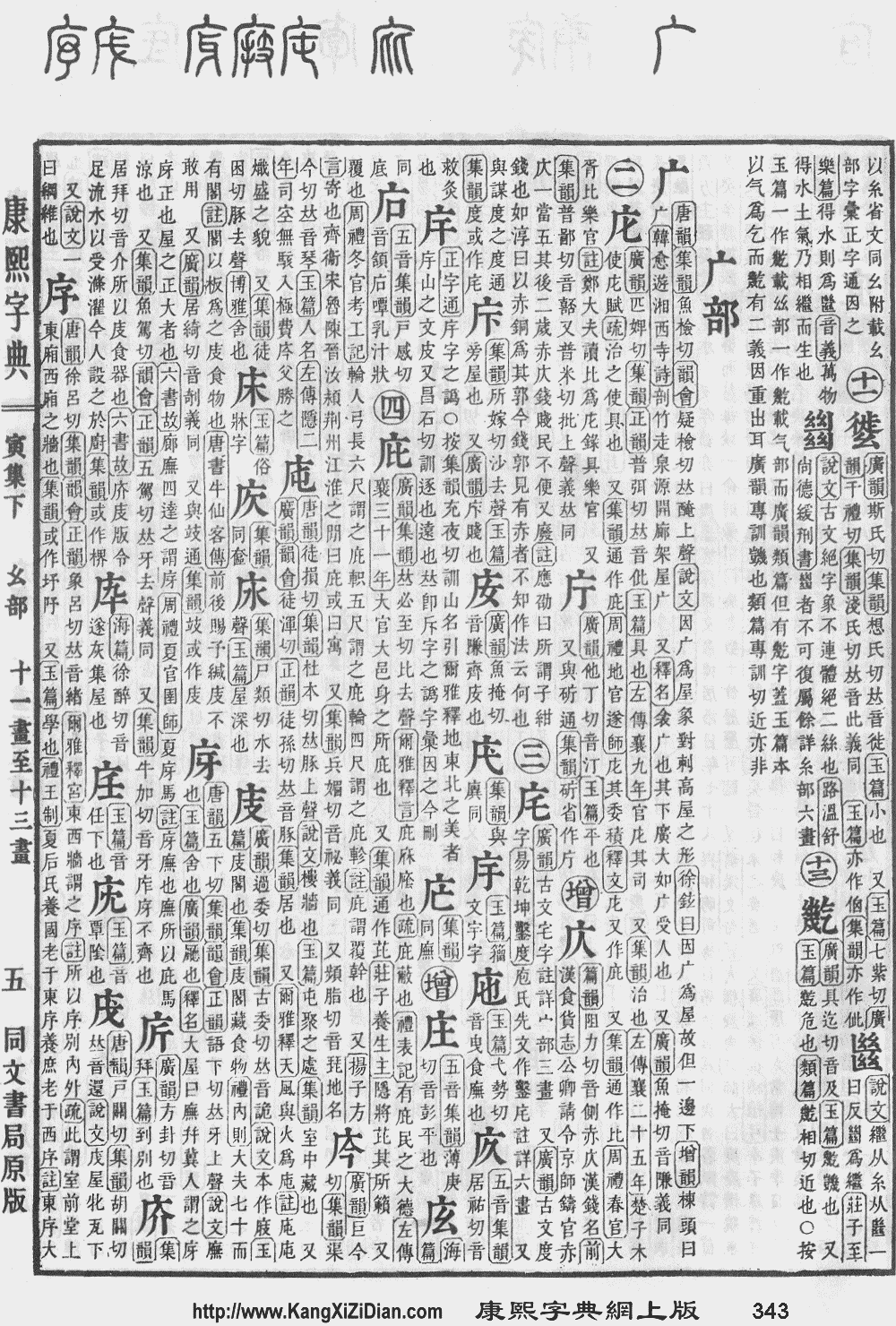
- Kangxi Dictionary: not present, would follow page 343, character 8
- Dai Kanwa Jiten: character 9224
- Dae Jaweon: page 652, character 18
- Hanyu Da Zidian (first edition): not present, would follow volume 2, page 873, character 2
- Unihan data for U+5E83
- Mari Yamashita, 「広」の字体について―略字体の出現時期とその要因―, 2011
Chinese
Lua error in Module:utilities at line 142: attempt to perform arithmetic on local 'h' (a nil value)
Japanese
| Lua error in Module:utilities at line 142: attempt to perform arithmetic on local 'h' (a nil value) | |
| 廣 |
Readings
Korean
References
- Supreme Court of the Republic of Korea (대한민국 대법원, Daehanmin'guk Daebeobwon) (2018). Table of hanja for personal names (인명용 한자표 / 人名用漢字表, Inmyeong-yong hanja-pyo), page 4.
This article is issued from Wiktionary. The text is licensed under Creative Commons - Attribution - Sharealike. Additional terms may apply for the media files.