抜
See also: 拔
| ||||||||
Translingual
| Japanese | 抜 |
|---|---|
| Simplified | 拔 |
| Traditional | 拔 |
Etymology
Japanese shinjitai Simplified from 拔 (犮 → 友).
Phono-semantic compound (形聲/形声) : semantic 扌 (“hand”) + phonetic 友 (OC *ɢʷɯʔ) – a hand pulls.
Han character
抜 (Kangxi radical 64, 手+4, 7 strokes, cangjie input 手大水 (QKE) or X手大水 (XQKE), composition ⿰扌友)
References
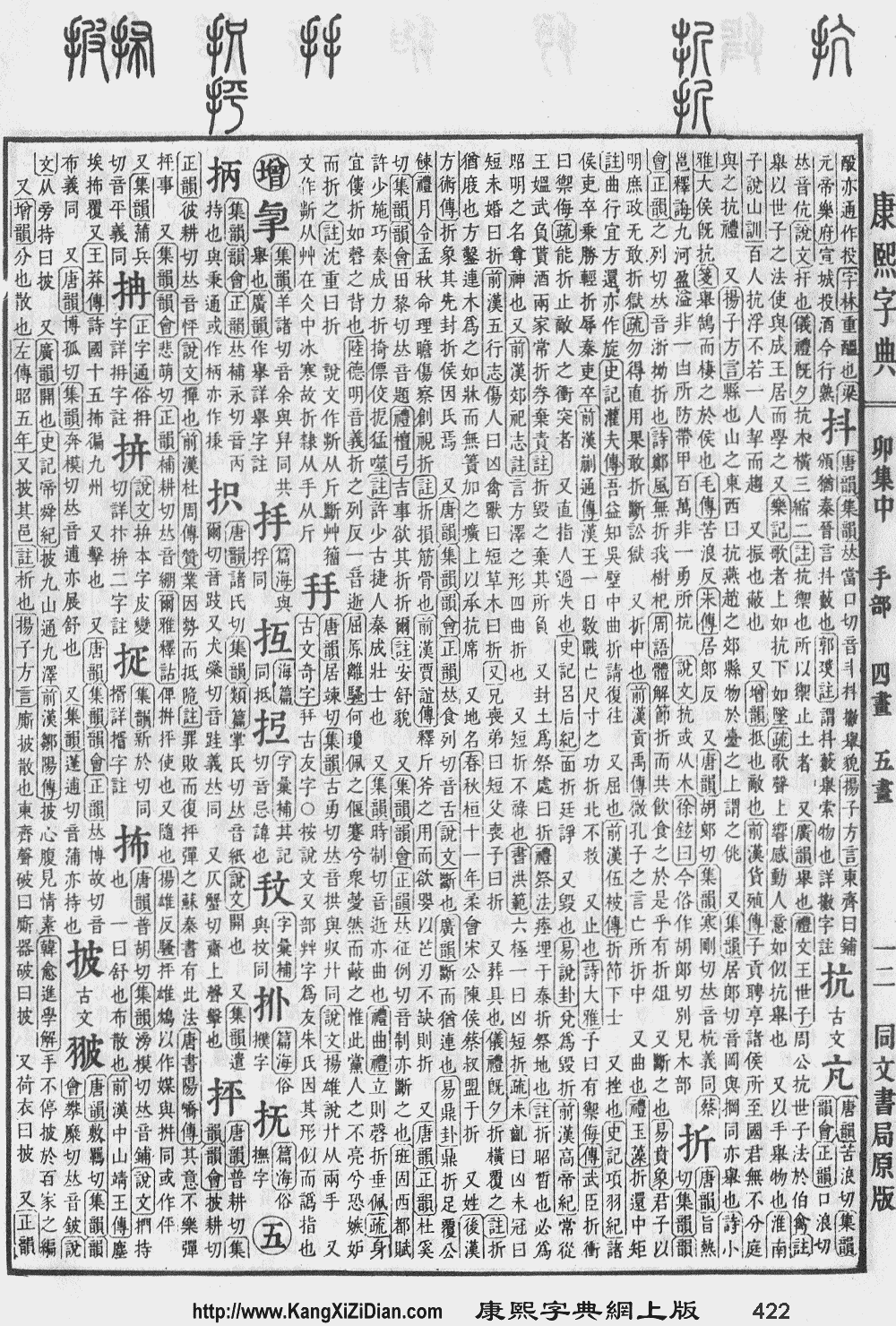
- Kangxi Dictionary: not present, would follow page 422, character 12
- Dai Kanwa Jiten: character 11901
- Dae Jaweon: page 770, character 8
- Hanyu Da Zidian (first edition): not present, would follow volume 3, page 1834, character 9
- Unihan data for U+629C
Japanese
| Lua error in Module:utilities at line 142: attempt to perform arithmetic on local 'h' (a nil value) | |
| 拔 |
Readings
Compounds
- 縄抜け (nawanuke)
Derived terms
- 抜ける (nukeru)
Korean
Mandarin
This article is issued from Wiktionary. The text is licensed under Creative Commons - Attribution - Sharealike. Additional terms may apply for the media files.