揭
See also: 掲
| ||||||||
Translingual
Han character
揭 (Kangxi radical 64, 手+9, 12 strokes, cangjie input 手日心女 (QAPV), four-corner 56027, composition ⿰扌曷)
References
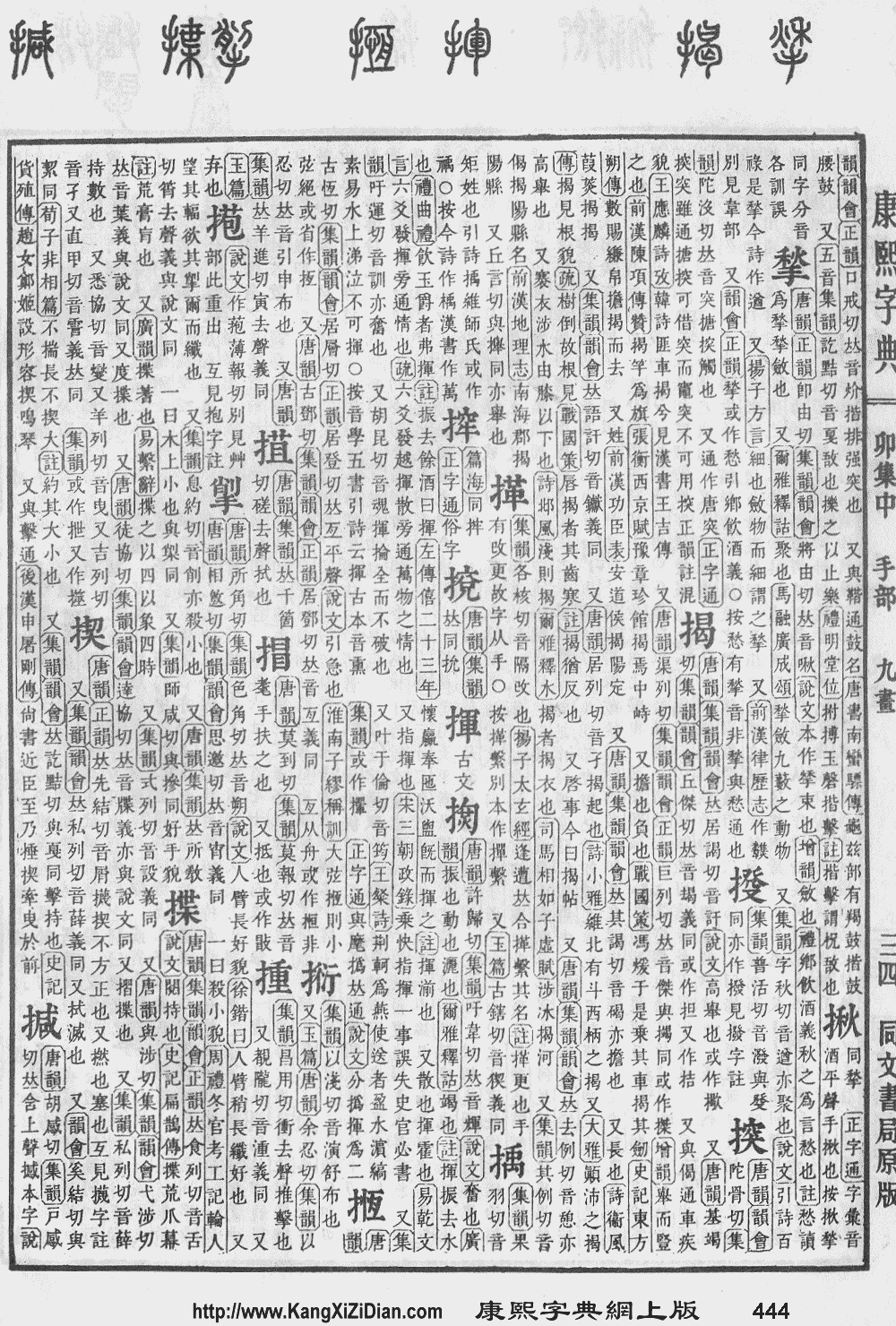
- Kangxi Dictionary: page 444, character 5
- Dai Kanwa Jiten: character 12389
- Hanyu Da Zidian (first edition): volume 3, page 1916, character 5
- Unihan data for U+63ED
Chinese
| trad. | 揭 | |
|---|---|---|
| simp. # | 揭 | |
| alternative forms | ||
Glyph origin
| Historical forms of the character 揭 | |
|---|---|
| Shuowen Jiezi (compiled in Han) | Liushutong (compiled in Ming) |
| Small seal script | Transcribed ancient scripts |
 |
 |
Characters in the same phonetic series (曷) (Zhengzhang, 2003)
| Old Chinese | |
|---|---|
| 愒 | *kʰaːds, *kʰrads, *kʰrad |
| 馤 | *qaːds |
| 靄 | *qaːds, *qaːd |
| 餲 | *qraːds, *qrads, *ɡaːd, *qaːd |
| 喝 | *qraːds, *qʰoːb, *qʰaːd |
| 揭 | *kʰrads, *ked, *kʰrad, *ɡrad, *kad, *ɡad |
| 偈 | *ɡrads, *ɡrad |
| 猲 | *kʰob, *qʰaːd, *qʰad |
| 葛 | *kaːd |
| 輵 | *kaːd |
| 獦 | *klaːd, *rab |
| 渴 | *kʰaːd, *ɡrad |
| 嵑 | *kʰaːd |
| 暍 | *qʰaːd, *qad |
| 曷 | *ɡaːd |
| 褐 | *ɡaːd |
| 鶡 | *ɡaːd |
| 毼 | *ɡaːd |
| 蝎 | *ɡaːd |
| 鞨 | *ɡaːd, *ɢljad |
| 遏 | *qaːd |
| 齃 | *qaːd |
| 堨 | *qaːd |
| 擖 | *kʰreːd, *kraːd, *r'aːb |
| 楬 | *kʰraːd, *ɡrad, *ɡad |
| 朅 | *kʰrad |
| 藒 | *kʰrad |
| 竭 | *ɡrad, *ɡad |
| 碣 | *ɡrad, *ɡad |
| 羯 | *kad |
| 鍻 | *kad |
| 歇 | *qʰad |
| 蠍 | *qʰad |
| 謁 | *qad |
Phono-semantic compound (形聲/形声, OC *kʰrads, *ked, *kʰrad, *ɡrad, *kad, *ɡad) : semantic 扌 + phonetic 曷 (OC *ɡaːd).
Pronunciation
Definitions
揭
Synonyms
- 宣洩/宣泄 (xuānxiè)
- 戳破 (chuōpò)
- 戳穿 (chuōchuān)
- 托破 (Min Nan)
- 抖 (dǒu)
- 抖落 (dǒuluò)
- 捅
- 揭發/揭发 (jiēfā)
- 揭穿 (jiēchuān)
- 揭露 (jiēlù)
- 㨴 (kin2) (Cantonese)
- 撞破 (zhuàngpò)
- 泄露 (xièlù)
- 洩漏/泄漏 (xièlòu)
- 洩露/泄露 (xièlù)
- 流露 (liúlù)
- 浮泛 (fúfàn)
- 漏 (lòu)
- 漏洩/漏泄 (lòuxiè)
- 破 (pò) (literary, or in compounds)
- 篤爆/笃爆 (duk1 baau3) (Cantonese)
- 篤穿/笃穿 (duk1 cyun1) (Cantonese)
- 說破/说破 (shuōpò)
- 說穿/说穿 (shuōchuān)
- 講穿/讲穿 (Xiang, Cantonese)
- 走 (zǒu)
- 走漏 (zǒulòu)
- 踢爆 (tek3 baau3) (Cantonese)
- 透露 (tòulù)
Compounds
- 匿名揭帖
- 打揭
- 掀天揭地
- 揭不開鍋/揭不开锅
- 揭債/揭债
- 揭債還債/揭债还债
- 揭布
- 揭帖
- 揭席
- 揭幕 (jiēmù)
- 揭底 (jiēdǐ)
- 揭底牌 (jiē dǐpái)
- 揭折
- 揭挑
- 揭揭
- 揭曉/揭晓 (jiēxiǎo, “to be revealed”)
- 揭榜
- 揭櫫/揭橥
- 揭水
- 揭火
- 揭牌 (jiēpái)
- 揭瘡疤/揭疮疤
- 揭發/揭发 (jiēfā)
- 揭白
- 揭白旗
- 揭短 (jiēduǎn)
- 揭破 (jiēpò)
- 揭示 (jiēshì)
- 揭祕/揭秘 (jiēmì)
- 揭穿 (jiēchuān)
- 揭竿
- 揭竿而起 (jiēgān'érqǐ)
- 揭老底 (jiē lǎodǐ)
- 揭蓋兒/揭盖儿
- 揭蓋子/揭盖子
- 揭裱
- 揭諦/揭谛 (jiēdì)
- 揭醜/揭丑
- 揭開/揭开 (jiēkāi, “to reveal”)
- 揭露 (jiēlù)
- 昭然若揭 (zhāoránruòjiē)
- 深厲淺揭/深厉浅揭
- 表揭
Etymology 2
Pronunciation
Definitions
揭
- Used in place names.
Compounds
Etymology 3
Pronunciation
Definitions
揭
Etymology 4
Pronunciation
Definitions
揭
- ‡ to block up
Etymology 5
| For pronunciation and definitions of 揭 – see 攑 (“to lift; to lift; to hold up; to raise; etc.”). (This character, 揭, is a variant form of 攑). |
Etymology 6
| For pronunciation and definitions of 揭 – see 撠 (“to catch, to grasp; to touch; etc.”). (This character, 揭, is a variant form of 撠). |
Japanese
| 掲 | |
| 揭 |
Kanji
揭
(“Jinmeiyō” kanji used for names, kyūjitai kanji, shinjitai form 掲)
Readings
Korean
Etymology
From Middle Chinese 揭 (MC khjejH).
| Historical readings |
|---|
|
Pronunciation
- (SK Standard/Seoul) IPA(key): [ke̞(ː)]
- Phonetic hangul: [게(ː)]
- Though still prescribed in Standard Korean, most speakers in both Koreas no longer distinguish vowel length.
Hanja
Wikisource 揭 (eumhun 높이 들 게 (nopi deul ge))
Compounds
References
Vietnamese
Han character
揭: Hán Nôm readings: yết
- This term needs a translation to English. Please help out and add a translation, then remove the text
{{rfdef}}.
This article is issued from Wiktionary. The text is licensed under Creative Commons - Attribution - Sharealike. Additional terms may apply for the media files.