攪
| ||||||||
Translingual
| Traditional | 攪 |
|---|---|
| Shinjitai (extended) |
撹 |
| Simplified | 搅 |
Han character
攪 (Kangxi radical 64, 手+20, 23 strokes, cangjie input 手竹月山 (QHBU), four-corner 57016, composition ⿰扌覺)
Related characters
- 撹 (Japanese extended shinjitai)
- 搅 (Simplified Chinese)
References
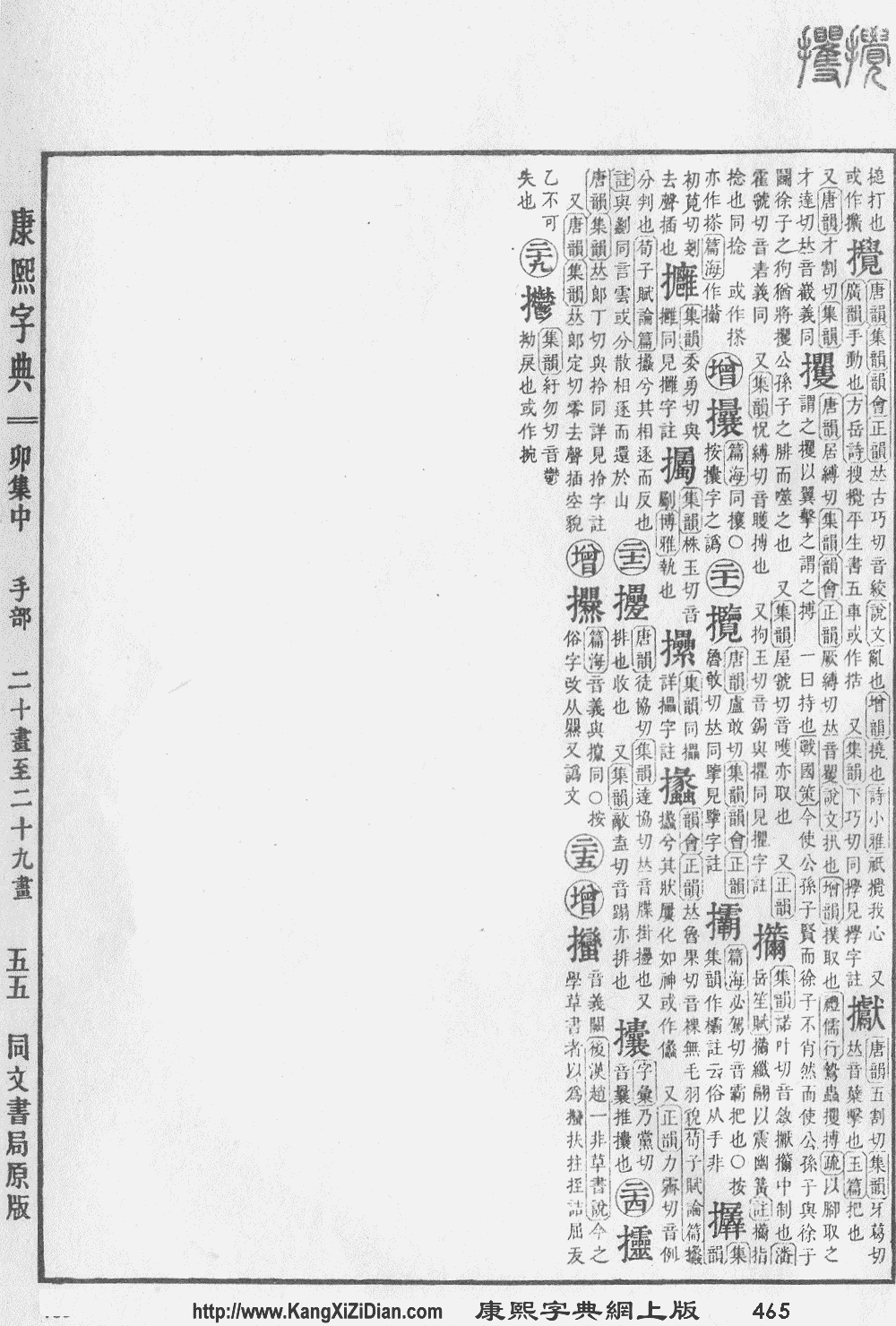
- Kangxi Dictionary: page 465, character 1
- Dai Kanwa Jiten: character 13041
- Dae Jaweon: page 813, character 24
- Hanyu Da Zidian (first edition): volume 3, page 1992, character 1
- Unihan data for U+652A
Chinese
| trad. | 攪 | |
|---|---|---|
| simp. | 搅 | |
Glyph origin
| Historical forms of the character 攪 | |
|---|---|
| Shuowen Jiezi (compiled in Han) | Liushutong (compiled in Ming) |
| Small seal script | Transcribed ancient scripts |
 |
 |
Characters in the same phonetic series (學) (Zhengzhang, 2003)
Phono-semantic compound (形聲/形声, OC *kruːʔ) : semantic 扌 (“hand”) + phonetic 覺 (OC *kruːɡs, *kruːɡ).
Etymology 1
From Proto-Sino-Tibetan *kruk (“rouse; awaken; disturb”). Cognate with 學 (OC *ɡruːɡ, “to learn; to study”), 覺 (OC *kruːɡs, *kruːɡ, “to awaken”), Tibetan དཀྲོག (dkrog, “to agitate; to rouse”), Tibetan འཁྲུག་པ ('khrug pa, “to be disturbed; to quarrel”).
Pronunciation
Synonyms
- (to disturb):
- 告擾/告扰 (gàorǎo) (formal, humble, polite)
- 困擾/困扰 (kùnrǎo)
- 干擾/干扰 (gānrǎo)
- 打亂/打乱 (dǎluàn)
- 打擾/打扰 (dǎrǎo)
- 打攪/打搅 (dǎjiǎo)
- 搗/捣 (dǎo) (literary, or in compounds)
- 擾亂/扰乱 (rǎoluàn)
- 攪亂/搅乱 (jiǎoluàn)
- 攪動/搅动 (jiǎodòng)
- 攪吵/搅吵 (Min Nan)
- 攪擾/搅扰 (jiǎorǎo)
- 梟亂/枭乱 (xiāoluàn) (literary)
- 殽亂/淆乱 (xiáoluàn) (literary)
- 煩/烦 (fán)
- 煩擾/烦扰 (fánrǎo)
- 糾紛/纠纷 (jiūfēn) (literary)
- 糾纏/纠缠 (jiūchán)
- 纏/缠 (chán)
- 纏擾/缠扰 (chánrǎo)
- 纏磨/缠磨 (chánmo) (colloquial)
- 纏繞/缠绕 (chánrào)
- 驚/惊 (jīng)
- 驚動/惊动 (jīngdòng)
- (to mix):
Compounds
- 一攪果/一搅果
- 亂三攪四/乱三搅四
- 心如刀攪/心如刀搅
- 打攪/打搅 (dǎjiǎo)
- 拗彆攪炒/拗别搅炒
- 摧山攪海/摧山搅海
- 攪三攪四/搅三搅四
- 攪亂/搅乱 (jiǎoluàn)
- 攪來攪去/搅来搅去
- 攪動/搅动 (jiǎodòng)
- 攪和/搅和 (jiǎohuo)
- 攪家精/搅家精
- 攪局/搅局 (jiǎojú)
- 攪屎棍/搅屎棍 (jiǎoshǐgùn)
- 攪惱/搅恼
- 攪拌/搅拌 (jiǎobàn)
- 攪拌器/搅拌器 (jiǎobànqì)
- 攪拌機/搅拌机 (jiǎobànjī)
- 攪撒/搅撒
- 攪擾/搅扰 (jiǎorǎo)
- 攪散/搅散
- 攪海翻江/搅海翻江
- 攪混/搅混
- 攪渾/搅浑 (jiǎohún)
- 攪碎機/搅碎机
- 攪絲兒/搅丝儿
- 攪纏不來/搅缠不来
- 攪肚蛆腸/搅肚蛆肠
- 攪蛆扒/搅蛆扒
- 攪計/搅计
- 攪鬼/搅鬼
- 混攪/混搅
- 盤攪/盘搅
- 瞎攪/瞎搅
- 翻江攪海/翻江搅海
- 胡攪/胡搅 (hújiǎo)
- 胡攪蠻纏/胡搅蛮缠 (hújiǎománchán)
Korean
Hanja
攪 • (gyo) (hangeul 교, revised gyo, McCune–Reischauer kyo, Yale kyo)
- This term needs a translation to English. Please help out and add a translation, then remove the text
{{rfdef}}.
Vietnamese
Han character
- This term needs a translation to English. Please help out and add a translation, then remove the text
{{rfdef}}.
References
This article is issued from Wiktionary. The text is licensed under Creative Commons - Attribution - Sharealike. Additional terms may apply for the media files.