汰
| ||||||||
Translingual
Han character
汰 (Kangxi radical 85, 水+4, 7 strokes, cangjie input 水大戈 (EKI), four-corner 34130, composition ⿰氵太)
Derived characters
Further reading
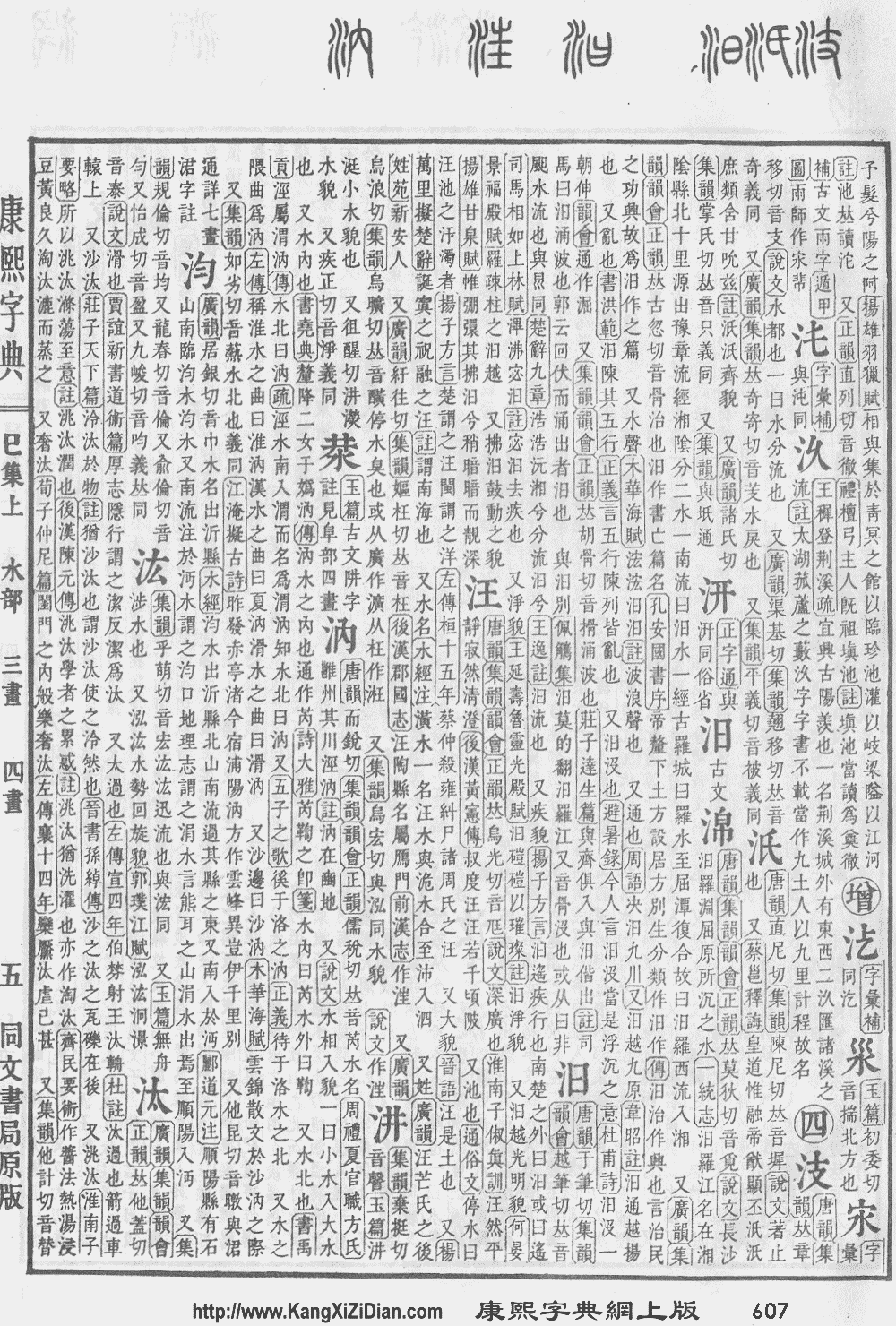
- Kangxi Dictionary: page 607, character 18
- Dai Kanwa Jiten: character 17160
- Dae Jaweon: page 1001, character 5
- Hanyu Da Zidian (first edition): volume 3, page 1560, character 6
- Unihan data for U+6C70
Chinese
| simp. and trad. |
汰 | |
|---|---|---|
| alternative forms | 汏 汱 溙 ancient | |
Glyph origin
Characters in the same phonetic series (大) (Zhengzhang, 2003)
Phono-semantic compound (形聲/形声, OC *tʰaːds) : semantic 氵 (“water”) + phonetic 太 (OC *tʰaːds).
Pronunciation
Definitions
汰
- to rinse; to wash away
- to discard; to eliminate through competition or selection
- arrogant
- 伯石之汰也,一為禮於晉,猶荷其祿。 [Classical Chinese, trad.]
- From: Commentary of Zuo, c. 4th century BCE, translation from Zuozhuan: Commentary on the "Spring and Autumn Annals" (2017), by Stephen Durrant, Wai-yee Li and David Schaberg
- Bóshí zhī tài yě, yī wéilǐ yú jìn, yóu hè qí lù. [Pinyin]
- As overreaching as he had been, Gongsun Duan [Boshi] nevertheless managed with one good performance of ritual in Jin to come away laden with rewards.
伯石之汰也,一为礼于晋,犹荷其禄。 [Classical Chinese, simp.]
- extravagant, excessive
- 皆所以示諸侯汰也,諸侯所由棄命也。今君以汰,無乃不濟乎? [Classical Chinese, trad.]
- From: Commentary of Zuo, c. 4th century BCE, translation from Zuozhuan: Commentary on the "Spring and Autumn Annals" (2017), by Stephen Durrant, Wai-yee Li and David Schaberg
- Jiē suǒyǐ shì zhūhóu tài yě, zhūhóu suǒyóu qì mìng yě. Jīn jūn yǐ tài, wú nǎi bùjì hū? [Pinyin]
- In each case the ceremonies became occasions on which they displayed their excesses to the princes and were the reason the princes ignored their commands. Now that you are acting excessively, is it not the case that you will fail to prevail?
皆所以示诸侯汰也,诸侯所由弃命也。今君以汰,无乃不济乎? [Classical Chinese, simp.]
Compounds
References
- “汰”, in 漢語多功能字庫 (Multi-function Chinese Character Database), 香港中文大學 (the Chinese University of Hong Kong), 2014–
- Dictionary of Chinese Character Variants (教育部異體字字典), A02147
Etymology 2
| For pronunciation and definitions of 汰 – see 汏 (“to rinse; to wash; great wave”). (This character, 汰, is a variant form of 汏). |
References
- 康熙字典網上版 Kangxi Dictionary Type-set Online Version, entry "汰" Quote:「又徒蓋切,音大。淅𤄒也,與汏同。」
Korean
Vietnamese
Han character
汰: Hán Việt readings: thái (
汰: Nôm readings: thảy[1][2][4][3][5][6], thãi[1][4][7][5], thải[1][7], sưởi[1], thẩy[4]
References
- Nguyễn (2014).
- Nguyễn et al. (2009).
- Bonet (1899).
- Trần (2004).
- Génibrel (1898).
- Taberd & Pigneau de Béhaine (1838).
- Hồ (1976).
This article is issued from Wiktionary. The text is licensed under Creative Commons - Attribution - Sharealike. Additional terms may apply for the media files.