甥
| ||||||||
Translingual
Han character
甥 (Kangxi radical 100, 生+7, 12 strokes, cangjie input 竹一田大尸 (HMWKS), four-corner 26127, composition ⿰生男)
References
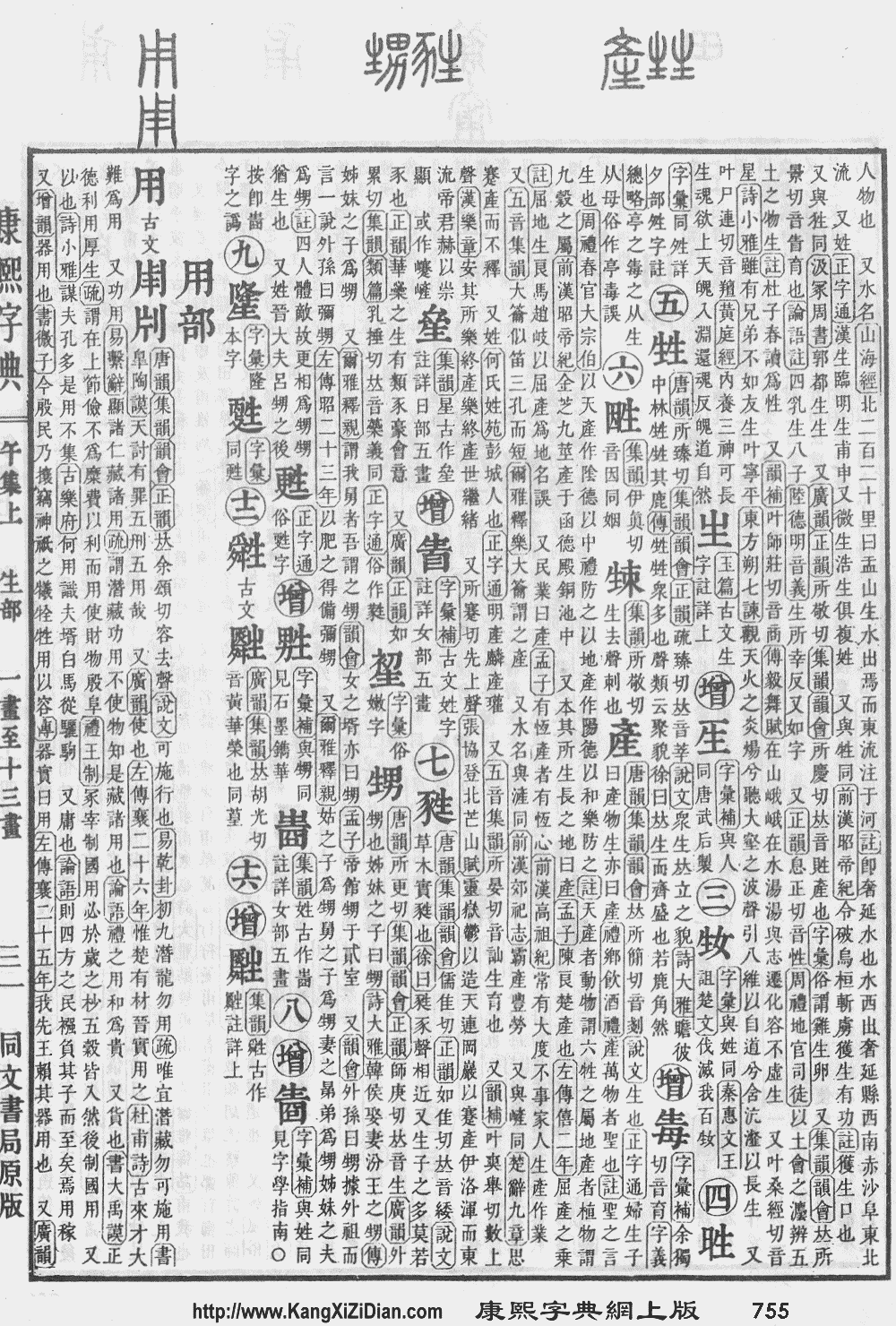
- Kangxi Dictionary: page 755, character 14
- Dai Kanwa Jiten: character 21689
- Dae Jaweon: page 1165, character 11
- Hanyu Da Zidian (first edition): volume 4, page 2578, character 5
- Unihan data for U+7525
Chinese
Lua error in Module:utilities at line 142: attempt to perform arithmetic on local 'h' (a nil value)
Glyph origin
| Old Chinese | |
|---|---|
| 猜 | *sʰlɯː |
| 輤 | *sʰleːns |
| 綪 | *sʰleːns, *ʔsreːŋ |
| 倩 | *sʰleːns, *sʰleŋs |
| 棈 | *sʰleːns |
| 蒨 | *sʰeːns |
| 篟 | *sʰeːns |
| 生 | *sʰleːŋ, *sreŋs |
| 牲 | *sreŋ |
| 笙 | *sreŋ |
| 甥 | *sreŋ |
| 鉎 | *sreŋ, *sleːŋ |
| 珄 | *sreŋ |
| 鼪 | *sreŋ, *sreŋs |
| 猩 | *sreŋ, *seːŋ |
| 狌 | *sreŋ |
| 眚 | *sreŋʔ |
| 貹 | *sreŋs |
| 崝 | *zreːŋ |
| 精 | *ʔsleŋ, *ʔsleŋs |
| 菁 | *ʔsleŋ |
| 鶄 | *ʔsleŋ, *sʰleːŋ |
| 蜻 | *ʔsleŋ, *sʰleːŋ |
| 鼱 | *ʔsleŋ |
| 婧 | *ʔsleŋ, *zleŋs, *zleŋʔ |
| 睛 | *ʔsleŋ, *sʰleŋʔ |
| 箐 | *ʔsleŋ |
| 聙 | *ʔsleŋ |
| 旌 | *ʔsleŋ |
| 清 | *sʰleŋ |
| 圊 | *sʰleŋ |
| 請 | *sʰleŋʔ, *zleŋs, *zleŋ |
| 凊 | *sʰleŋs |
| 䝼 | *zleŋs, *zleŋ |
| 靚 | *zleŋs |
| 情 | *zleŋ |
| 晴 | *zleŋ |
| 夝 | *zleŋ |
| 靜 | *zleŋʔ |
| 靖 | *zleŋʔ |
| 睲 | *seŋʔ, *seːŋs |
| 惺 | *seŋʔ, *seːŋ |
| 性 | *sleŋs |
| 姓 | *sleŋs |
| 靗 | *l̥ʰeŋs |
| 鯖 | *ʔljeŋ, *sʰleːŋ |
| 青 | *sʰleːŋ |
| 靘 | *sʰleːŋ, *sʰleːŋs |
| 掅 | *sʰleːŋs |
| 胜 | *sleːŋ |
| 曐 | *sleːŋ |
| 星 | *sleːŋ |
| 鮏 | *sleːŋ |
| 腥 | *seːŋ, *seːŋs |
| 鯹 | *seːŋ |
| 醒 | *seːŋ, *seːŋʔ, *seːŋs |
| 篂 | *seːŋ |
Etymology
From Proto-Sino-Tibetan *sriŋ (“sister”), related by Coblin (1986) to Proto-Sino-Tibetan *s-riŋ ~ s-r(j)aŋ (“to live; to be alive; to give birth; raw; green”).
Cognate with Tibetan སྲིང་མོ (sring mo), Kinnauri riŋz, Jangshung śiŋ, Chinese 生 (OC *sʰleːŋ, *sreŋs, “life, birth”) and 姓 (OC *sleŋs, “family name”).
Pronunciation
Synonyms
Lua error in Module:utilities at line 142: attempt to perform arithmetic on local 'h' (a nil value)
References
- “甥”, in 漢語多功能字庫 (Multi-function Chinese Character Database), 香港中文大學 (the Chinese University of Hong Kong), 2014–
Japanese
Readings
Lua error in Module:utilities at line 142: attempt to perform arithmetic on local 'h' (a nil value)
Etymology
| Kanji in this term |
|---|
| 甥 |
| おい Jinmeiyō |
| kun’yomi |
From Old Japanese, ultimately from Proto-Japonic *wopUi.
Attested in the Ryūnoshūge of 868 with the phonetic spelling 俗備 (⟨wopi2⟩).[1]
Antonyms
- 姪 (mei)
References
- Omodaka, Hisataka (1967) 時代別国語大辞典 上代編 [The dictionary of historical Japanese: Old Japanese] (in Japanese), →ISBN, page 839
- 1974, 新明解国語辞典 (Shin Meikai Kokugo Jiten), Second Edition (in Japanese), Tōkyō: Sanseidō
- 1998, NHK日本語発音アクセント辞典 (NHK Japanese Pronunciation Accent Dictionary) (in Japanese), Tōkyō: NHK, →ISBN
- 2006, 大辞林 (Daijirin), Third Edition (in Japanese), Tōkyō: Sanseidō, →ISBN
Korean
Etymology
(This etymology is missing or incomplete. Please add to it, or discuss it at the Etymology scriptorium. Particularly: “Middle Korean readings, if any”)
Pronunciation
- (SK Standard/Seoul) IPA(key): [sʰɛŋ] ~ [sʰe̞ŋ]
- Phonetic hangul: [생/셍]
Hanja
Wikisource 甥 (eumhun 생질 생 (saengjil saeng))
- This term needs a translation to English. Please help out and add a translation, then remove the text
{{rfdef}}.