疏
| ||||||||
Translingual
Alternative forms
- In mainland China (based on Xin Zixing character form), Japanese kanji, Korean hanja and Vietnamese Nôm, the upper right component 𠫓 is written ⿱亠厶 (4 strokes) while the bottom right stroke is written 乚 with an ending hook which is the historical form found in the Kangxi Dictionary.
- In Taiwan and Hong Kong (based on Big5 character form), the upper right component 𠫓 is written ⿻一厶 (3 strokes) while the bottom right stroke is written ㇄ without the ending hook.
Han character
疏 (Kangxi radical 103, 疋+7, 11 strokes in traditional Chinese, 12 strokes in mainland China and Japanese and Korean, cangjie input 弓一卜戈山 (NMYIU), four-corner 10113, composition ⿰𤴔㐬(GJKV) or ⿰𤴔⿱𠫓⿲丿丨㇄(HT))
Derived characters
- 𦠦, 蔬, 𩯕
Related characters
- 疎, 䟽, 踈 (Variant forms)
References
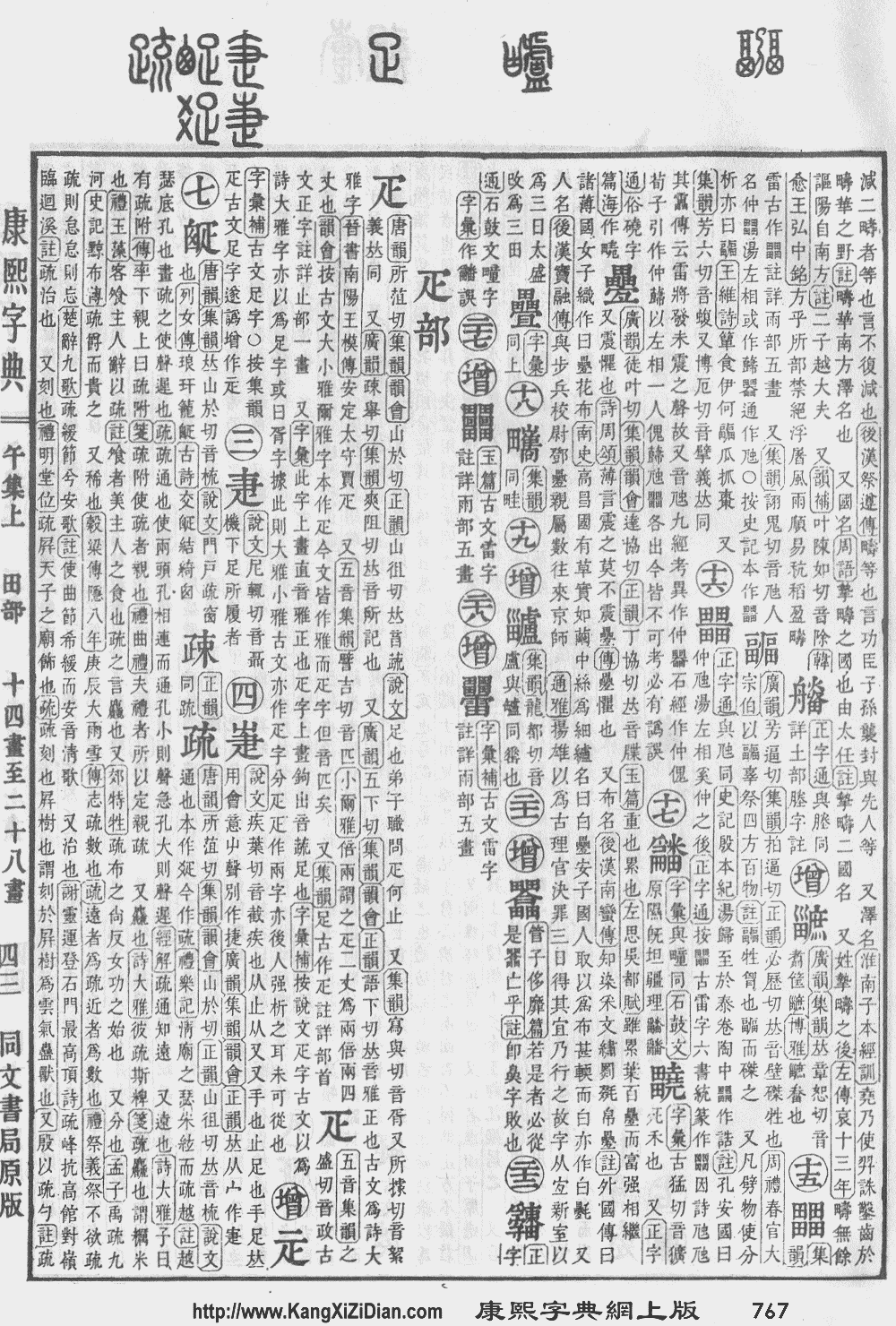
- Kangxi Dictionary: page 767, character 23
- Dai Kanwa Jiten: character 22000
- Dae Jaweon: page 1178, character 2
- Hanyu Da Zidian (first edition): volume 4, page 2750, character 2
- Unihan data for U+758F
Chinese
| trad. | 疏 | |
|---|---|---|
| simp. # | 疏 | |
| alternative forms | ||
Glyph origin
Characters in the same phonetic series (疋) (Zhengzhang, 2003)
Ideogrammic compound (會意/会意) and phono-semantic compound (形聲/形声, OC *sŋra, *sŋras) : phonetic 疋 (OC *ŋraːʔ, *sŋra, *sŋraʔ) + semantic 㐬.
Pronunciation 1
Definitions
疏
Compounds
- 上疏
- 交疏
- 人地兩疏/人地两疏
- 人地生疏 (réndìshēngshū)
- 仗義疏財/仗义疏财
- 凋疏
- 分疏
- 力薄才疏
- 反親疏/反亲疏
- 大疏脫/大疏脱
- 奏疏 (zòushū)
- 學淺才疏/学浅才疏
- 學疏才淺/学疏才浅
- 廣雅疏證/广雅疏证
- 弊衣疏食
- 德薄才疏
- 志大才疏 (zhìdàcáishū)
- 志廣才疏/志广才疏
- 意廣才疏/意广才疏
- 才疏學淺/才疏学浅 (cáishūxuéqiǎn)
- 才疏德薄
- 才疏志大
- 才疏意廣/才疏意广
- 才疏計拙/才疏计拙
- 扶疏
- 故疏
- 暗香疏影
- 書疏/书疏
- 朗目疏眉
- 材疏志大
- 枝葉扶疏/枝叶扶疏
- 清清疏疏
- 生疏 (shēngshū)
- 疏不謀親/疏不谋亲
- 疏不間親/疏不间亲
- 疏剌剌
- 疏勒 (Shūlè)
- 疏失 (shūshī)
- 疏宕不拘
- 疏導/疏导 (shūdǎo)
- 疏影
- 疏忽
- 疏慵
- 疏慵愚鈍/疏慵愚钝
- 疏懶/疏懒 (shūlǎn)
- 疏放
- 疏散
- 疏於/疏于 (shūyú)
- 疏於職守/疏于职守
- 疏水簞瓢/疏水箪瓢
- 疏洪道
- 疏浚 (shūjùn)
- 疏漏 (shūlòu)
- 疏濬 (shūjùn)
- 疏瀹
- 疏狂
- 疏率 (shūshuài)
- 疏理 (shūlǐ)
- 疏疏
- 疏神
- 疏糲/疏粝
- 疏網/疏网
- 疏而不漏
- 疏落 (shūluò)
- 疏蕪/疏芜
- 疏虞
- 疏解
- 疏謀少略/疏谋少略
- 疏財/疏财 (shūcái)
- 疏財仗義/疏财仗义 (shūcái zhàngyì)
- 疏財尚氣/疏财尚气
- 疏財重義/疏财重义
- 疏通 (shūtōng)
- 疏遠/疏远 (shūyuǎn)
- 疏野
- 疏闊/疏阔
- 疏隔
- 疏離/疏离 (shūlí)
- 疏離感/疏离感
- 疏食 (shūshí)
- 疏食飲水/疏食饮水
- 疏鬆/疏松 (shūsōng)
- 百密一疏 (bǎimìyīshū)
- 禁網疏闊/禁网疏阔
- 稀疏 (xīshū)
- 稀稀疏疏
- 空疏 (kōngshū)
- 空疏無據/空疏无据
- 競今疏古/竞今疏古
- 粗疏 (cūshū)
- 綺疏/绮疏
- 綱目不疏/纲目不疏
- 網目不疏/网目不疏
- 花木扶疏
- 荒疏 (huāngshū)
- 蕭疏/萧疏 (xiāoshū)
- 褐衣疏食
- 親極反疏/亲极反疏
- 親疏/亲疏 (qīnshū)
- 親疏遠近/亲疏远近
- 通疏
- 麤疏/粗疏
- 龍疏/龙疏
Pronunciation 2
Japanese
Kanji
疏
(“Jinmeiyō” kanji used for names)
- This term needs a translation to English. Please help out and add a translation, then remove the text
{{rfdef}}.
Readings
Korean
Hanja
疏 • (so) (hangeul 소, revised so, McCune–Reischauer so, Yale so)
- This term needs a translation to English. Please help out and add a translation, then remove the text
{{rfdef}}.
Vietnamese
Han character
疏: Hán Việt readings: sớ[1][2][3], sơ[3]
疏: Nôm readings: sơ[2][3][4], sớ[1][2], sờ[3][4], sưa[4], xơ[4], xờ[4]
- This term needs a translation to English. Please help out and add a translation, then remove the text
{{rfdef}}.
References
- Nguyễn (2014).
- Nguyễn et al. (2009).
- Trần (2004).
- Hồ (1976).
This article is issued from Wiktionary. The text is licensed under Creative Commons - Attribution - Sharealike. Additional terms may apply for the media files.