癆
| ||||||||
Translingual
| Traditional | Lua error in Module:utilities at line 142: attempt to perform arithmetic on local 'h' (a nil value) |
|---|---|
| Shinjitai (extended) |
𭼎 |
| Simplified | 痨 |
Han character
癆 (Kangxi radical 104, 疒+12, 17 strokes, cangjie input 大火火尸 (KFFS), four-corner 00127, composition ⿸疒勞)
References
- Kangxi Dictionary: page 780, character 32
- Dai Kanwa Jiten: character 22512
- Dae Jaweon: page 1190, character 11
- Hanyu Da Zidian (first edition): volume 4, page 2698, character 10
- Unihan data for U+7646
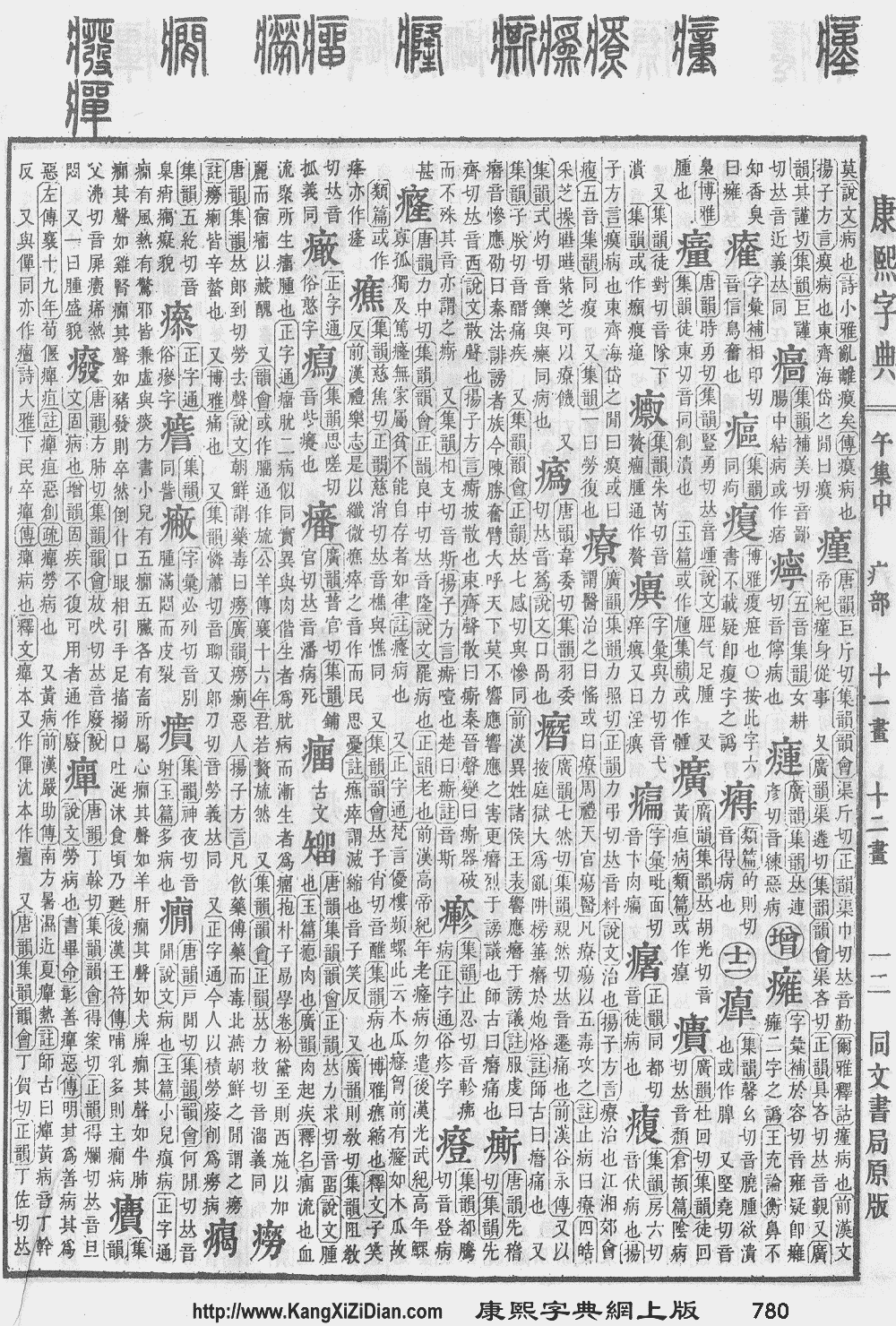
Chinese
Glyph origin
Phono-semantic compound (形聲/形声, OC *raːw, *raːw, *raːws) : semantic 疒 (“sickness”) + phonetic 勞 (OC *raːw, *raːws).
Etymology 1
Lua error in Module:utilities at line 142: attempt to perform arithmetic on local 'h' (a nil value) From 勞 (OC *raːw, *raːws, “to toil”) (Wang, 1982).
Pronunciation
Definitions
癆
- (traditional Chinese medicine) internal injury caused by overstraining
- tuberculosis; pulmonary tuberculosis
- (Southwestern Mandarin, dialectal Gan) to have an upset stomach because of the lack of fats in one's diet; to crave meat
- (Xiang, of plants) to wither (in the sun)
- (Xiang, of a person) to be dispirited; depressed
Compounds
Etymology 2
Lua error in Module:utilities at line 142: attempt to perform arithmetic on local 'h' (a nil value) Possibly related to 療 (OC *rews, “to cure”) (Schuessler, 2007). Compare ancient Chu dialect 瘌 (OC *raːd, “to be poisoned by medication”). Cognate to Mizo ru (“bark, roots, leaves or fruit which can be used to poison fish”), Jingpho mə-rau (“fishing by stupefying fish by poisonous vines”), Burmese ရိုး (rui:, “fish poison”) (Starostin).
Pronunciation
Definitions
癆
- (ancient Northern Yan and Joseon region) to be poisoned (by medication)
- (Jianghuai Mandarin, Southwestern Mandarin, Gan, Xiang, transitive) to poison
- † painful
Japanese
| 𭼎 | |
| Lua error in Module:utilities at line 142: attempt to perform arithmetic on local 'h' (a nil value) |
Kanji
- This term needs a translation to English. Please help out and add a translation, then remove the text
{{rfdef}}.
Readings
- Go-on: ろう (rō)←らう (rau, historical)
- Kan-on: ろう (rō)←らう (rau, historical)
- Kun: いたむ (itamu, 癆む)