織
See also: 织
| ||||||||
Translingual
Han character
織 (Kangxi radical 120, 糸+12, 18 strokes, cangjie input 女火卜戈日 (VFYIA), four-corner 23950, composition ⿰糹戠)
References
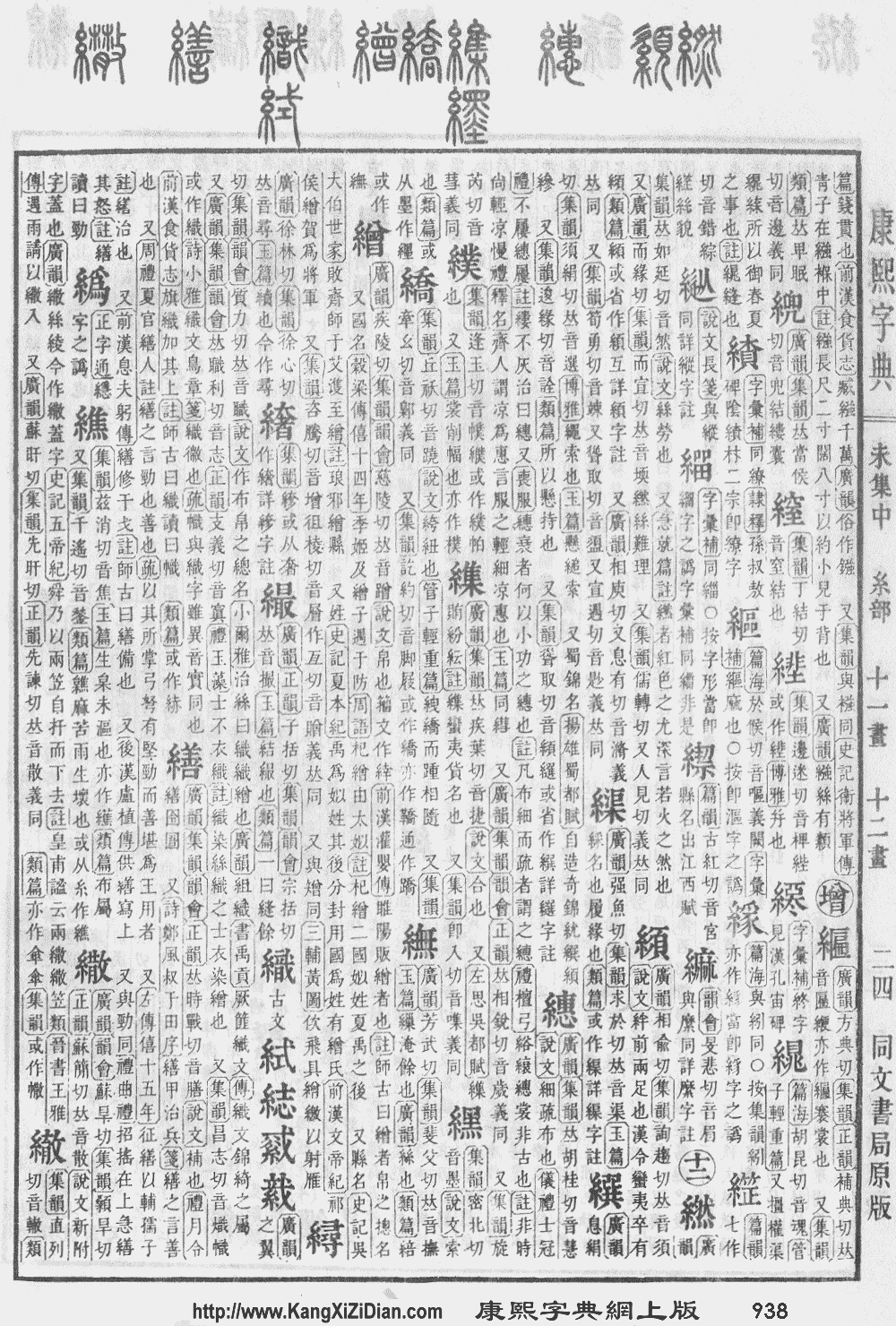
- Kangxi Dictionary: page 938, character 29
- Dai Kanwa Jiten: character 27892
- Dae Jaweon: page 1377, character 28
- Hanyu Da Zidian (first edition): volume 5, page 3453, character 17
- Unihan data for U+7E54
Chinese
Lua error in Module:utilities at line 142: attempt to perform arithmetic on local 'h' (a nil value)
Glyph origin
| Historical forms of the character 織 | ||
|---|---|---|
| Shang | Shuowen Jiezi (compiled in Han) | Liushutong (compiled in Ming) |
| Oracle bone script | Small seal script | Transcribed ancient scripts |
 |
 |
 |
Characters in the same phonetic series (戠) (Zhengzhang, 2003)
Phono-semantic compound (形聲/形声, OC *tjɯɡs, *tjɯɡ) : semantic 糸 (“silk”) + phonetic 戠 (OC *tjɯɡ).
Etymology
From Proto-Sino-Tibetan *tak ~ dak (“to weave”).
Pronunciation
Synonyms
- (to alternate)
Compounds
- 不織布/不织布 (bùzhībù)
- 交織/交织 (jiāozhī)
- 交織線/交织线
- 促織/促织 (cùzhī)
- 女織男耕/女织男耕
- 孟母斷織/孟母断织
- 廢學如斷織/废学如断织
- 往來如織/往来如织
- 心織筆耕/心织笔耕
- 愛恨交織/爱恨交织
- 拔葵去織/拔葵去织
- 斷織/断织
- 棉織品/棉织品
- 毛織品/毛织品 (máozhīpǐn)
- 毛織物/毛织物 (máozhīwù)
- 牛郎織女/牛郎织女
- 牽牛織女/牵牛织女
- 男耕女織/男耕女织 (nángēngnǚzhī)
- 紡織/纺织 (fǎngzhī)
- 組織/组织 (zǔzhī)
- 絲織品/丝织品 (sīzhīpǐn)
- 編織/编织 (biānzhī)
- 織女/织女 (zhīnǚ)
- 織女星/织女星 (Zhīnǚxīng)
- 織布/织布 (zhībù)
- 織布娘/织布娘
- 織布機/织布机 (zhībùjī)
- 織席編屨/织席编屦
- 織成/织成
- 織物/织物 (zhīwù)
- 織田信長/织田信长
- 織畫/织画
- 織綜/织综
- 織蓆/织席 (zhīxí)
- 織補/织补 (zhībǔ)
- 織造/织造
- 織錦/织锦 (zhījǐn)
- 織錦緞/织锦缎
- 織錦迴文/织锦回文
- 羅織/罗织 (luózhī)
- 耕織/耕织
- 蝦蟆促織兒/虾蟆促织儿
- 觀者如織/观者如织
- 迴文織錦/回文织锦
- 遊客如織/游客如织
- 針織/针织 (zhēnzhī)
- 針織品/针织品 (zhēnzhīpǐn)
- 鉤索羅織/钩索罗织
- 麻織品/麻织品
Japanese
| Shinjitai | 織 | |
| Kyūjitai [1][2] |
織󠄂 織+ 󠄂?(Hanyo-Denshi) (Moji_Joho) |
 |
| The displayed kanji may be different from the image due to your environment. See here for details. | ||
Readings
From Middle Chinese 織 (MC tsyik); compare Lua error in Module:utilities at line 142: attempt to perform arithmetic on local 'h' (a nil value):
From Middle Chinese 織 (MC tsyiH); compare Lua error in Module:utilities at line 142: attempt to perform arithmetic on local 'h' (a nil value):
From native Japanese roots:
Etymology
| Kanji in this term |
|---|
| 織 |
| おり Grade: 5 |
| kun’yomi |
| For pronunciation and definitions of 織 – see the following entry. | ||
| ||
| (This term, 織, is an alternative spelling of the above term.) |
Korean
Hanja
織 • (jik) (hangeul 직, revised jik, McCune–Reischauer chik, Yale cik)
- This term needs a translation to English. Please help out and add a translation, then remove the text
{{rfdef}}.
Vietnamese
This article is issued from Wiktionary. The text is licensed under Creative Commons - Attribution - Sharealike. Additional terms may apply for the media files.