腋
| ||||||||
Translingual
Han character
腋 (Kangxi radical 130, 肉+8, 12 strokes, cangjie input 月卜人大 (BYOK), four-corner 70247, composition ⿰月夜)
References
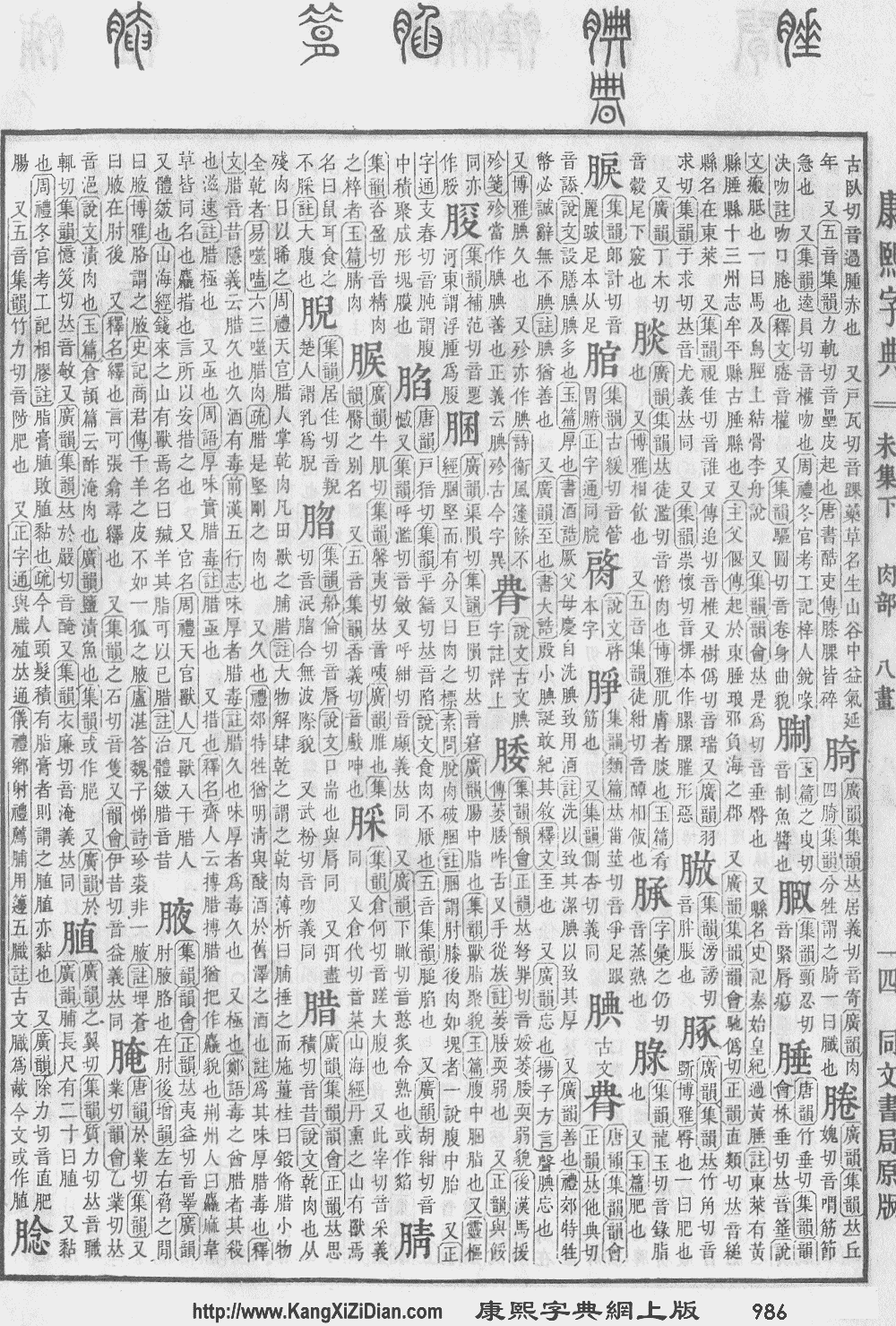
- Kangxi Dictionary: page 986, character 28
- Dai Kanwa Jiten: character 29615
- Dae Jaweon: page 1439, character 7
- Hanyu Da Zidian (first edition): volume 3, page 2090, character 5
- Unihan data for U+814B
Chinese
Lua error in Module:utilities at line 142: attempt to perform arithmetic on local 'h' (a nil value)
Glyph origin
Phono-semantic compound (形聲/形声, OC *laːɡ) : semantic 肉 (“flesh”) + phonetic 夜 (OC *laːɡs).
Originally written 亦, see there for more.
Etymology
From Proto-Sino-Tibetan *lak ~ *C-jak (“arm; hand; wing”), either via *jak (STEDT; Schuessler, 2007) or *lak (Shi, 2000; Handel, 2009). Compare Mizo zak (“armpit”), Tibetan ལག་པ (lag pa, “arm; hand”), Burmese လက် (lak, “arm; hand”).
Pronunciation
Synonyms
Lua error in Module:utilities at line 142: attempt to perform arithmetic on local 'h' (a nil value)
Japanese
Readings
Lua error in Module:utilities at line 142: attempt to perform arithmetic on local 'h' (a nil value)
Korean
Etymology
From Middle Chinese 腋 (MC yek). Recorded as Middle Korean ᄋᆡᆨ〮 (óyk) (Yale: óyk) in Hunmong Jahoe (訓蒙字會 / 훈몽자회), 1527.
Pronunciation
- (SK Standard/Seoul) IPA(key): [ɛk̚] ~ [e̞k̚]
- Phonetic hangul: [액/엑]