舐
| ||||||||
Translingual
Han character
舐 (Kangxi radical 135, 舌+4, 10 strokes, cangjie input 竹口竹女心 (HRHVP), four-corner 22640, composition ⿰舌氏)
References
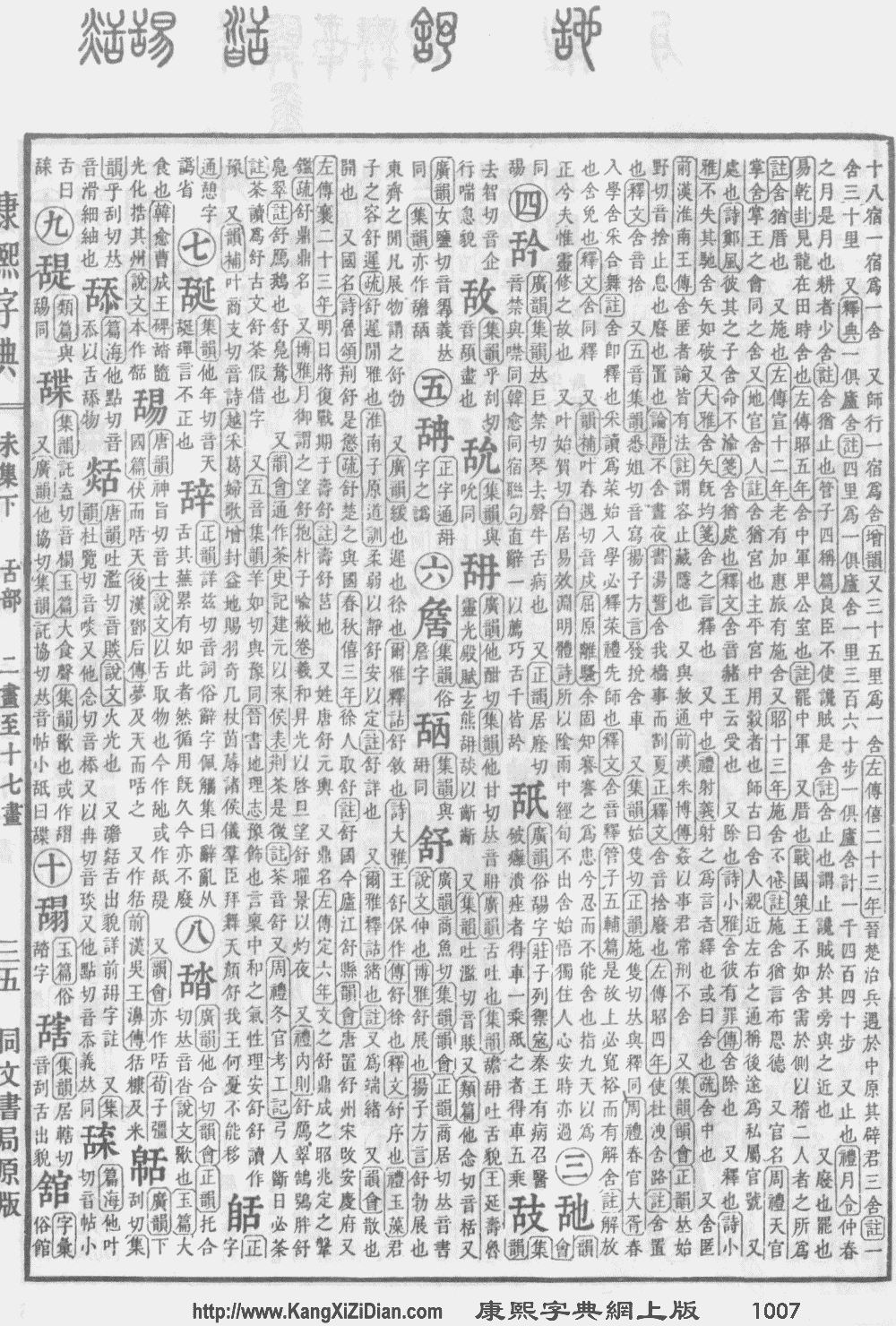
- Kangxi Dictionary: page 1007, character 3
- Dai Kanwa Jiten: character 30283
- Dae Jaweon: page 1464, character 5
- Hanyu Da Zidian (first edition): volume 5, page 2943, character 7
- Unihan data for U+8210
Chinese
Lua error in Module:utilities at line 142: attempt to perform arithmetic on local 'h' (a nil value)
Glyph origin
Phono-semantic compound (形聲/形声, OC *ɦljeʔ) : semantic 舌 + phonetic 氏 (OC *skeŋ, *kje, *ɡjeʔ).
The glyphs recorded in Shuowen are 舓 (shì) (with phonetic 易 (OC *leːɡs, *leɡ)) and 𦧇 (with phonetic 也 (OC *laːlʔ)).
Etymology 1
From Proto-Sino-Tibetan *m/s/g-ljak (“to lick; tongue”). The Cantonese vernacular reading laai2 preserves the Old Chinese initial *l-.
Pronunciation
Synonyms
Lua error in Module:utilities at line 142: attempt to perform arithmetic on local 'h' (a nil value)
Etymology 2
Lua error in Module:utilities at line 142: attempt to perform arithmetic on local 'h' (a nil value)
Pronunciation
References
- (Cantonese) 粵音資料集叢
- “舐”, in 漢語多功能字庫 (Multi-function Chinese Character Database), 香港中文大學 (the Chinese University of Hong Kong), 2014–
Japanese
Kanji
- This term needs a translation to English. Please help out and add a translation, then remove the text
{{rfdef}}.
Korean
Hanja
舐 (eum 지 (ji))
- This term needs a translation to English. Please help out and add a translation, then remove the text
{{rfdef}}.
Vietnamese
Han character
舐: Hán Nôm readings: liếm, thỉ
- This term needs a translation to English. Please help out and add a translation, then remove the text
{{rfdef}}.