采
| ||||||||
Translingual
Han character
采 (Kangxi radical 165, 釆+1, 8 strokes, cangjie input 月木 (BD), four-corner 20904, composition ⿱爫木)
Derived characters
References
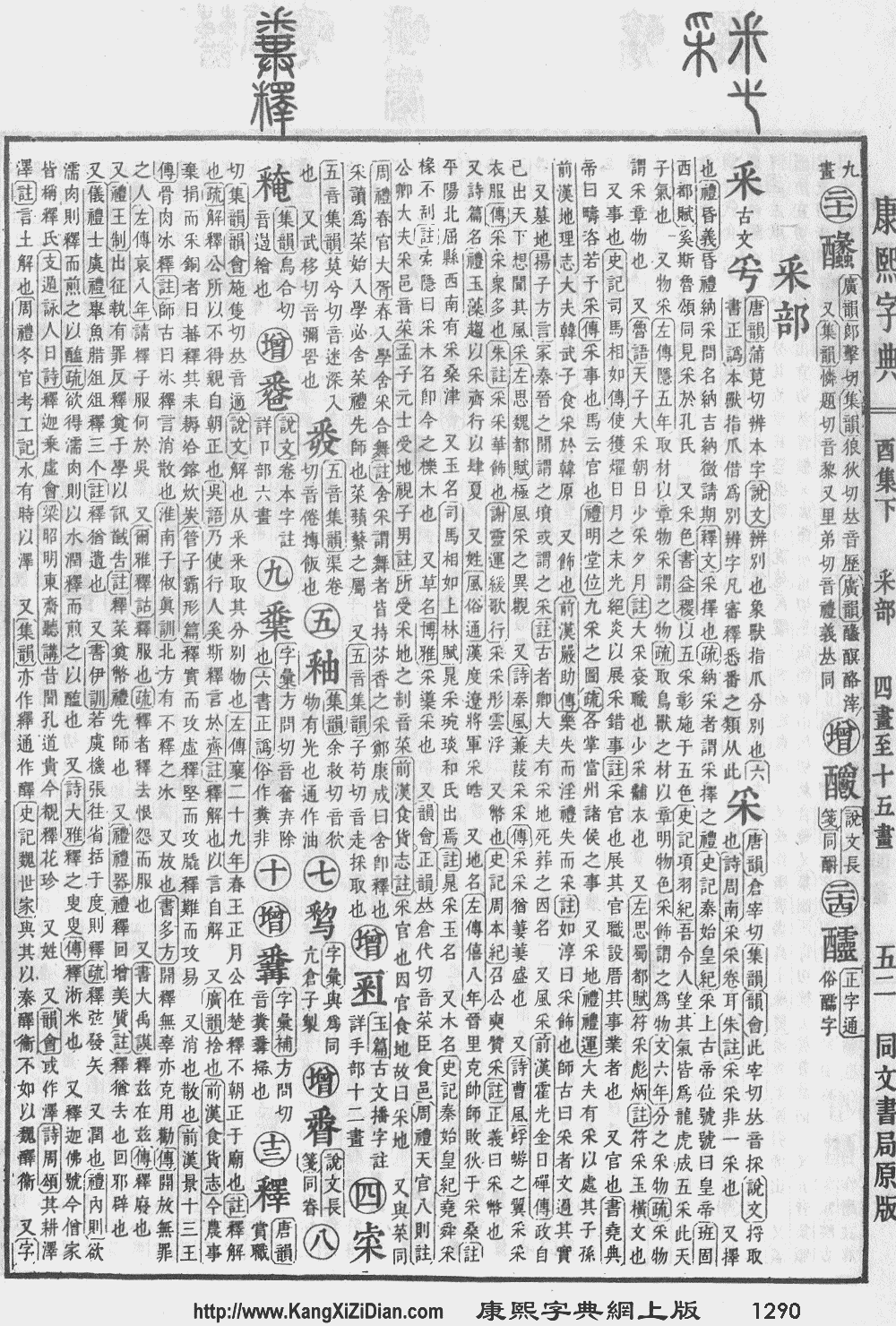
- Kangxi Dictionary: page 1290, character 6
- Dai Kanwa Jiten: character 40116
- Dae Jaweon: page 1790, character 9
- Hanyu Da Zidian (first edition): volume 6, page 3898, character 2
- Unihan data for U+91C7
Chinese
| simp. and trad. |
采 | |
|---|---|---|
Glyph origin
| Historical forms of the character 采 | |||
|---|---|---|---|
| Shang | Western Zhou | Shuowen Jiezi (compiled in Han) | Liushutong (compiled in Ming) |
| Oracle bone script | Bronze inscriptions | Small seal script | Transcribed ancient scripts |
 |
 |
 |
 |
Characters in the same phonetic series (采) (Zhengzhang, 2003)
Ideogrammic compound (會意/会意) . Two forms can be found in oracle bone script:
- 爪 (“hand”) + 果 (“fruit”) – a hand (爪) picking fruits from a tree (果 (guǒ)).
- 爪 (“hand”) + 木 (“tree”) – a hand (爪) picking from a tree (木 (mù)).
The current glyph is of composition 2.
Etymology 1
Uncertain. Several etymologies have been proposed:
- From Proto-Sino-Tibetan *tsa-n (“child; grandchild; nephew; niece”), whence Tibetan བཙའ (btsa', “to fruit, bear, bring forth”), བཙས (btsas, “to harvest, to reap”), possibly as well as 才 (OC *zlɯː, *zlɯːs), 子 (OC *ʔslɯʔ) (STEDT; Schuessler, 2007);
- Related to Tibetan ཚོད་མ (tshod ma, “vegetables”) (Schuessler, 2007);
- Related to 穡 (OC *s.rək, “to reap; harvest”) (Baxter, 1992; Sagart, 1999; Baxter and Sagart, 2014).
Pronunciation 1
Definitions
采
- to pick; to pluck; to gather; to collect
- to pick; to choose; to select
- to mine; to dig
- to drag; to pull
- color
- colored silk
- literary talent
- luster
- alt. forms: 彩 (cǎi)
- beautiful in words but poor in content; using colorful language to cover up flaws
- expression; spirit; complexion
- wager; stake
- alt. forms: 彩 (cǎi)
- lucky (in gambling)
- alt. forms: 彩 (cǎi)
- oak
- alt. forms: 棌
- 采椽 ― cǎichuán ― oak
- to heed; to pay attention to
- official position
- vine; creeper
- (Can we verify(+) this sense?) thing
- to exploit; to gain
- to accept
- currency
- tomb
- a surname
Compounds
- 下采
- 不大精采
- 不討采/不讨采
- 不采
- 丰采 (fēngcǎi)
- 五采
- 偢采
- 儷采/俪采
- 光采 (guāngcǎi)
- 喝倒采 (hèdàocǎi)
- 喝采 (hècǎi)
- 多姿多采
- 多采多姿 (duōcǎi-duōzī)
- 大放異采/大放异采
- 大采
- 尼采 (Nícǎi)
- 展采
- 干名采譽/干名采誉
- 得采
- 情采
- 捋采
- 文采 (wéncǎi)
- 文采風流/文采风流
- 有采
- 樵采 (qiáocǎi)
- 氣揚采飛/气扬采飞
- 沒精打采/没精打采 (méijīngdǎcǎi)
- 沒采/没采
- 無精打采/无精打采 (wújīngdǎcǎi)
- 異采/异采 (yìcǎi)
- 發采揚明/发采扬明
- 神采 (shéncǎi)
- 神采奕奕 (shéncǎi yìyì)
- 神采奕然
- 神采煥發/神采焕发
- 神采英拔
- 神采飛揚/神采飞扬 (shéncǎifēiyáng)
- 神采駿發/神采骏发
- 符采
- 精采 (jīngcǎi)
- 精采絕倫/精采绝伦
- 納采/纳采
- 結采/结采
- 興高采烈/兴高采烈 (xìnggāocǎiliè)
- 舉手可采/举手可采
- 葑菲之采
- 藍采和/蓝采和
- 蟠采
- 衣不兼采
- 衣不完采
- 衣不重采
- 褒采一介
- 詞采/词采
- 辭采/辞采
- 采光剖璞
- 采女 (cǎinǚ)
- 采椽
- 采椽不斲
- 采石之役
- 采石磯/采石矶
- 采綠/采绿
- 采緝/采缉
- 采聲/采声
- 采色 (cǎisè)
- 采芑
- 采芹
- 采苓
- 采菽
- 采葛
- 采薇 (cǎiwéi)
- 采薪之憂/采薪之忧
- 采薪之疾
- 采蘋/采苹
- 采蘩
- 采蘭贈芍/采兰赠芍
- 采詩/采诗 (cǎishī)
- 采采
- 采頭/采头
- 采風/采风 (cǎifēng)
- 采風錄/采风录
- 鏤金錯采/镂金错采
- 風采/风采 (fēngcǎi)
- 風采堂堂/风采堂堂
- 鹿門采藥/鹿门采药
Pronunciation 2
Etymology 2
| For pronunciation and definitions of 采 – see 採 (“to pick; to pluck; to select; to choose; to pick; etc.”). (This character, 采, is the simplified form of 採). |
Notes:
|
Etymology 3
| For pronunciation and definitions of 采 – see 彩 (“variegated colors; rich and bright colors; etc.”). (This character, 采, is the second-round simplified form of 彩). |
Notes:
|
References
- “采”, in 漢語多功能字庫 (Multi-function Chinese Character Database), 香港中文大學 (the Chinese University of Hong Kong), 2014–
Japanese
| Shinjitai | 采 | |
| Kyūjitai [1] |
采󠄁 采+ 󠄁?(Adobe-Japan1) |
 |
| 采󠄃 采+ 󠄃?(Hanyo-Denshi) (Moji_Joho) | ||
| The displayed kanji may be different from the image due to your environment. See here for details. | ||
Readings
References
- 1914, 漢和大辭書 (Kanwa Dai Jisho, “The Great Kanji-Japanese Dictionary”) (in Japanese), page 2163 (paper), page 1133 (digital), Tōkyō: 興文社 (Kōbunsha)
- 2011, 新明解国語辞典 (Shin Meikai Kokugo Jiten), Seventh Edition (in Japanese), Tōkyō: Sanseidō, →ISBN
- 2006, 大辞林 (Daijirin), Third Edition (in Japanese), Tōkyō: Sanseidō, →ISBN
Korean
Hanja
采 • (chae) (hangeul 채, revised chae, McCune–Reischauer ch'ae, Yale chay)
- This term needs a translation to English. Please help out and add a translation, then remove the text
{{rfdef}}.
This article is issued from Wiktionary. The text is licensed under Creative Commons - Attribution - Sharealike. Additional terms may apply for the media files.