鵰
| ||||||||
Translingual
Han character
鵰 (Kangxi radical 196, 鳥+8, 19 strokes, cangjie input 月口竹日火 (BRHAF), four-corner 77227, composition ⿰周鳥)
References
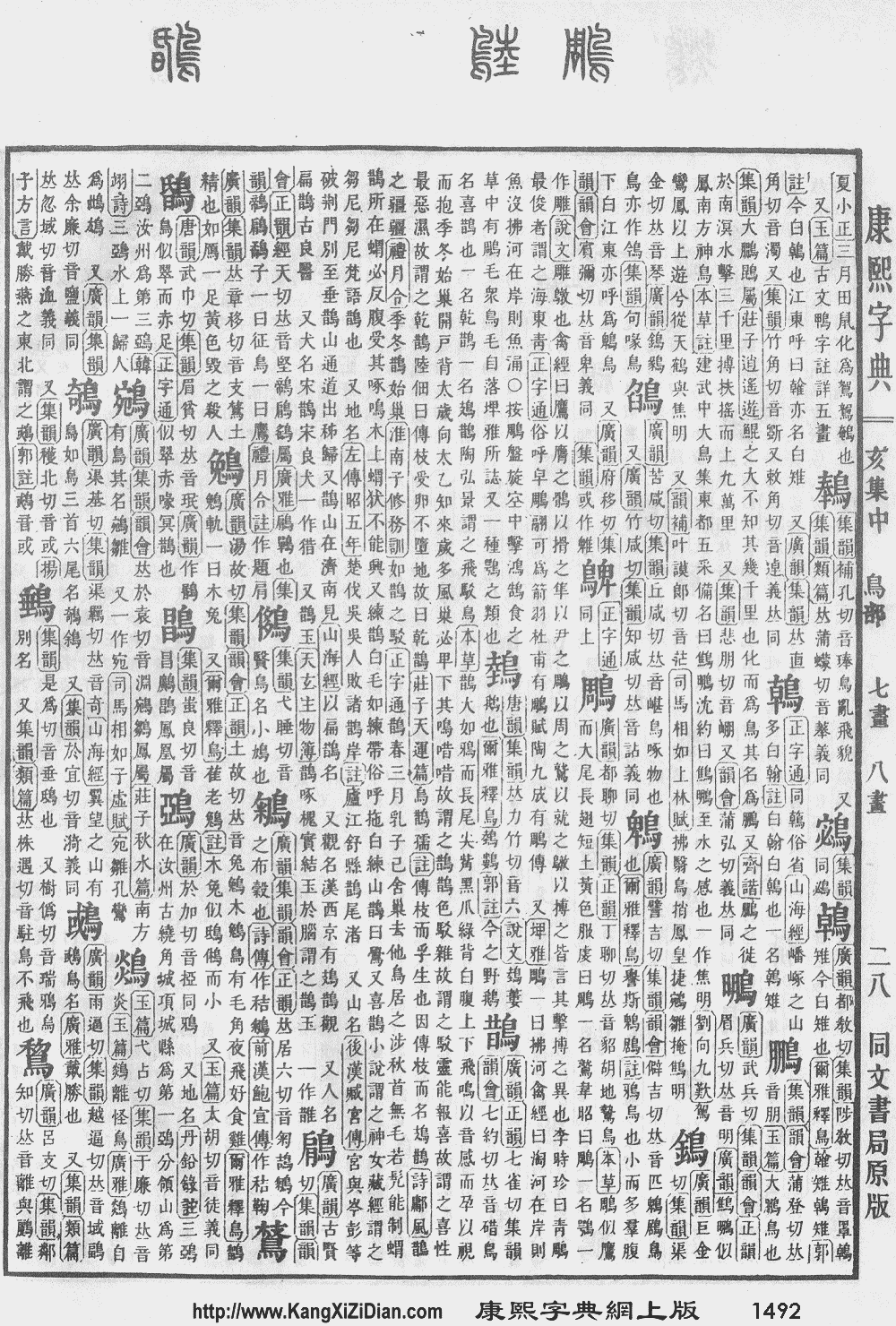
- Kangxi Dictionary: page 1492, character 11
- Dai Kanwa Jiten: character 47012
- Dae Jaweon: page 2022, character 20
- Hanyu Da Zidian (first edition): volume 7, page 4642, character 1
- Unihan data for U+9D70
Chinese
| trad. | 鵰/雕* | |
|---|---|---|
| simp. | 雕* | |
| 2nd round simp. | ⿰刁鸟 | |
| nonstandard simp. | 𫛲 | |
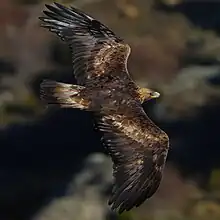
鵰/雕
Etymology
From Proto-Sino-Tibetan *daw (“bird”); cognate with 鳥 (OC *tɯːwʔ) (STEDT).
Pronunciation
Descendants
References
- “鵰”, in 漢語多功能字庫 (Multi-function Chinese Character Database), 香港中文大學 (the Chinese University of Hong Kong), 2014–
Japanese
Readings
Korean
Etymology
(This etymology is missing or incomplete. Please add to it, or discuss it at the Etymology scriptorium. Particularly: “Middle Korean readings, if any”)
Pronunciation
- (SK Standard/Seoul) IPA(key): [t͡ɕo̞]
- Phonetic hangul: [조]
This article is issued from Wiktionary. The text is licensed under Creative Commons - Attribution - Sharealike. Additional terms may apply for the media files.