𤆬
| ||||||||
Translingual
Han character
𤆬 (Kangxi radical 86, 火+4, 8 strokes, cangjie input 竹山火 (HUF), composition ⿱毛灬)
Derived characters
- 𢯁, 𢉐
References
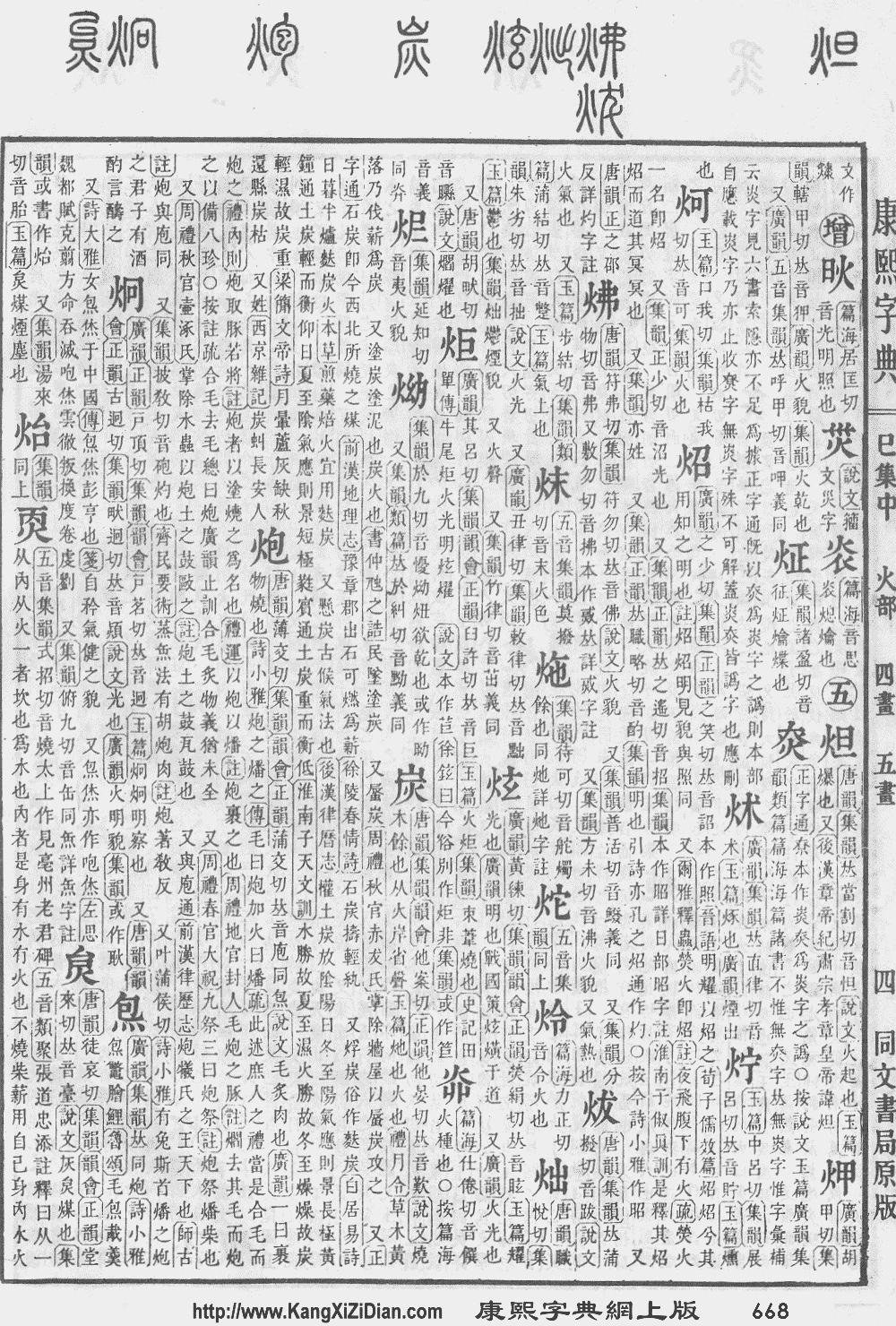
- Kangxi Dictionary: not present, would follow page 668, character 3
- Unihan data for U+241AC
Chinese
Lua error in Module:utilities at line 142: attempt to perform arithmetic on local 'h' (a nil value)
Glyph origin
Created for Hokkien. Ngô͘ Siú-lé (吳守禮) suggests that it is an ideogrammic compound (會意/会意) : 毛 (“feathers (representing the feathers of a mother hen)”) + 灬 (“four dots (representing four chicks)”) — a mother hen leading and protecting four chicks under her feathers.
Etymology
Possibly from 曳 (OC *leds, “to drag”) (Lin, 1999; Yang, 2000; Tu, 2019) or 抴 (OC *lebs, “to pull”) (Tu, 2019).
Also compare 逝 (chōa, “path”) (Ong, 2023).
Pronunciation
Definitions
𤆬
- (Min Nan, Puxian Min) to lead; to guide
- 耶和華行佇𪜶的頭前,日時佇雲柱中𤆬𪜶的路,暝時佇火柱中光照𪜶;予𪜶日暝攏通行。 [Hokkien, trad.]
- From: 巴克禮譯本 (Barclay Amoy Romanized Bible), 出埃及記 (Exodus) 13:21
- Iâ-hô-hoa kiâⁿ tī in ê thâu-chêng, ji̍t--sî tī hûn-thiāu-tiong chhōa in ê lō͘, mî--sî tī hé-thiāu-tiong kng-chiò in; hō͘ in ji̍t-mî lóng thang kiâⁿ. [Pe̍h-ōe-jī]
- And the Lord went before them by day in a pillar of a cloud, to lead them the way; and by night in a pillar of fire, to give them light; to go by day and night.
耶和华行伫𪜶的头前,日时伫云柱中𤆬𪜶的路,暝时伫火柱中光照𪜶;予𪜶日暝拢通行。 [Hokkien, simp.]
- (Min Nan, chiefly Teochew, Leizhou Min) to cause; to lead someone to do something
- (Hokkien, Teochew, of a man) to marry; to take a wife
- 爾我費了許多心 想𡥘媳婦過門庭 [Teochew, trad.]
- From: Late Qing/early Republic, anonymous, 古板三合奇巧奇緣全歌 book 1 page 4
- le2 ua2 hui3 liou2 he2 do1 sim1, siên6 cua7 sêg4 hu6 guê3 mung5 têng5 [Peng'im]
- You and I have had our hearts set upon [our son] bringing a daughter-in-law across the threshold
尔我费了许多心 想𡥘媳妇过门庭 [Teochew, simp.]
- Synonym: 娶
- (Hokkien) to take care of; to bring up; to nurture
- 𤆬囡仔 [Hokkien] ― chhōa gín-á [Pe̍h-ōe-jī] ― to take care of a child; to babysit
- (Taiwanese Hokkien) to lure; to kidnap
Usage notes
- In Mandarin, this word is only used in names, such as 𤆬治 (chhōa-tī in Min Nan, homophone of 𤆬弟, "to lead to a brother"), given to girls to lead to the birth of a son.
Synonyms
Lua error in Module:utilities at line 142: attempt to perform arithmetic on local 'h' (a nil value)
Compounds
References
- “Entry #13511”, in 臺灣閩南語常用詞辭典 [Dictionary of Frequently-Used Taiwan Minnan] (in Chinese and Min Nan), Ministry of Education, R.O.C., 2023.
- “(#)”, in 臺灣閩南語按呢寫, Ministry of Education, R.O.C., 2013.
- 劉建仁 (2011-02-27), “帶路雞(ts‘ua⊦-lɔ⊦-ke )──(台灣習俗之一)”, in 台灣話的語源與理據 (in Chinese), retrieved 2019-05-26
This article is issued from Wiktionary. The text is licensed under Creative Commons - Attribution - Sharealike. Additional terms may apply for the media files.