sich
English
.jpg.webp)
Etymology 1
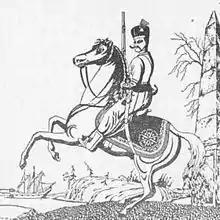
Borrowed from Ukrainian Січ (Sič), from Ukrainian сікти (sikty, “to chop”), alluding to the clearing of a forest for an encampment, or the building of a fort with trees that have been cut down.[1]
Pronunciation
- IPA(key): /siːt͡ʃ/
Audio (Southern England) (file)
- Rhymes: -iːtʃ
Noun
- (historical) An administrative and military centre for the Zaporozhian and Danube Cossacks.
Translations
References
- Dmytro Yavornytsky; Ivan Svarnyk, transl. (1892), L. L. Kiriyenko, editor, Історія Запорізьких Козаків, у трьох томах [History of the Zaporozhian Cossacks, in Three Volumes] (in Ukrainian), volume 1, Lviv: Видавництво "Світ" ["Svit" Publishing House], →ISBN.

Adjective
sich (not comparable)
- Pronunciation spelling of such.
- (Can we find and add a quotation of Rudyard Kipling to this entry?)
German
Etymology
From Lua error in Module:utilities at line 142: attempt to perform arithmetic on local 'h' (a nil value), from Old High German sih, from Proto-Germanic *sek. Compare Yiddish זיך (zikh), Dutch zich.
This pronoun was originally restricted to the accusative case, while simple personal pronouns were used in the dative. Dative use of sich in Middle High German was restricted to northern dialects of Central German. In Early Modern German, a rare dative sir also occurred, formed by analogy with mir, dir. An obstacle to the generalisation of this form was the use of sich in the plural, where there operated the conflicting analogy with the merged accusative/dative forms uns, euch.
Pronunciation
- IPA(key): /zɪç/
audio (file) audio (file) - Rhymes: -ɪç
Pronoun
sich (both accusative and dative)
- (reflexive) Reflexive pronoun of the third person singular: herself, himself, itself, oneself (direct or indirect object).
- (reflexive) Reflexive pronoun of the third person plural: themselves (direct or indirect object).