trobar
Aragonese
Etymology
From Vulgar Latin *tropāre, present active infinitive of *tropō, from Latin tropus.
Conjugation
| infinitive | trobar | ||||||
|---|---|---|---|---|---|---|---|
| gerund | trobando | ||||||
| past participle | masculine | feminine | |||||
| singular | trobau, trobato | trobada, trobata | |||||
| plural | trobaus, trobatos | trobadas, trobatas | |||||
| person | singular | plural | |||||
| first | second | third | first | second | third | ||
| indicative | yo | tú | él | nusatros nusatras |
busatros busatras |
ellos/els ellas | |
| present | trobo | trobas | troba | trobamos | trobaz | troban | |
| imperfect | trobaba, trobabe | trobabas | trobaba | trobabanos | trobabaz | trobaban | |
| preterite | trobé | trobés | trobó | trobemos | trobez | troboron, trobón | |
| future | trobaré | trobarás | trobará | trobaremos | trobarez | trobarán | |
| conditional | trobaría | trobarías | trobaría | trobaríanos | trobaríaz | trobarían | |
| subjunctive | yo | tú | él | nusatros nusatras |
busatros busatras |
ellos/els ellas | |
| present | trobe | trobes | trobe | trobemos | trobez | troben | |
| imperfect | trobase | trobases | trobase | trobasenos | trobasez | trobasen | |
| imperative | — | tú | — | — | busatros busatras |
— | |
| — | troba | — | — | trobaz | — | ||
Catalan
Etymology
Inherited from Old Catalan trobar, from Vulgar Latin *tropāre, a verb presumably derived from Latin tropus, of Greek origin.
Pronunciation
Verb
trobar (first-person singular present trobo, first-person singular preterite trobí, past participle trobat); root stress: (Central, Valencian, Balearic) /ɔ/
Conjugation
| infinitive | |||||||
|---|---|---|---|---|---|---|---|
| gerund | |||||||
| past participle | masculine | feminine | |||||
| singular | |||||||
| plural | |||||||
| person | singular | plural | |||||
| first | second | third | first | second | third | ||
| indicative | jo | tu | ell/ella vostè |
nosaltres nós |
vosaltres vós |
ells/elles vostès | |
| present | |||||||
| imperfect | |||||||
| future | |||||||
| preterite | |||||||
| conditional | |||||||
| subjunctive | jo | tu | ell/ella vostè |
nosaltres nós |
vosaltres vós |
ells/elles vostès | |
| present | |||||||
| imperfect | |||||||
| imperative | — | tu | vostè | nosaltres | vosaltres vós |
vostès | |
| affirmative | — | ||||||
| negative (no) | — | no trobis | no trobi | no trobem | no trobeu | no trobin | |
Derived terms
- de trobadures
- tal faràs, tal trobaràs
- trobable
- trobadís
- troballa
- trobament
- trobar a faltar
- trobat
Related terms
References
- “trobar” in Diccionari català-valencià-balear, Antoni Maria Alcover and Francesc de Borja Moll, 1962.
- “trobar” in Diccionari de la llengua catalana, segona edició, Institut d’Estudis Catalans.
Galician
Etymology
From Old Galician-Portuguese trobar, borrowed from Old Occitan trobar, from Vulgar Latin *tropāre, present active infinitive of *tropō, from Latin tropus. Cognate with Portuguese trovar.
Verb
trobar (first-person singular present trobo, first-person singular preterite trobei, past participle trobado)
Conjugation
| Singular | Plural | |||||
|---|---|---|---|---|---|---|
| First-person (eu) |
Second-person (ti) |
Third-person (el / ela / Vde.) |
First-person (nós) |
Second-person (vós) |
Third-person (eles / elas / Vdes.) | |
| Infinitive | ||||||
| Impersonal | ||||||
| Personal | ||||||
| Gerund | ||||||
| Past participle | ||||||
| Masculine | ||||||
| Feminine | ||||||
| Indicative | ||||||
| Present | ||||||
| Imperfect | ||||||
| Preterite | ||||||
| Pluperfect | ||||||
| Future | ||||||
| Conditional | ||||||
| Subjunctive | ||||||
| Present | ||||||
| Imperfect | ||||||
| Future | ||||||
| Imperative | ||||||
| Affirmative | ||||||
| Negative (non) | non trobes | non trobe | non trobemos | non trobedes | non troben | |
| Singular | Plural | |||||
|---|---|---|---|---|---|---|
| First-person (eu) |
Second-person (ti / tu) |
Third-person (ele / ela / você) |
First-person (nós) |
Second-person (vós) |
Third-person (eles / elas / vocês) | |
| Infinitive | ||||||
| Impersonal | ||||||
| Personal | ||||||
| Gerund | ||||||
| Past participle | ||||||
| Masculine | ||||||
| Feminine | ||||||
| Indicative | ||||||
| Present | , | |||||
| Imperfect | , , trobávais1 | |||||
| Preterite | , trobache1 | , | ||||
| Pluperfect | , , trobárais1 | |||||
| Future | , | , | ||||
| Conditional | , , trobaríais1 | |||||
| Subjunctive | ||||||
| Present | , | |||||
| Imperfect | , | |||||
| Future | ||||||
| Imperative | ||||||
| Affirmative | , | |||||
| Negative (nom) | nom trobes | nom trobe | nom trobemos | nom trobedes, nom trobeis | nom trobem | |
1Less recommended.
References
- “trobar” in Dicionario de Dicionarios da lingua galega, SLI - ILGA 2006–2013.
Occitan
Alternative forms
- trouvar (Mistralian)
- troubar (Mistralian)
Etymology
From Old Occitan trobar, from Vulgar Latin *tropāre, present active infinitive of *tropō, from Latin tropus.
Pronunciation
Audio (file)
Conjugation
This verb needs an inflection-table template.
Related terms
Old Galician-Portuguese
Etymology
Borrowed from Old Occitan trobar, from Vulgar Latin *tropāre, present active infinitive of *tropō, from Latin tropus.
Pronunciation
- IPA(key): /tɾo.ˈbaɾ/
- Rhymes: -aɾ
Verb
trobar
- to compose verses or songs
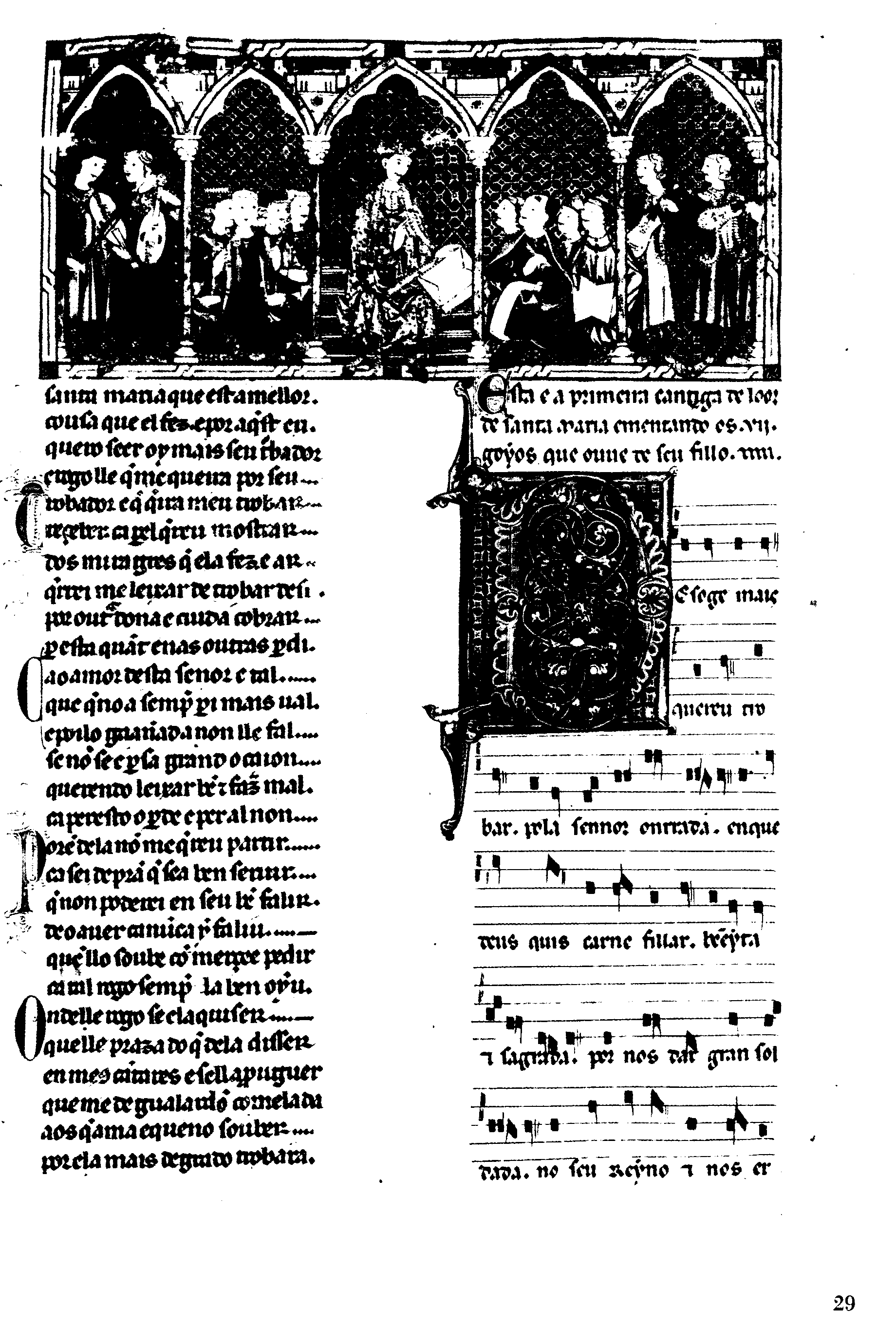
- 13th century CE, Alfonso X of Castile, Cantigas de Santa Maria, E codex, cantiga 1 (facsimile):
- Deſoge mais quereu trobar. pola ſennor onrrada
- From today on I wish to sing only to my honoured Lady
Conjugation
Note: Forms marked with an asterisk (*), if any, are unattested forms that are presumed to have existed verbally and were conjugated according to the Old Galician-Portuguese conjugation system. | |||||||||
| infinitive | trobar | ||||||||
|---|---|---|---|---|---|---|---|---|---|
| gerund | trobando | ||||||||
| past participle | singular | plural | |||||||
| masculine | trobado | trobada | |||||||
| feminine | trobados | trobadas | |||||||
| person | singular | plural | |||||||
| first | second | third | first | second | third | ||||
| indicative mood | eu | tu | el~ele ela vossa mercee |
nós nós outros nós outras |
vós vós outros vós outras |
eles elas | |||
| simple tenses |
present | trobo | trobas | troba | trobamos | trobades | trobam1, troban2 | ||
| imperfect | trobava | trobavas | trobava | trobavamos | trobavades | trobavam1, trobavan2 | |||
| preterite | trobei | trobaste1, trobasche2 | trobou | trobamos | trobastes | trobarom1, trobaron2 | |||
| pluperfect | trobara | trobaras | trobara | trobaramos | trobarades | trobaram1, trobaran2 | |||
| future | trobarei | trobarás | trobará | trobaremos | trobaredes | trobarám1, trobarán2 | |||
| conditional | trobaría | trobarías | trobaría | trobariamos | trobariades | trobaríam1, trobarían2 | |||
| compound tenses |
present perfect | present of haver3 or tẽer4 + past participle | |||||||
| present imperfect | imperfect of haver3 or tẽer4 + past participle | ||||||||
| past anterior | preterite of haver3 or tẽer4 + past participle | ||||||||
| pluperfect | simple pluperfect of haver3 or tẽer4 + past participle | ||||||||
| future perfect | future of haver3 or tẽer4 + past participle | ||||||||
| conditional perfect | conditional of haver3 or tẽer4 + past participle | ||||||||
| subjunctive mood | eu | tu | el~ele ela vossa mercee |
nós nós outros nós outras |
vós vós outros vós outras |
eles elas | |||
| simple tenses |
present | trobe | trobes | trobe | trobemos | trobedes | trobem1, troben2 | ||
| preterite | trobasse | trobasses | trobasse | trobassemos | trobassedes | trobassem1, trobassen2 | |||
| future | trobar | trobares | trobar | trobarmos | trobardes | trobarem1, trobaren2 | |||
| compound tenses |
present perfect | present subjunctive of haver3 or tẽer4 + past participle | |||||||
| pluperfect | preterite subjunctive of haver3 or tẽer4 + past participle | ||||||||
| perfect future | future subjunctive of haver3 or tẽer4 + past participle | ||||||||
| imperative mood | — | tu | vossa mercee | nós nós outros nós outras |
vós vós outros vós outras |
— | |||
| affirmative | — | troba | trobe | trobemos | trobade | — | |||
| negative | — | nunca non trobes | nunca non trobe | nunca non trobemos | nunca non trobedes | — | |||
| personal infinitive | eu | tu | el~ele ela vossa mercee |
nós nós outros nós outras |
vós vós outros vós outras |
eles elas | |||
| trobar | trobares | trobar | trobarmos | trobardes | trobarem1, trobaren2 | ||||
|
1 Less common in Galicia 2 Less common in Portugal 3 Its alternative form aver can be used as well. 4 Teer and ter were used too, though all 3 were less common than forms of "haver". | |||||||||
Related terms
Old Occitan
Etymology
Inherited from Vulgar Latin *tropāre. Compare Old French trover.
Verb
trobar
Related terms
- trobaire, trobador
Old Spanish
Etymology
From Vulgar Latin *tropāre, present active infinitive of *tropō (probably through the intermediate of Old Occitan trobar), from Latin tropus; cognate with Old French trover, Anglo-Norman truver.
Verb
trobar
- to find
- c. 1260, Gonzalo de Berceo, Milagros de Nuestra Señora:
- Nunca trobé en sieglo logar tan deleitoso
- I never found anywhere else such a delightful place
Descendants
- Spanish: trovar