Andrew Fuller
Andrew Fuller (1754-1815) (* Wicken, perto de Ely, Cambridgeshire, 6 de Fevereiro de 1754 † Kettering (Northamptonshire), 7 de Maio de 1815), foi um ministro e teólogo batista reformado e promotor do trabalho missionário inglês.
| Andrew Fuller | |
|---|---|
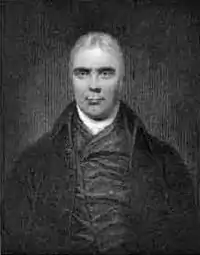 Andrew Fuller | |
| Nascimento | 6 de fevereiro de 1754 Wicken, Cambridgeshire, Inglaterra |
| Morte | 7 de maio de 1815 (61 anos) Kettering (Northamptonshire), Inglaterra |
| Nacionalidade | inglês |
| Ocupação | teólogo batista inglês |
Biografia
Ele se tornou pastor da Igreja Batista na cidade de Soham, do Condado de Cambridgeshire, em 1775, e se transferiu para Kettering, em Northamptonshire, em 1782. Foi um dos fundadores da "Sociedade Missionária Batista", e trabalhou como secretário desde a criação da sociedade em 2 de outubro de 1792 até a sua morte, em 7 de maio de 1815.
Fuller algumas vezes costumava ser controversista em relação à teoria do juízo final, quando comparado ao hiper-calvinismo[1] de um lado e o Socinianismo e a Sandemania de outro. Abraham Booth[2](1734-1806) o acusou de abandonar o verdadeiro Calvinismo. Fuller também discutiu teologia com o batista geral Dan Taylor[3](1738-1816), com resultados favoráveis para os dois lados.
Fuller contribuiu escrevendo panfletos, sermões e ensaios. Foi colaborador de Charles Edward de Coetlogon em sua obra "Miscelânea Teológica" e em diversos periódicos tais como "Evangelical Magazine", "Missionary Magazine", "Quarterly Magazine", "Protestant Dissenter's Magazine", e com a "Biblical Magazine. John Ryland, em sua obra "Vida de Fuller", enumera 167 artigos criados por ele. Edições com as Obras Completas apareceram nos anos 1838, 1840, 1845, 1852 e 1853. Joseph Belcher publicou uma edição com três volumes para a Sociedade Batista de Publicações da Filadélfia, e suas principais obras foram editadas junto com um memorial pelo seu filho através da Bohn's Standard Library[4], 1852.
Obras
| Parte de uma série de artigos sobre |
| Baptistas |
|---|
 |
|
Fundo Histórico |
|
Soteriologia
|
|
Doutrinas distintas
|
|
Figuras importantes
|
|
Organizações
|
- The Gospel Worthy of all Acceptation
- The Nature and Importance of Walking by Faith
- Expository Discourses on the Book of Genesis, 1806, 2 vols.
- On the revelation, 1815
- The Gospel worthy of all acceptation, or the Obligations of Men fully to credit and cordially to approve whatever God makes known.
- The Calvinistic and Socinian Systems examined and compared as to their Moral Tendency, 1794, 1796, 1802.
- The Gospel its own Witness, or the Holy Nature and Divine Harmony of the Christian Religion contrasted with the Immorality and Absurdity of Deism, 1799–1800.
- An Apology for the late Christian Missions to India.
- Memórias do Rev. Samuel Pearce[5](1766-1789), A.M., de Birmingham, 1800.
- Expository Discourses on the Apocalypse, 1815.
- Sermons on Various Subjects, 1814.
- The Backslider, 1801, 1840, 1847.
Bibliografia
- (em inglês) A Cyclopedia of Biblical Literature, Volume 2, pág 57.
- (em inglês) Oliver, Robert, History of the English Calvinistic Baptists 1771 - 1892, Banner of Truth (2006), ISBN 0-85151-920-2
- (em inglês) The Complete Works of Andrew Fuller: with a memoir of his life, in three volumes, Sprinkle Publications (1988), ISBN 1-59442-102-1
- (em inglês)Dictionary of National Biography
- (em inglês) The Nuttall Encyclopædia.
Referências
- O que é o hiper-calvinismo?
- (em inglês) Abraham Booth (1734-1806)
- (em inglês) Dan Taylor (1738-1816)
- Henry George Bohn (1796-1884), foi um publicador britânico e fundador da Bohn's Standard Library.
- (em inglês) The Spirituality of Samuel Pearce Arquivado em 3 de dezembro de 2013, no Wayback Machine.
| Controle de autoridade |
|---|
