Bageherpeton
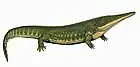
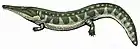
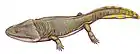
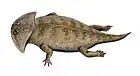
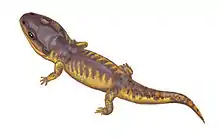
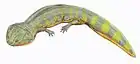
Bageherpeton é um gênero extinto de Temnospondyli Archegosauridae, um anfíbio do final do período Permiano do Rio Grande do Sul, Brasil. Foi encontrado na Formação Rio do Rasto e recebeu este nome em homenagem a cidade de Bagé, onde foi localizado. Foi descrito por um maxilar inferior parcialmente preservado encontrado.[1]
| Bageherpeton | |||||||||||||
|---|---|---|---|---|---|---|---|---|---|---|---|---|---|
| Ocorrência: Permiano Superior | |||||||||||||
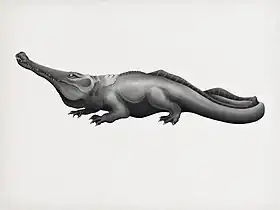 | |||||||||||||
| Classificação científica | |||||||||||||
| |||||||||||||
| Espécies | |||||||||||||
| |||||||||||||
Generic name - Bageherpeton derives from the name of the Bagé city and herpeton, from Greek language meaning, animal that moves crawling.
Specific name - B. longignathus in relation to the elongated lower jaw, from the Latin, longi = long and from the Greek, gnathus = jaw.
Referências
| ||||||||||||||||||||||||||||||||||||||||||||||||||||||||||||||||
| ||||||||||||||||||||||||||||||||||||||||||||||||||||||||||||||||
| ||||||||||||||||||||||||||||||||||||||||||||||||||||||||||||||||
| ||||||||||||||||||||||||||||||||||||||||||||||||||||||||||||||||
| ||||||||||||||||||||||||||||||||||||||||||||||||||||||||||||||||
| ||||||||||||||||||||||||||||||||||||||||||||||||||||||||||||||||
This article is issued from Wikipedia. The text is licensed under Creative Commons - Attribution - Sharealike. Additional terms may apply for the media files.