เกาเหลา
Thai
Etymology 1
From Teochew or Hokkien 高樓/高楼 (“ko-lâu”, literally “tall building”).[1] Compare Cantonese 高樓/高楼 (gou1 lau4).
Pronunciation
| Orthographic | เกาเหลา e k ā e h l ā | |
| Phonemic | เกา-เหฺลา e k ā – e h ̥ l ā | |
| Romanization | Paiboon | gao-lǎo |
| Royal Institute | kao-lao | |
| (standard) IPA(key) | /kaw˧.law˩˩˦/(R) | |
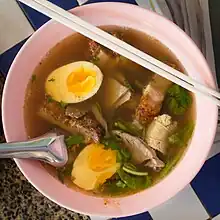
pig's organ soup
Noun
เกาเหลา • (gao-lǎo)
Verb
เกาเหลา • (gao-lǎo) (abstract noun การเกาเหลา or ความเกาเหลา)
- (slang, humorous) to have a grudge (with someone); to be at variance (with someone).
Usage notes
- First used by Thai politician Samak Sundaravej in 1994,[2] the slang took its origin from the idiom ไม่กินเส้น (mâi-gin-sêen), which means "to have a difference (with)" and literally translates "to not take [the same] nerve" (arising from a traditional massage method) and can also be translated as "to not eat strips" (i.e. noodles).[3]
References
- SEAlang Library (n.d.), “Notes on Modern Chinese Loanwords in Thai”, in SEAlang Library, retrieved 2021-03-16
- ราชบัณฑิตยสถาน (2009) พจนานุกรมคำใหม่ เล่ม ๒ ฉบับราชบัณฑิตยสถาน, กรุงเทพฯ: ยูเนียนอุลตร้าไวโอเร็ต, →ISBN, page 12
- ราชบัณฑิตยสถาน (2007-10-16), “ไม่กินเส้น”, in คลังความรู้, กรุงเทพฯ: สำนักงานราชบัณฑิตยสภา, archived from the original on 2007-11-18
Etymology 2
Corrupted from เกาหลี (gao-lǐi). The term itself comes from etymology 1.
This article is issued from Wiktionary. The text is licensed under Creative Commons - Attribution - Sharealike. Additional terms may apply for the media files.