舛
See also: 夅
| ||||||||
| ||||||||
Translingual
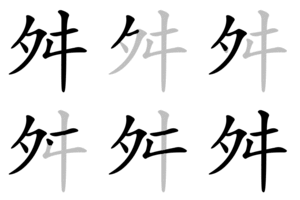
| Stroke order | |||
|---|---|---|---|
 | |||
Han character
舛 (Kangxi radical 136, 舛+0, 6 strokes, cangjie input 弓戈手 (NIQ), four-corner 25200, composition ⿰夕㐄)
- Kangxi radical #136, ⾇.
Derived characters
See also
- 𠎀, 韋
References
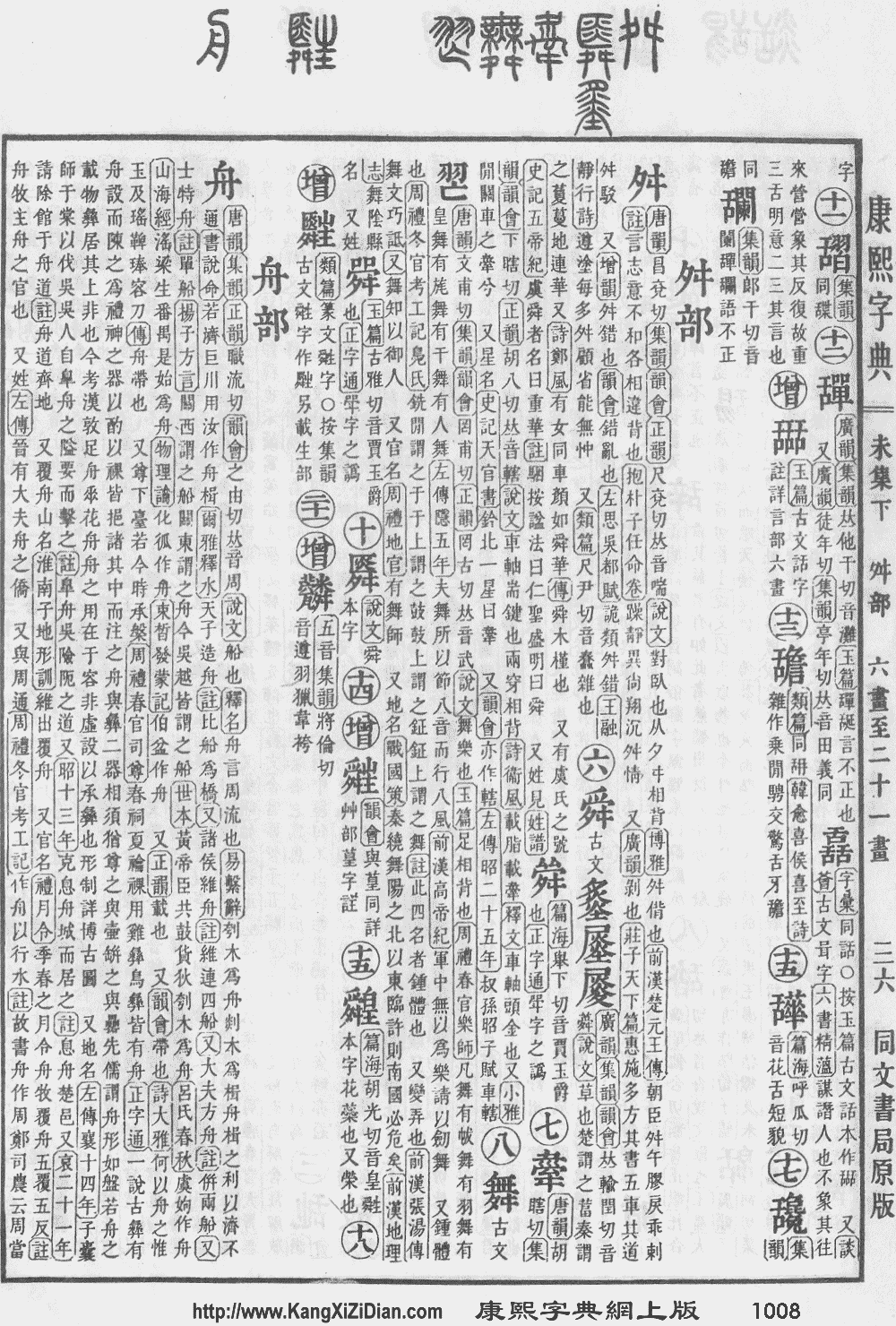
- Kangxi Dictionary: page 1008, character 9
- Dai Kanwa Jiten: character 30338
- Dae Jaweon: page 1465, character 11
- Hanyu Da Zidian (first edition): volume 2, page 861, character 6
- Unihan data for U+821B
Chinese
Lua error in Module:utilities at line 142: attempt to perform arithmetic on local 'h' (a nil value)
Glyph origin
| Historical forms of the character 舛 | |
|---|---|
| Shuowen Jiezi (compiled in Han) | Liushutong (compiled in Ming) |
| Small seal script | Transcribed ancient scripts |
 |
 |
Characters in the same phonetic series (舛) (Zhengzhang, 2003)
Ideogrammic compound (會意/会意) : 夊 + 𡕒 (second character roughly ヰ) – two feet facing in different directions. Compare 夅, with feet pointing down. Compare also foot in 夂, 夊, 𡕒. Note that the left foot has changed shape rather more than the right foot, which still resembles the form in earlier script.
Pronunciation
Definitions
舛
- (literary) to be opposed to; to be contrary to; to deviate from
- (literary) an error or mistake
- (literary) a disorderly misfortune; be in a difficult situation
Compounds
Japanese
Kanji
舛
- This term needs a translation to English. Please help out and add a translation, then remove the text
{{rfdef}}.
Korean
Hanja
舛 • (cheon) (hangeul 천, revised cheon, McCune–Reischauer ch'ŏn, Yale chen)
- This term needs a translation to English. Please help out and add a translation, then remove the text
{{rfdef}}.
Vietnamese
This article is issued from Wiktionary. The text is licensed under Creative Commons - Attribution - Sharealike. Additional terms may apply for the media files.