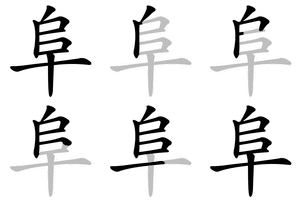
See also: and
U+961C, 阜
CJK UNIFIED IDEOGRAPH-961C

[U+961B]
CJK Unified Ideographs
[U+961D]
U+2FA9, ⾩
KANGXI RADICAL MOUND

[U+2FA8]
Kangxi Radicals
[U+2FAA]

Translingual

Stroke order

Alternative forms

  • (when used as a left Chinese Radical)

Han character

(Kangxi radical 170, 阜+0, 8 strokes, cangjie input 竹口十 (HRJ), four-corner 27407, composition 𠂤)

  1. Kangxi radical #170, .

Derived characters

  • Appendix:Chinese radical/阜
  • , 𢮒, , 𤦞, 𥓭, 𧌓, 𧨮, 𮢌, 𩣸
  • 𤭟, (𬱪), 𧌛, , 𡸠, 𦰺, 𢈹, 𤷎

References

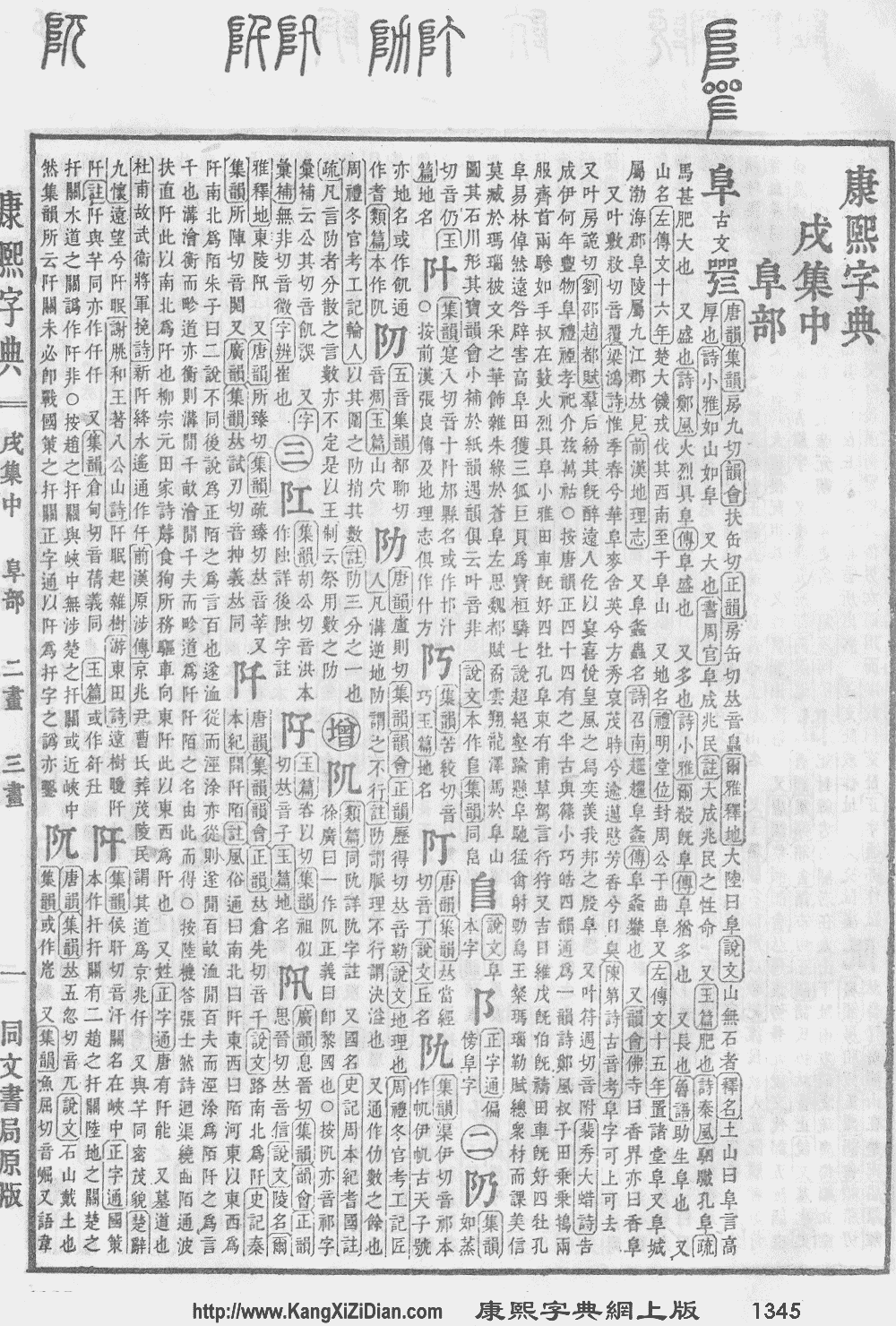
  • Kangxi Dictionary: page 1345, character 1
  • Dai Kanwa Jiten: character 41534
  • Dae Jaweon: page 1847, character 25
  • Hanyu Da Zidian (first edition): volume 6, page 4114, character 1
  • Unihan data for U+961C

Chinese

Lua error in Module:utilities at line 142: attempt to perform arithmetic on local 'h' (a nil value)

Glyph origin

Historical forms of the character
Shang Shuowen Jiezi (compiled in Han) Liushutong (compiled in Ming)
Oracle bone script Small seal script Transcribed ancient scripts

Pictogram (象形) , a row of hills.

Pronunciation


Rime
Character
Reading # 1/1
Initial () (3)
Final () (136)
Tone (調) Rising (X)
Openness (開合) Open
Division () III
Fanqie
Baxter bjuwX
Reconstructions
Zhengzhang
Shangfang
/bɨuX/
Pan
Wuyun
/biuX/
Shao
Rongfen
/biəuX/
Edwin
Pulleyblank
/buwX/
Li
Rong
/biuX/
Wang
Li
/bĭəuX/
Bernard
Karlgren
/bʱi̯ə̯uX/
Expected
Mandarin
Reflex
fòu
Expected
Cantonese
Reflex
fau6
BaxterSagart system 1.1 (2014)
Character
Reading # 1/1
Modern
Beijing
(Pinyin)
Middle
Chinese
‹ bjuwX ›
Old
Chinese
/*[b](r)uʔ/
English big mound

Notes for Old Chinese notations in the Baxter–Sagart system:

* Parentheses "()" indicate uncertain presence;
* Square brackets "[]" indicate uncertain identity, e.g. *[t] as coda may in fact be *-t or *-p;
* Angle brackets "<>" indicate infix;
* Hyphen "-" indicates morpheme boundary;

* Period "." indicates syllable boundary.
Zhengzhang system (2003)
Character
Reading # 1/1
No. 3533
Phonetic
component
Rime
group
Rime
subdivision
1
Corresponding
MC rime
Old
Chinese
/*buʔ/

Definitions

  1. (literary) mound
  2. (literary) abundant; rich
  3. a surname

Compounds

  • 土阜
  • 岐阜 (Qífù)
  • 左阜右邑
  • 平阜
  • 康阜
  • 曲阜 (Qūfù)
  • 殷民阜利
  • 殷民阜財殷民阜财
  • 殷阜
  • 民安物阜
  • 民康物阜
  • 民殷財阜民殷财阜
  • 民熙物阜
  • 物阜民安
  • 物阜民熙
  • 物阜民豐物阜民丰
  • 翠阜
  • 阜盛
  • 阜蕃
  • 阜螽
  • 阜財阜财
  • 阜陽阜阳 (Fùyáng)
  • 陰阜阴阜 (yīnfù)

Descendants

  • Lao: ພູ (phū)
  • Thai: ภู (puu, mound, mountain, hill)

Japanese

Kanji

(common “Jōyō” kanji)

  1. mound, dam

Readings

Lua error in Module:utilities at line 142: attempt to perform arithmetic on local 'h' (a nil value)

Usage notes

  • This kanji, when referencing as a radical, is usually called "Gifu-no-'fu'"

Noun

Kanji in this term
つかさ
Grade: 4
kun’yomi
For pronunciation and definitions of – see the following entry.
つかさ
[noun] Lua error in Module:utilities at line 142: attempt to perform arithmetic on local 'h' (a nil value) a small hill
Alternative spelling
(This term, , is an alternative spelling of the above term.)

Korean

Etymology

From Middle Chinese (MC bjuwX). Recorded as Middle Korean 부〯 (pwǔ) (Yale: pwu) in Hunmong Jahoe (訓蒙字會 / 훈몽자회), 1527.

Hanja

Wikisource (eumhun 언덕 (eondeok bu))

  1. Hanja form? of (hill).

Compounds

References

  • 국제퇴계학회 대구경북지부 (國際退溪學會 大邱慶北支部) (2007). Digital Hanja Dictionary, 전자사전/電子字典.

Vietnamese

Han character

: Hán Nôm readings: phụ

  1. This term needs a translation to English. Please help out and add a translation, then remove the text {{rfdef}}.
This article is issued from Wiktionary. The text is licensed under Creative Commons - Attribution - Sharealike. Additional terms may apply for the media files.