夠
See also: 够
| ||||||||
Translingual
Han character
夠 (Kangxi radical 36, 夕+8, 11 strokes, cangjie input 弓弓心口 (NNPR), four-corner 27220, composition ⿰多句)
References
- Kangxi Dictionary: page 247, character 10
- Dai Kanwa Jiten: character 5777
- Dae Jaweon: page 491, character 12
- Hanyu Da Zidian (first edition): volume 2, page 864, character 5
- Unihan data for U+5920
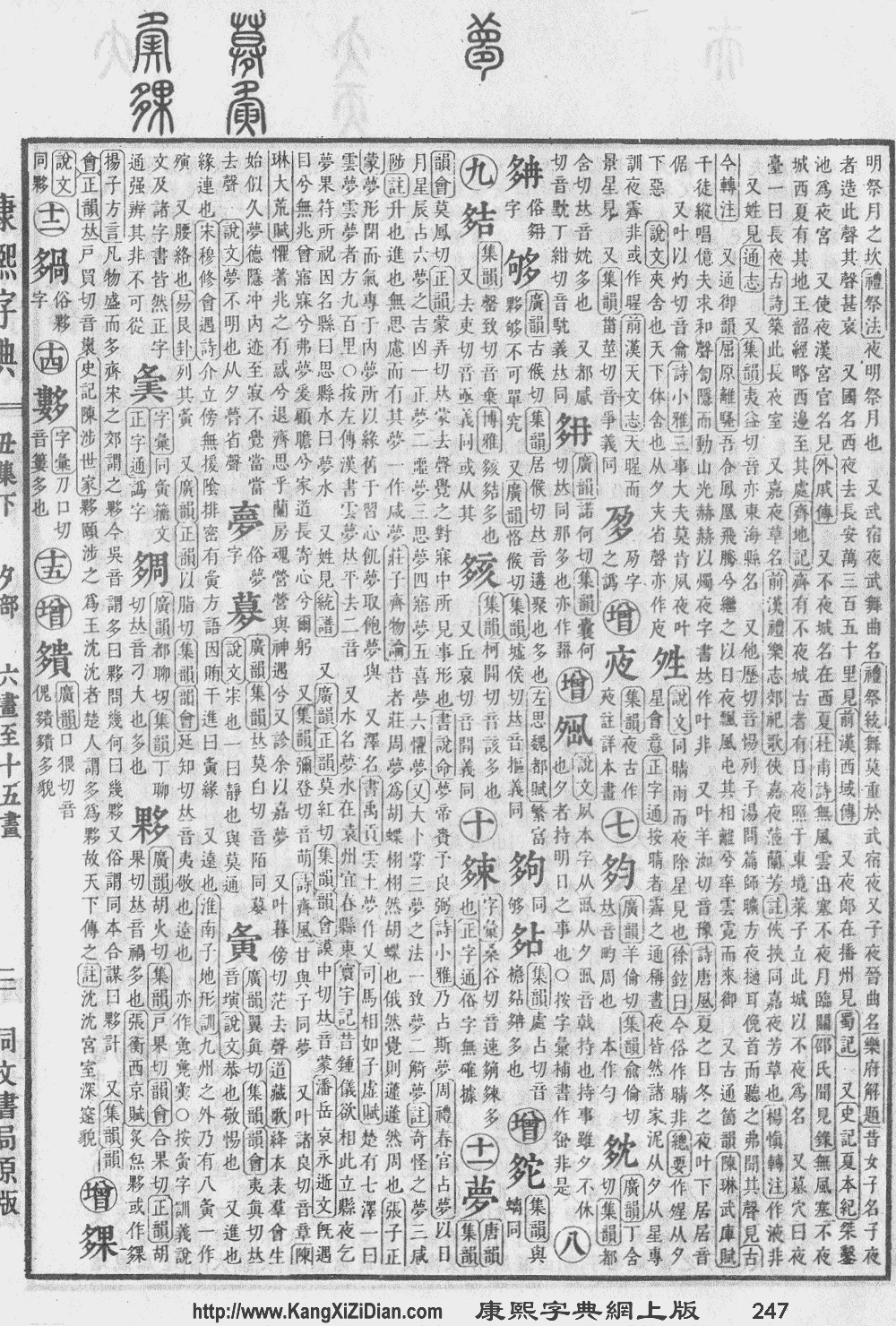
Usage notes
This character is listed in the Kangxi dictionary as an alternative form of 够.
Chinese
Lua error in Module:utilities at line 142: attempt to perform arithmetic on local 'h' (a nil value)
Glyph origin
Characters in the same phonetic series (句) (Zhengzhang, 2003)
| Old Chinese | |
|---|---|
| 勾 | *koː, *koːs |
| 鉤 | *koː |
| 鴝 | *koː, *ɡo |
| 句 | *koː, *koːs, *kos, *ɡo |
| 夠 | *koː, *koːs, *kʰoː |
| 枸 | *koː, *koːʔ, *koʔ |
| 軥 | *koː, *koːs, *ɡo |
| 狗 | *koːʔ |
| 苟 | *koːʔ |
| 岣 | *koːʔ, *ko |
| 笱 | *koːʔ |
| 玽 | *koːʔ |
| 耇 | *koːʔ |
| 豿 | *koːʔ, *qʰroːɡ |
| 敂 | *koːʔ |
| 怐 | *koːs, *kʰoːs, *qʰoːs, *kos |
| 雊 | *koːs |
| 竘 | *kʰoːʔ, *kʰoʔ |
| 齁 | *qʰoː |
| 呴 | *qʰoːʔ, *qʰos |
| 蚼 | *qʰoːʔ, *ɡo |
| 豞 | *qʰoːs |
| 訽 | *qʰoːs, *ɡoːs |
| 佝 | *qʰoːs |
| 拘 | *ko |
| 駒 | *ko |
| 眗 | *ko |
| 跔 | *ko |
| 鮈 | *ko |
| 痀 | *ko |
| 蒟 | *koʔ, *kos |
| 絇 | *kos, *ɡo |
| 邭 | *kos |
| 劬 | *ɡo |
| 朐 | *ɡo |
| 鼩 | *ɡo |
| 斪 | *ɡo |
| 翑 | *ɡo |
| 葋 | *ɡo |
| 姁 | *ɡo, *qʰo, *qʰoʔ, *qʰos |
| 欨 | *qʰo, *qʰoʔ |
| 喣 | *qʰoʔ |
| 煦 | *qʰoʔ, *qʰos |
| 昫 | *qʰos |
Phono-semantic compound (形聲/形声, OC *koː, *koːs, *kʰoː) : semantic 多 + phonetic 句 (OC *koː, *koːs, *kos, *ɡo).
Pronunciation
Definitions
夠
- to be enough; to be sufficient; to reach or achieve a desired level
- to reach
- to have enough of something; to have a sufficient amount of something
- (with negative connotations) quite; impressively
- (Cantonese) also
- (Hakka) serious; hardworking
- (Hakka) arrogant
- (dialectal Cantonese, including Taishanese) tired
- alt. forms: 疚 (jiù)
- (Teochew) whole; entire
Synonyms
- (to be enough): (Xinzhou Jin) 足沿
- (Hakka) 罅 (la)
Lua error in Module:utilities at line 142: attempt to perform arithmetic on local 'h' (a nil value) Lua error in Module:utilities at line 142: attempt to perform arithmetic on local 'h' (a nil value)
Compounds
References
- “夠”, in 漢語多功能字庫 (Multi-function Chinese Character Database), 香港中文大學 (the Chinese University of Hong Kong), 2014–
Japanese
Kanji
夠
- This term needs a translation to English. Please help out and add a translation, then remove the text
{{rfdef}}.
Vietnamese
References
- Trần (1999).
- Nguyễn (1974).
- Thiều Chửu (1942).
- Trần (2004).
- Hồ (1976).
This article is issued from Wiktionary. The text is licensed under Creative Commons - Attribution - Sharealike. Additional terms may apply for the media files.