契
| ||||||||
 | ||||||||
Translingual
Han character
契 (Kangxi radical 37, 大+6, 9 strokes, cangjie input 手竹大 (QHK), four-corner 57432, composition ⿱㓞大(GHTKV) or ⿱𭃌大(J))
Derived characters
References
- Kangxi Dictionary: page 251, character 21
- Dai Kanwa Jiten: character 5917
- Dae Jaweon: page 513, character 1
- Hanyu Da Zidian (first edition): volume 1, page 536, character 10
- Unihan data for U+5951
- Unihan data for U+F909
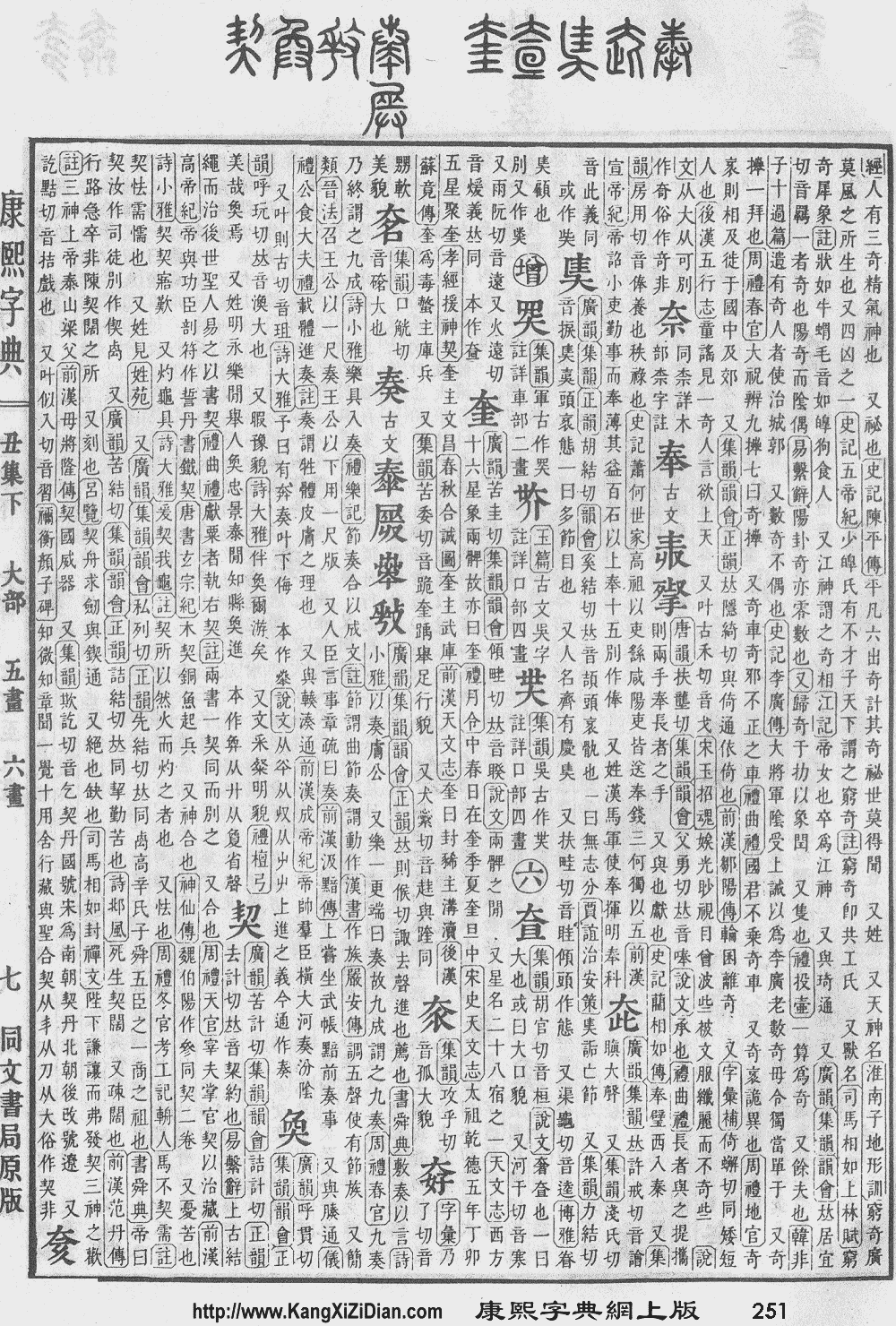
Chinese
Glyph origin
| Historical forms of the character 契 | |||||
|---|---|---|---|---|---|
| Shang | Western Zhou | Spring and Autumn | Warring States | Shuowen Jiezi (compiled in Han) | |
| Oracle bone script | Bronze inscriptions | Bronze inscriptions | Chu slip and silk script | Qin slip script | Small seal script |
 |
 |
 |
 |
 |
 |
| Old Chinese | |
|---|---|
| 夆 | *pʰoŋ, *boŋ, *ɡaːds |
| 丯 | *kreːds |
| 瘛 | *kʰjeds, *ɡeːds, *kʰjed |
| 觢 | *ɡjeds |
| 契 | *kʰeːds, *kʰeːd, *kʰeːd, *kʰɯd |
| 栔 | *kʰeːds |
| 禊 | *ɡeːds |
| 稧 | *ɡeːds |
| 楔 | *kreːd, *sqʰeːd |
| 葜 | *kʰreːd |
| 猰 | *qreːd, *kraːd, *kʰeːd |
| 窫 | *qreːd |
| 揳 | *sqʰeːd |
| 偰 | *sqʰeːd |
| 潔 | *keːd |
| 絜 | *keːd, *ɡeːd |
| 鍥 | *keːd, *kʰeːd |
| 挈 | *kʰeːd |
| 蛪 | *kʰeːd |
| 齧 | *ŋeːd |
| 褉 | *qʰeːd |
| 喫 | *ŋ̊ʰeːɡ |
Phono-semantic compound (形聲/形声, OC *kʰeːds, *kʰeːd, *kʰeːd, *kʰɯd) and ideogrammic compound (會意/会意) : phonetic 㓞 (, “to engrave”) + semantic 大 (“person”).
Etymology 1
Lua error in Module:utilities at line 142: attempt to perform arithmetic on local 'h' (a nil value)
Exopassive of 鍥 (OC *keːd, *kʰeːd, “to cut”): "what has been cut" (Schuessler, 2007).
Pronunciation
Definitions
契
Compounds
- 上契
- 丹書鐵契/丹书铁契
- 主契約/主契约
- 亞米契斯/亚米契斯
- 交契
- 佃契
- 借契
- 冥契
- 勞動契約/劳动契约
- 參同契/参同契
- 合契若神
- 同窗契友
- 單務契約/单务契约
- 團契/团契 (tuánqì)
- 地契 (dìqì)
- 壓契/压契
- 契刀
- 契分
- 契券 (qìquàn)
- 契勘
- 契友
- 契合 (qìhé)
- 契合金蘭/契合金兰
- 契哥 (qìgē)
- 契契
- 契姐
- 契妹
- 契媽/契妈
- 契尾
- 契弟 (qìdì)
- 契據/契据 (qìjù)
- 契文
- 契文舉例/契文举例
- 契機/契机 (qìjī)
- 契父 (qìfù)
- 契爸
- 契爺/契爷
- 契稅/契税
- 契箭
- 契約/契约 (qìyuē)
- 契約書/契约书 (qìyuēshū)
- 契約說/契约说
- 契約農業/契约农业
- 契若金蘭/契若金兰
- 契重 (qìzhòng)
- 契需
- 姻契
- 官契
- 宓契爾/宓契尔
- 工作契約/工作契约
- 左契
- 心契
- 忘年之契
- 忘形之契
- 房契 (fángqì)
- 投契 (tóuqì)
- 承攬契約/承揽契约
- 文契
- 書契/书契 (shūqì)
- 有償契約/有偿契约
- 有名契約/有名契约
- 欠契
- 死契
- 殷墟書契/殷墟书契
- 殷契
- 水乳之契
- 活契
- 無償契約/无偿契约
- 田契 (tiánqì)
- 白契 (báiqì)
- 相契
- 知契
- 磚契/砖契
- 社會契約/社会契约
- 神會心契/神会心契
- 租契 (zūqì)
- 租賃契約/租赁契约
- 稅契/税契
- 立契 (lìqì)
- 符契
- 紅契/红契 (hóngqì)
- 絕契/绝契
- 結契/结契
- 老契
- 至交契友
- 莫逆之契
- 虛錢實契/虚钱实契
- 衿契
- 賣契/卖契
- 賢契/贤契
- 賣身契/卖身契 (màishēnqì)
- 道契
- 隨意契約/随意契约
- 雙務契約/双务契约
- 驗契/验契
- 默契 (mòqì)
Etymology 2
Lua error in Module:utilities at line 142: attempt to perform arithmetic on local 'h' (a nil value)
Pronunciation
Etymology 3
Lua error in Module:utilities at line 142: attempt to perform arithmetic on local 'h' (a nil value)
Pronunciation
Etymology 4
Lua error in Module:utilities at line 142: attempt to perform arithmetic on local 'h' (a nil value)
Pronunciation
Definitions
契
References
- Dictionary of Chinese Character Variants (教育部異體字字典), A00864
- “契”, in 漢語多功能字庫 (Multi-function Chinese Character Database), 香港中文大學 (the Chinese University of Hong Kong), 2014–
Japanese
| Shinjitai | 契 | |
| Kyūjitai [1][2][3] |
契 契or 契+ ︀? |
|
| 契󠄁 契+ 󠄁?(Adobe-Japan1) | ||
| 契󠄅 契+ 󠄅?(Hanyo-Denshi) (Moji_Joho) | ||
| 契󠄂 契+ 󠄂?(Adobe-Japan1) |
 | |
| 契󠄄 契+ 󠄄?(Hanyo-Denshi) (Moji_Joho) | ||
| The displayed kanji may be different from the image due to your environment. See here for details. | ||
Readings
From Middle Chinese 契 (MC khejH); compare Lua error in Module:utilities at line 142: attempt to perform arithmetic on local 'h' (a nil value):
From Middle Chinese 契 (MC khet); compare Lua error in Module:utilities at line 142: attempt to perform arithmetic on local 'h' (a nil value):
From Middle Chinese 契 (MC set); compare Lua error in Module:utilities at line 142: attempt to perform arithmetic on local 'h' (a nil value):
From native Japanese roots: Lua error in Module:utilities at line 142: attempt to perform arithmetic on local 'h' (a nil value)
Compounds
References
- “契”, in 漢字ぺディア (Kanjipedia) (in Japanese), 日本漢字能力検定協会, 2015–2024
- 1914, 漢和大辭書 (Kanwa Dai Jisho, “The Great Kanji-Japanese Dictionary”) (in Japanese), page 606 (paper), page 353 (digital), Tōkyō: 興文社 (Kōbunsha)
- 1927, 新漢和辭典 (Shin Kanwa Jiten, “The New Kanji-Japanese Dictionary”) (in Japanese), page 386 (paper), page 206 (digital), Ōsaka: 松雲堂 (Shōundō)
Korean
Etymology 1
From Middle Chinese 契 (MC khejH).
| Historical readings |
|---|
|
Pronunciation
- (SK Standard/Seoul) IPA(key): [kje̞(ː)] ~ [ke̞(ː)]
- Phonetic hangul: [계(ː)/게(ː)]
- Though still prescribed in Standard Korean, most speakers in both Koreas no longer distinguish vowel length.
Compounds
Etymology 2
From Middle Chinese 契 (MC khet).
| Historical readings |
|---|
|
Pronunciation
- (SK Standard/Seoul) IPA(key): [kjʌ̹ɭ]
- Phonetic hangul: [결]
Hanja
Compounds
Etymology 3
From Middle Chinese 契 (MC khj+t).
| Historical readings |
|---|
|
Compounds
Etymology 4
From Middle Chinese 契 (MC set).
| Historical readings |
|---|
|
Hanja
References
- 국제퇴계학회 대구경북지부 (國際退溪學會 大邱慶北支部) (2007). Digital Hanja Dictionary, 전자사전/電子字典.
- Supreme Court of the Republic of Korea (대한민국 대법원, Daehanmin'guk Daebeobwon) (2018). Table of hanja for personal names (인명용 한자표 / 人名用漢字表, Inmyeong-yong hanja-pyo), page 23.