妄
| ||||||||
| Stroke order | |||
|---|---|---|---|
 | |||
Translingual
Han character
妄 (Kangxi radical 38, 女+3, 6 strokes, cangjie input 卜女女 (YVV), four-corner 00404, composition ⿱亡女)
References
- Kangxi Dictionary: page 256, character 1
- Dai Kanwa Jiten: character 6063
- Hanyu Da Zidian (first edition): volume 2, page 1027, character 9
- Unihan data for U+5984
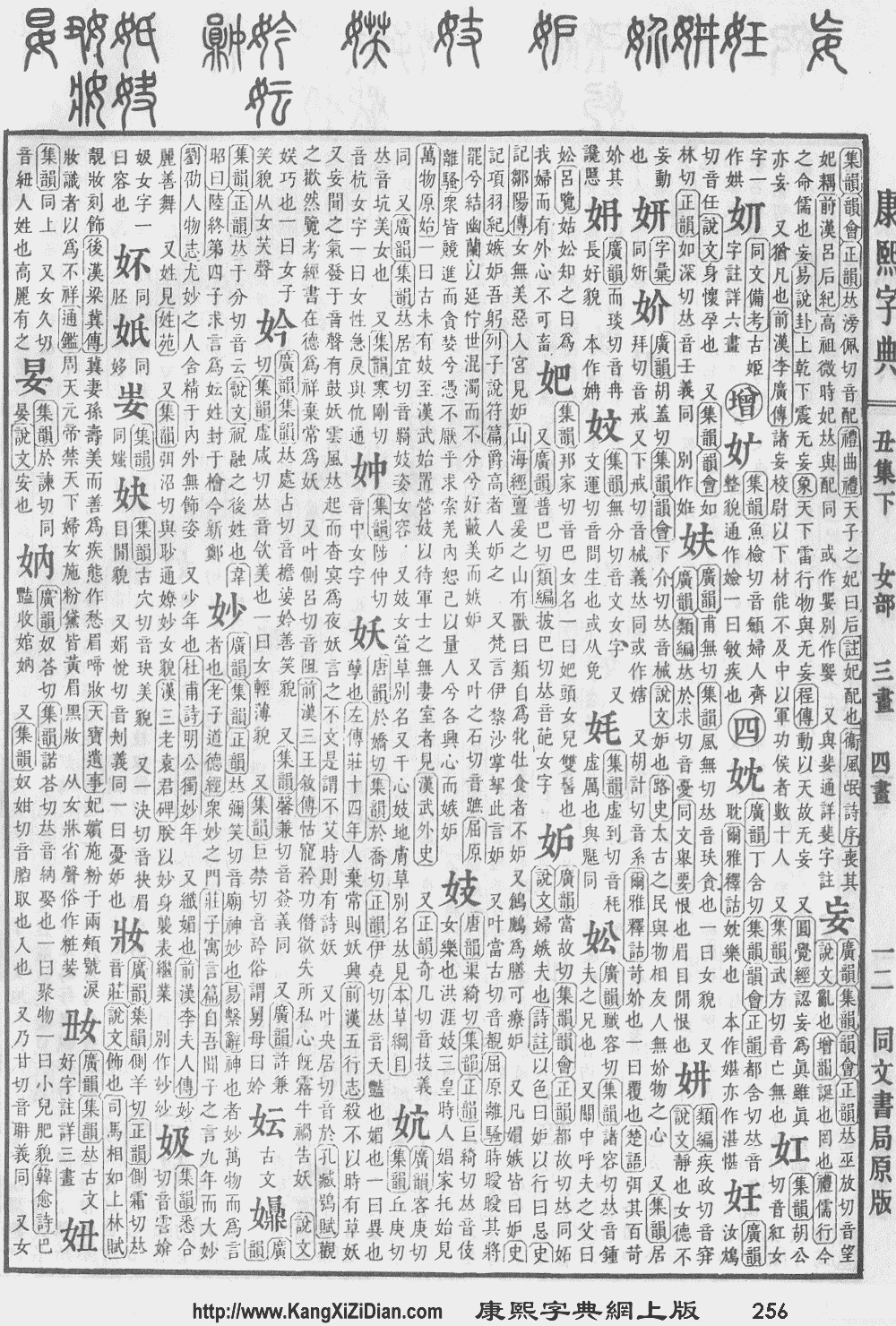
Chinese
Lua error in Module:utilities at line 142: attempt to perform arithmetic on local 'h' (a nil value)
Glyph origin
| Historical forms of the character 妄 | ||
|---|---|---|
| Western Zhou | Shuowen Jiezi (compiled in Han) | Liushutong (compiled in Ming) |
| Bronze inscriptions | Small seal script | Transcribed ancient scripts |
 |
 |
 |
Characters in the same phonetic series (亡) (Zhengzhang, 2003)
| Old Chinese | |
|---|---|
| 忙 | *maːŋ |
| 芒 | *maːŋ, *maŋ |
| 茫 | *maːŋ |
| 恾 | *maːŋ |
| 吂 | *maːŋ, *maːŋs |
| 汒 | *maːŋ, *maŋs |
| 朚 | *maːŋ, *hmaːŋ, *maŋ, *mraːŋ, *mraːŋs |
| 邙 | *maːŋ, *maŋ |
| 杗 | *maːŋ, *maŋ |
| 荒 | *hmaːŋ, *hmaːŋs |
| 肓 | *hmaːŋ |
| 衁 | *hmaːŋ |
| 巟 | *hmaːŋ |
| 詤 | *hmaːŋ, *hmaːŋʔ, *hmaŋʔ |
| 慌 | *hmaːŋ, *hmaːŋʔ |
| 謊 | *hmaːŋʔ |
| 喪 | *smaːŋs, *smaːŋ |
| 亡 | *maŋ |
| 望 | *maŋ, *maŋs |
| 莣 | *maŋ |
| 朢 | *maŋ, *maŋs |
| 鋩 | *maŋ |
| 硭 | *maŋ |
| 忘 | *maŋ, *maŋs |
| 网 | *mlaŋʔ |
| 罔 | *mlaŋʔ |
| 蛧 | *maŋʔ |
| 網 | *mlaŋʔ |
| 輞 | *maŋʔ |
| 棢 | *maŋʔ |
| 惘 | *maŋʔ |
| 菵 | *maŋʔ |
| 誷 | *maŋʔ |
| 魍 | *maŋʔ |
| 妄 | *maŋs |
| 盲 | *mraːŋ |
| 蝱 | *mraːŋ |
| 虻 | *mraːŋ |
| 氓 | *mraːŋ |
| 甿 | *mraːŋ |
Phono-semantic compound (形聲/形声, OC *maŋs) and ideogrammic compound (會意/会意) : phonetic 亡 (OC *maŋ) + semantic 女 (“woman”).
With 亡 also including meanings of “loss” or “destruction”, this character can be interpreted as the loss (亡) of one's proper reason after being seduced by a woman (女).
Pronunciation
Definitions
妄
Compounds
- 不敢妄言
- 任性妄為/任性妄为
- 僭妄 (jiànwàng)
- 塵妄/尘妄
- 大膽妄為/大胆妄为
- 妄下雌黃/妄下雌黄
- 妄人 (wàngrén)
- 妄作 (wàngzuò)
- 妄動/妄动 (wàngdòng)
- 妄圖/妄图 (wàngtú)
- 妄念
- 妄想 (wàngxiǎng)
- 妄想症 (wàngxiǎngzhèng)
- 妄求 (wàngqiú)
- 妄為/妄为 (wàngwéi)
- 妄生穿鑿/妄生穿凿
- 妄稱/妄称 (wàngchēng)
- 妄自尊大 (wàngzìzūndà)
- 妄自菲薄 (wàngzìfěibó)
- 妄言 (wàngyán)
- 妄言妄聽/妄言妄听
- 妄言輕動/妄言轻动
- 妄說/妄说
- 妄語/妄语 (wàngyǔ)
- 妄誕/妄诞 (wàngdàn)
- 妖妄
- 姑妄聽之/姑妄听之
- 姑妄言之
- 恣意妄為/恣意妄为
- 恣意妄行
- 愚妄 (yúwàng)
- 無妄/无妄 (wúwàng)
- 無妄之災/无妄之灾 (wúwàngzhīzāi)
- 無妄之禍/无妄之祸
- 無妄之福/无妄之福
- 狂妄 (kuángwàng)
- 狂妄自大 (kuángwàngzìdà)
- 痴心妄想 (chīxīnwàngxiǎng)
- 目不妄視/目不妄视
- 真妄
- 瞽言妄舉/瞽言妄举
- 禍不妄至/祸不妄至
- 肆意妄為/肆意妄为
- 膽大妄為/胆大妄为
- 虛妄/虚妄 (xūwàng)
- 言十妄九
- 言狂意妄
- 誕妄/诞妄 (dànwàng)
- 謀虛逐妄/谋虚逐妄
- 謬妄/谬妄 (miùwàng)
- 譫妄/谵妄 (zhānwàng)
- 貪心妄想/贪心妄想
- 輕舉妄動/轻举妄动 (qīngjǔ-wàngdòng)
- 逞意妄為/逞意妄为
- 驕矜狂妄/骄矜狂妄
Japanese
Korean
Vietnamese
This article is issued from Wiktionary. The text is licensed under Creative Commons - Attribution - Sharealike. Additional terms may apply for the media files.