孰
| ||||||||
Translingual
Han character
孰 (Kangxi radical 39, 子+8, 11 strokes, cangjie input 卜木大弓戈 (YDKNI), four-corner 05417, composition ⿰享丸)
See also
References
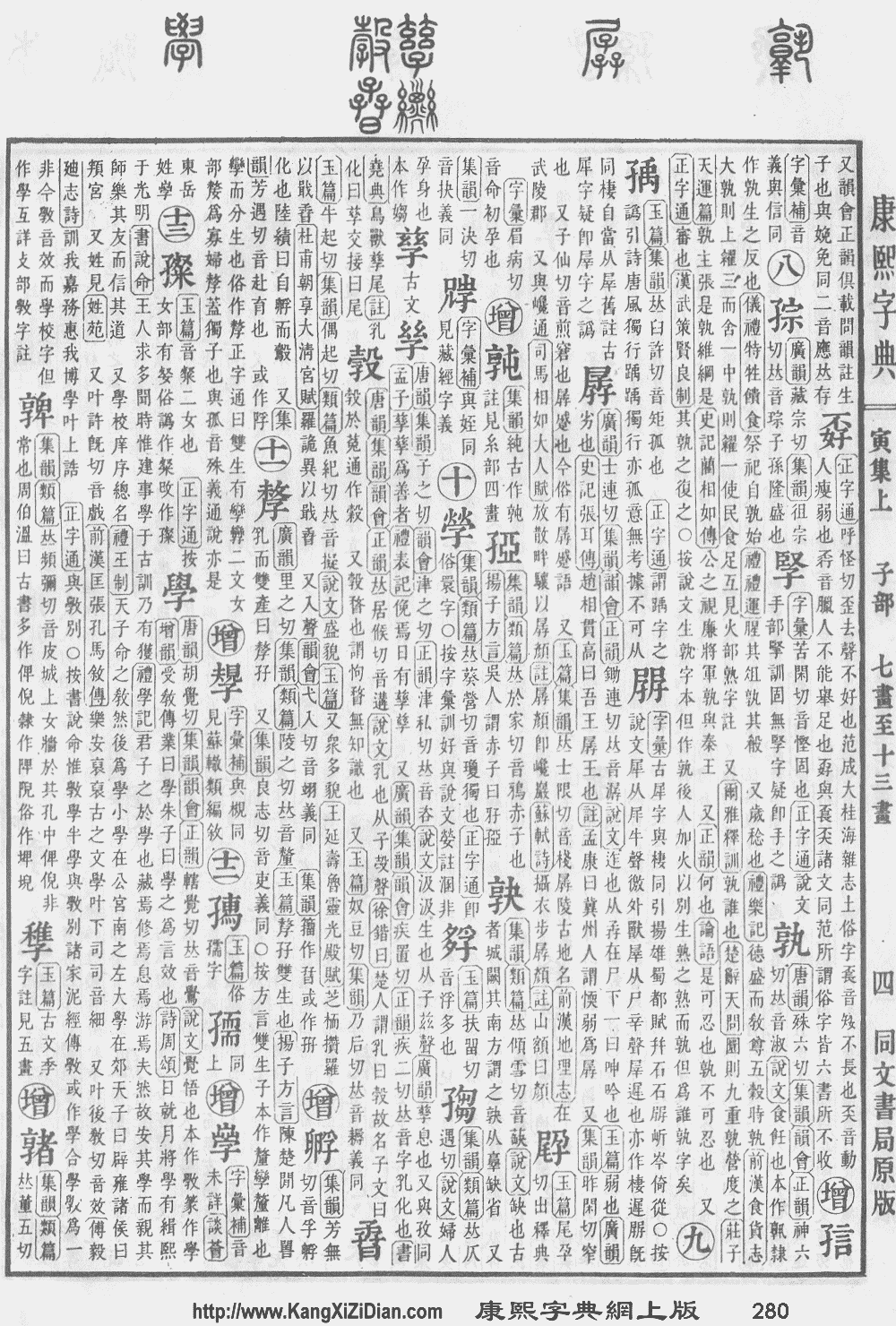
- Kangxi Dictionary: page 280, character 5
- Dai Kanwa Jiten: character 6995
- Dae Jaweon: page 549, character 3
- Hanyu Da Zidian (first edition): volume 2, page 1016, character 14
- Unihan data for U+5B70
Chinese
Lua error in Module:utilities at line 142: attempt to perform arithmetic on local 'h' (a nil value)
Glyph origin
| Historical forms of the character 孰 | ||
|---|---|---|
| Western Zhou | Shuowen Jiezi (compiled in Han) | Liushutong (compiled in Ming) |
| Bronze inscriptions | Small seal script | Transcribed ancient scripts |
 |
 |
 |
Characters in the same phonetic series (孰) (Zhengzhang, 2003)
Phono-semantic compound (形聲/形声, OC *djɯwɢ) : phonetic 𦎫 () + semantic 丮. In modern script 𦎫 and 丮 have corrupted into 享 and 丸 respectively.
Etymology
From *du + *-k (“distributive suffix”); cognate with 誰 (OC *djul, “who”), 疇 (OC *du, “who”) (Schuessler, 2007).
Pronunciation
Definitions
孰
- Original form of 熟 (shú).
- emphatic or interrogative pronoun
- who; whoever; whomever
- what; what else; whatever
- which; which one (what among the explicitly or implicitly mentioned)
- 漢孰與我大? [Classical Chinese, trad.]
- From: The Records of the Grand Historian, by Sima Qian, c. 91 BCE
- Hàn shú yǔ wǒ dà? [Pinyin]
- Which one is the larger, Han or us?
汉孰与我大? [Classical Chinese, simp.]
Synonyms
Lua error in Module:utilities at line 142: attempt to perform arithmetic on local 'h' (a nil value)
Compounds
References
- (Hakka) Lau, Chun-fat. Hakka Pinyin Dictionary (Chinese). Hong Kong: The Chinese University Press, 1997 (Chinese IME supplement) →ISBN.
Japanese
Korean
Hanja
孰 (eum 숙 (suk))
- This term needs a translation to English. Please help out and add a translation, then remove the text
{{rfdef}}.
Vietnamese
Han character
孰: Hán Nôm readings: thục
- This term needs a translation to English. Please help out and add a translation, then remove the text
{{rfdef}}.
This article is issued from Wiktionary. The text is licensed under Creative Commons - Attribution - Sharealike. Additional terms may apply for the media files.