斗
| ||||||||
| ||||||||
Translingual
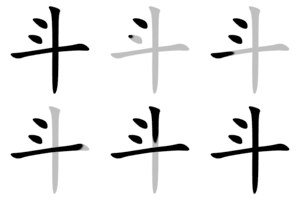
| Stroke order | |||
|---|---|---|---|
 | |||
| Japanese | 闘 |
|---|---|
| Simplified | 斗 |
| Traditional | 鬥/鬭 |
Han character
斗 (Kangxi radical 68, 斗+0, 4 strokes, cangjie input 卜十 (YJ), four-corner 34000, composition ⿻⿻㇀丨⺀)
- Kangxi radical #68, ⽃.
Derived characters
References
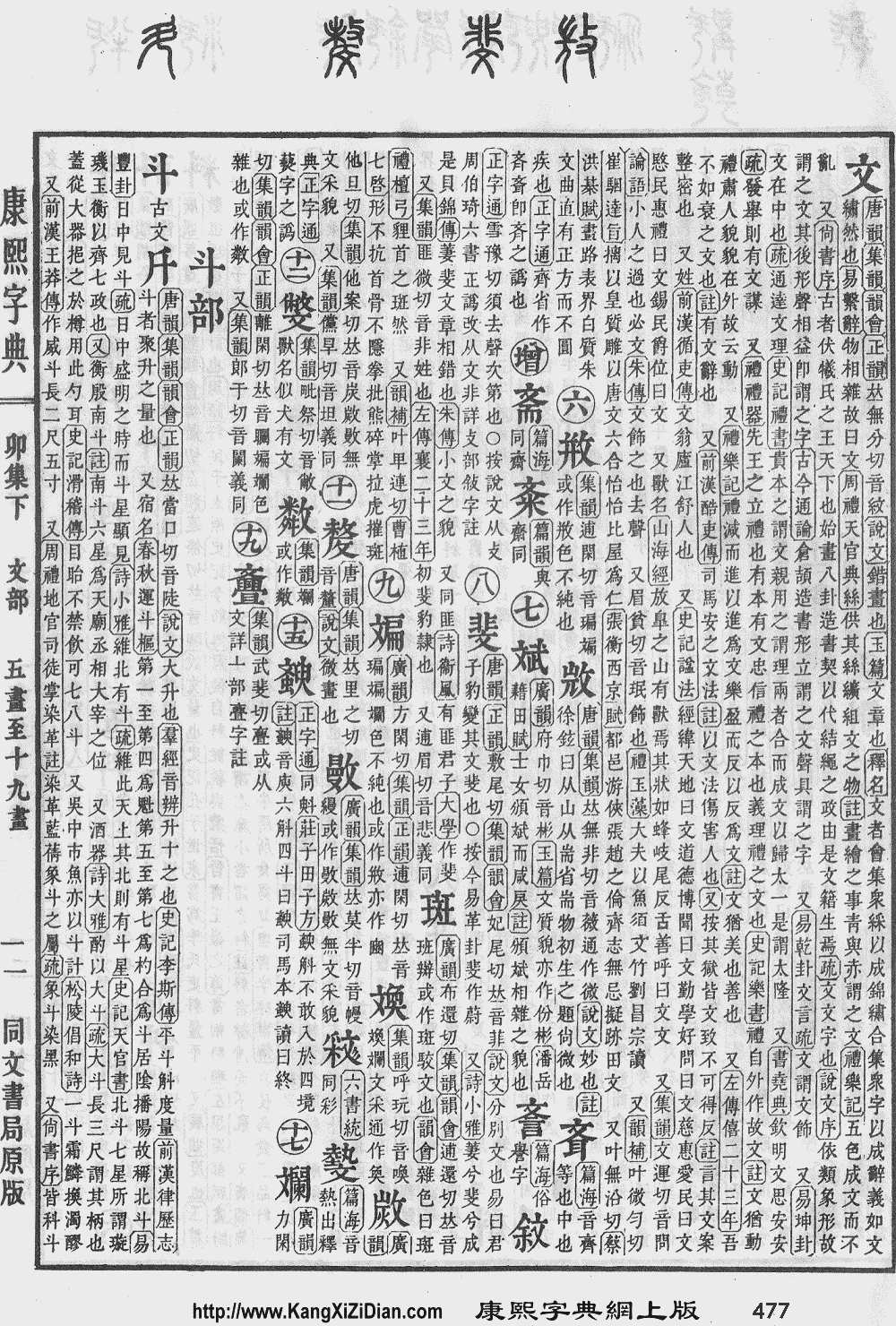
- Kangxi Dictionary: page 477, character 24
- Dai Kanwa Jiten: character 13489
- Dae Jaweon: page 835, character 27
- Hanyu Da Zidian (first edition): volume 3, page 2252, character 1
- Unihan data for U+6597
Chinese
Glyph origin
| Historical forms of the character 斗 | ||||||
|---|---|---|---|---|---|---|
| Shang | Spring and Autumn | Warring States | Shuowen Jiezi (compiled in Han) | Liushutong (compiled in Ming) | ||
| Oracle bone script | Bronze inscriptions | Bronze inscriptions | Chu slip and silk script | Qin slip script | Small seal script | Transcribed ancient scripts |
 |
 |
 |
 |
 |
 |
 |
Characters in the same phonetic series (斗) (Zhengzhang, 2003)
Pictogram (象形) (Shuowen), indicating a ladle-shaped dou (see below) held by hand.
Etymology 1
| simp. and trad. |
斗 | |
|---|---|---|
| alternative forms | 𤣫 𠦁 𣁬 | |
Pronunciations 1 (“dipper, ladle”) and 2 (“water ladle”) are cognate. Variant character: 枓 (zhǔ, “ladle”). They probably belong to the same word family as 注 (OC *tjos, “to pour”), as a derived noun. Within Sino-Tibetan, compare Tibetan ཆུ (chu, “water”), འཆུ ('chu, “to scoop up, to ladle water”).
Pronunciation 1
Definitions
斗
- (historical) A dipper or cup-like object, used in ancient China as a wine vessel.
- 斗量 ― dǒuliàng ― to measure with dou; numerous
- 斗筲 ― dǒushāo ― dou and xiao; humble; insignificant
- Any dou-shaped object; dipper, ladle.
- Round or spiral shaped; fingerprint (a dactylogram)
- A unit of dry measure (for grains, especially rice) roughly equal to 1 decaliter.
- A unit of measure based on dou.
- 升斗 ― shēngdǒu ― sheng and dou; a small amount
- (figurative) small, short, narrow (as with a dipper)
- 斗室 ― dǒushì ― small room
- (figurative) big, high, to be full of (as with a dipper)
- Stars in general.
- 星斗 ― xīngdǒu ― stars
- (北斗) The Big Dipper, an asterism of seven stars.
- 星移斗轉/星移斗转 ― xīngyídǒuzhuǎn ― passage of time
- 泰斗 ― tàidǒu ― the leading authority
- (~宿) (Chinese astronomy) Dipper (one of Twenty-Eight Mansions)
- (南斗) A subconstellation of the above mansion, consisting of six stars.
- (小北斗) The Little Dipper, a constellation of six stars.
- A Chinese constellation (星官) consisting of five stars.
- Short for 刁斗 (“cauldron, cymbal”).
- Short for 科斗 (“tadpole”).
- (斗姆) Doumu, a goddess in Taoism.
- Alternative form of 枓 (dǒu, “the system of wood brackets on the top of a column supporting the crossbeam”)
- 斗拱 ― dǒugǒng ― corbel bracket
- Alternative form of 陡 (dǒu, “steep, cliffy”)
- Alternative form of 陡 (dǒu, “suddenly, in a sudden”)
- Alternative form of 抖 (dǒu, “to tremble, to shake off”)
Compounds
- 一天星斗
- 三斗坪 (Sāndǒupíng)
- 不為五斗米折腰/不为五斗米折腰 (bù wèi wǔ dǒu mǐ zhéyāo)
- 久仰山斗
- 五斗折腰
- 五斗櫃/五斗柜 (wǔdǒuguì)
- 五斗米
- 五斗米道
- 五斗解酲
- 便斗 (biàndǒu)
- 八斗之才
- 八斗子
- 八斗才 (bādǒucái)
- 八斗陳思/八斗陈思
- 公斗
- 冰斗 (bīngdǒu)
- 刁斗
- 北斗 (Běidǒu)
- 北斗七星 (Běidǒu Qīxīng)
- 升斗
- 升斗之祿/升斗之禄
- 升斗小民
- 南箕北斗
- 告天拜斗
- 大斗
- 大斗小秤
- 孔章望斗
- 家無斗儲/家无斗储
- 尺寸斗粟
- 尺布斗粟
- 尺板斗食
- 山斗 (shāndòu)
- 巴斗 (bādǒu)
- 志沖斗牛/志冲斗牛
- 戽斗 (hùdǒu)
- 才儲八斗/才储八斗
- 才當曹斗/才当曹斗
- 才高八斗 (cáigāobādǒu)
- 打筋斗
- 折腰五斗
- 折腰升斗
- 抽斗 (chōudǒu)
- 拜斗
- 拋輾斗/抛辗斗 (pha-liàn-táu) (Min Nan)
- 捙畚斗 (chhia-pùn-táu) (Min Nan)
- 掛斗/挂斗 (guàdǒu)
- 掊斗折衡
- 搬斗
- 摔筋斗
- 文章星斗
- 斗儲/斗储
- 斗六 (Dǒuliù)
- 斗升
- 斗升之水
- 斗升之祿/斗升之禄
- 斗南 (Dǒunán)
- 斗南一人
- 斗城
- 斗大
- 斗姥 (Dǒumǔ)
- 斗姥元君 (Dǒumǔ Yuánjūn)
- 斗子
- 斗室 (dǒushì)
- 斗室生輝/斗室生辉
- 斗居 (dǒujū)
- 斗山 (Dǒushān)
- 斗帳/斗帐
- 斗府
- 斗店
- 斗拱
- 斗斛之祿/斗斛之禄
- 斗方
- 斗方名士
- 斗杓
- 斗杓東指/斗杓东指
- 斗杓轉勢/斗杓转势
- 斗柄
- 斗栱
- 斗極/斗极
- 斗概
- 斗渠
- 斗湖堤 (Dǒuhúdī)
- 斗然
- 斗燈/斗灯
- 斗牛 (dǒuniú)
- 斗笠 (dǒulì)
- 斗筲
- 斗筲之人
- 斗筲之器
- 斗筲之徒
- 斗筲之才
- 斗筲之材
- 斗筲之輩/斗筲之辈
- 斗筲小器
- 斗筲役
- 斗筲穿窬
- 斗箕
- 斗篷 (dǒupéng)
- 斗粟囊金
- 斗粟尺布
- 斗紋/斗纹
- 斗絕/斗绝
- 斗絕一隅/斗绝一隅
- 斗膽/斗胆 (dǒudǎn)
- 斗蓬裝/斗蓬装
- 斗藪/斗薮
- 斗車/斗车
- 斗轉參橫/斗转参横
- 斗轉星移/斗转星移 (dǒuzhuǎnxīngyí)
- 斗酒 (dǒujiǔ)
- 斗酒學士/斗酒学士
- 斗酒百篇
- 斗酒隻雞/斗酒只鸡
- 斗重山齊/斗重山齐
- 斗量車載/斗量车载
- 斗門/斗门 (dǒumén)
- 斗頓/斗顿
- 斗食
- 斗香
- 斗魁
- 斗齋/斗斋
- 日進斗金/日进斗金
- 星斗 (xīngdǒu)
- 星移斗轉/星移斗转
- 栽觔斗/栽斤斗
- 橡斗
- 步斗踏罡
- 步罡踏斗
- 氣克斗牛/气克斗牛
- 氣吞牛斗/气吞牛斗
- 氣沖斗牛/气冲斗牛
- 氣沖牛斗/气冲牛斗
- 沒量斗/没量斗
- 泰山北斗 (tàishānběidǒu)
- 泰斗 (tàidǒu)
- 漏斗 (lòudǒu)
- 漏斗器
- 漏斗管
- 滴水漏斗
- 火斗
- 無梁斗/无梁斗
- 煙斗/烟斗 (yāndǒu)
- 熅斗/煴斗
- 熨斗 (yùndǒu)
- 玉斗
- 珠斗爛班/珠斗烂班
- 畚斗 (běndǒu)
- 番張跟斗/番张跟斗
- 科斗文
- 科斗書/科斗书
- 秤平斗滿/秤平斗满
- 移星換斗/移星换斗
- 積金至斗/积金至斗
- 穿跟斗
- 笆斗 (bādǒu)
- 筋斗
- 筋斗雲/筋斗云
- 筲斗
- 箕斗
- 紫微斗數/紫微斗数 (zǐwēi dǒu shù)
- 維斗/维斗
- 翻筋斗 (fān jīndǒu)
- 翻跟斗
- 翻過筋斗/翻过筋斗
- 老斗
- 腮斗
- 膽大如斗/胆大如斗
- 菸斗/烟斗 (yāndǒu)
- 菸斗絲/烟斗丝
- 觔斗/斤斗
- 觔斗雲/斤斗云
- 豐城貫斗/丰城贯斗
- 車斗/车斗
- 車載斗量/车载斗量 (chēzàidǒuliàng)
- 金印如斗
- 金斗 (jīndǒu)
- 銅斗兒/铜斗儿
- 銅斗家私/铜斗家私
- 銅斗家計/铜斗家计
- 錢過北斗/钱过北斗
- 鐎斗/𨱓斗
- 門斗/门斗
- 阿斗 (ādǒu)
- 雙柑斗酒/双柑斗酒
- 電熨斗/电熨斗 (diànyùndǒu)
- 風斗/风斗
- 香斗
- 墨斗 (mòdǒu)
- 墨斗魚/墨斗鱼 (mòdǒuyú)
Pronunciation 2
Definitions
斗
Etymology 2
| For pronunciation and definitions of 斗 – see 鬥 (“to fight; to struggle; to make animals fight; etc.”). (This character, 斗, is the simplified form of 鬥). |
Notes:
|
Etymology 3
| For pronunciation and definitions of 斗 – see 陡 (“steep; sloping; abruptly; suddenly; etc.”). (This character, 斗, is the second-round simplified form of 陡). |
Notes:
|
Etymology 4
| simp. and trad. |
斗 | |
|---|---|---|
| alternative forms | 搗/捣 捯 | |
(This etymology is missing or incomplete. Please add to it, or discuss it at the Etymology scriptorium.)
Pronunciation
Synonyms
Dialectal synonyms of 次 (“time (frequency)”) [map]
Pronunciation
Definitions
斗
Old Korean
Pronunciation
Reconstructed *twu- after both the Middle Korean reflex and the Sino-Korean reading.
Verb
斗 (*twu-)
References
- 황선엽 (Hwang Seon-yeop), 이전경 (Yi Jeon-gyeong), 하귀녀 (Ha Gwi-nyeo), 이용 (Yi Yong), 박진호 (Park Jin-ho), 김성주 (Kim Seong-ju), 장경준 (Jang Gyeong-jun), 서민욱 (Seo Min-uk), 이지영 (Yi Ji-yeong), 서형국 (Seo Hyeong-guk). (2009) 석독구결사전/釋讀口訣辭典 [Dictionary of interpretive gugyeol], Bakmunsa, →ISBN, pages 76—84
Vietnamese
This article is issued from Wiktionary. The text is licensed under Creative Commons - Attribution - Sharealike. Additional terms may apply for the media files.