朗
| ||||||||
 | ||||||||
| ||||||||
| ||||||||
Translingual
Han character
朗 (Kangxi radical 74, 月+7, 10 strokes, cangjie input 戈戈月 (IIB), four-corner 37720, composition ⿰良月)
References
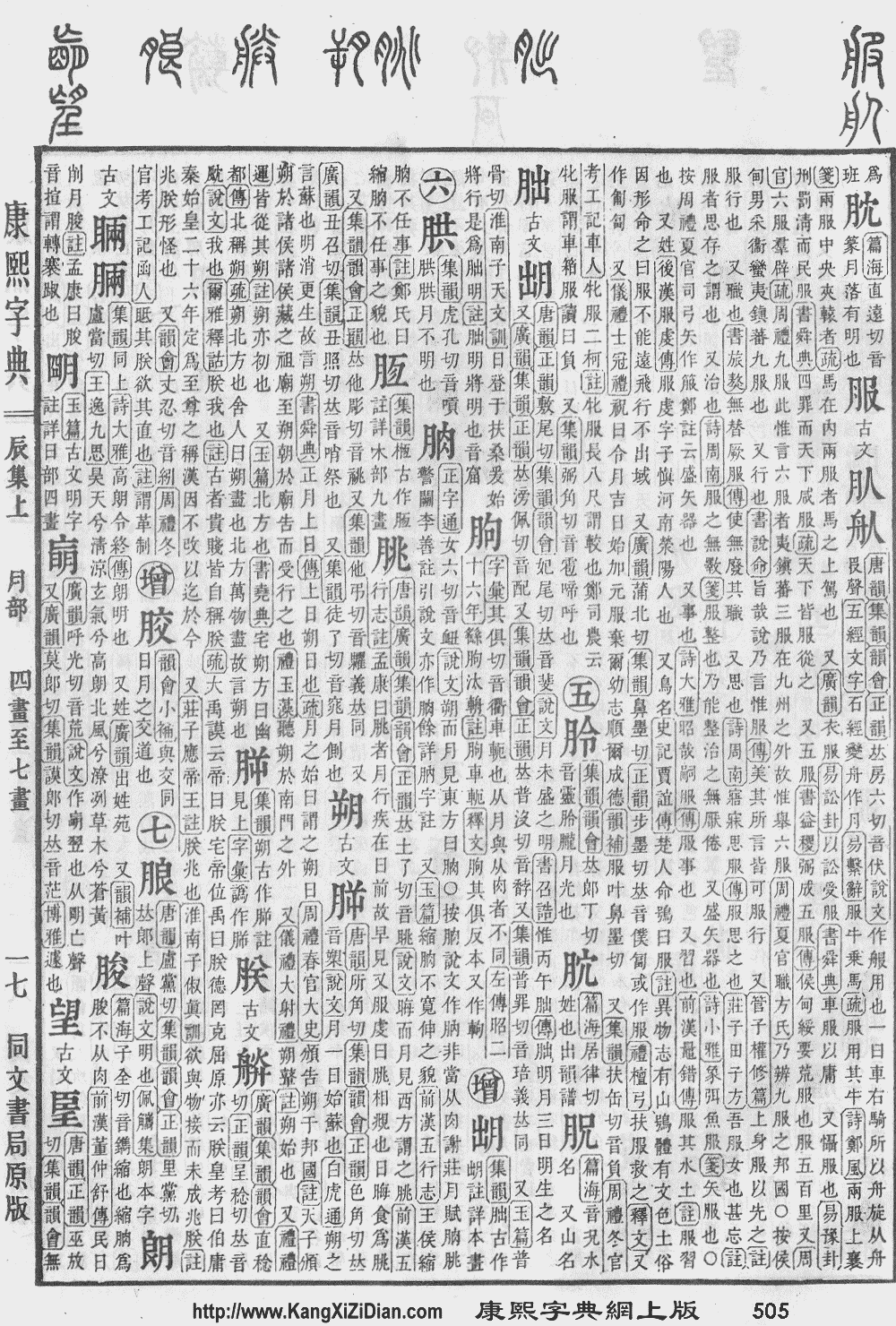
- Kangxi Dictionary: page 505, character 23
- Dai Kanwa Jiten: character 14362
- Dae Jaweon: page 884, character 19
- Hanyu Da Zidian (first edition): volume 3, page 2072, character 6
- Unihan data for U+6717
- Unihan data for U+F929
- Unihan data for U+FA92
- Unihan data for U+2F8D8
Chinese
| simp. and trad. |
朗 | |
|---|---|---|
| alternative forms | ||
Glyph origin
| Old Chinese | |
|---|---|
| 剆 | *raːl, *raːlʔ |
| 郎 | *raːŋ |
| 稂 | *raːŋ |
| 桹 | *raːŋ |
| 鋃 | *raːŋ |
| 硠 | *raːŋ |
| 浪 | *raːŋ, *raːŋs |
| 蜋 | *raːŋ, *raŋ |
| 琅 | *raːŋ |
| 狼 | *raːŋ |
| 欴 | *raːŋ |
| 踉 | *raːŋ, *raŋ, *raŋs |
| 莨 | *raːŋ, *raːŋs |
| 艆 | *raːŋ |
| 駺 | *raːŋ |
| 躴 | *raːŋ |
| 筤 | *raːŋ |
| 閬 | *raːŋ, *raːŋs |
| 哴 | *raːŋ, *raŋs |
| 蓈 | *raːŋ |
| 廊 | *raːŋ |
| 榔 | *raːŋ, *raːŋʔ |
| 螂 | *raːŋ |
| 瑯 | *raːŋ |
| 朗 | *raːŋʔ |
| 朖 | *raːŋʔ |
| 誏 | *raːŋʔ |
| 俍 | *raːŋʔ |
| 崀 | *raːŋʔ |
| 埌 | *raːŋs |
| 蒗 | *raːŋs |
| 娘 | *naŋ |
| 良 | *raŋ |
| 粮 | *raŋ |
| 悢 | *raŋs |
Phono-semantic compound (形聲/形声, OC *raːŋʔ) : phonetic 良 (OC *raŋ) + semantic 月 (“moon”)
Etymology
Areal etymon. Compare Khmer រង (rɔɔng, “be light, bright, become clear, clarify”), Old Mon to glitter (ˀaråṅ), Burmese ရောင် (raung, “brightness”), အရောင် (a.raung, “appearance, colour, luster”). Possibly related to 亮 (OC raŋh). (Schuessler, 2007)
Pronunciation
Compounds
- 不朗朗
- 伊朗 (Yīlǎng)
- 伊朗高原 (Yīlǎng Gāoyuán)
- 健朗 (jiànlǎng)
- 光朗朗
- 克朗 (kèlǎng)
- 勃朗峰 (Bólǎng Fēng)
- 勃朗特
- 勃朗運動/勃朗运动 (Bólǎng yùndòng)
- 天朗氣清/天朗气清
- 天清氣朗/天清气朗
- 布朗族 (Bùlǎngzú)
- 布朗運動/布朗运动 (Bùlǎng yùndòng)
- 明朗 (mínglǎng)
- 晃朗
- 晴朗 (qínglǎng)
- 書聲朗朗/书声朗朗
- 月朗風清/月朗风清
- 朗如 (Lǎngrú)
- 朗巴兒/朗巴儿
- 朗悟
- 朗抱
- 朗暢/朗畅
- 朗月
- 朗月清風/朗月清风
- 朗朗 (lǎnglǎng)
- 朗朗上口 (lǎnglǎngshàngkǒu)
- 朗朗雲天/朗朗云天
- 朗朗高談/朗朗高谈
- 朗格的
- 朗照
- 朗目疏眉
- 朗聲/朗声 (lǎngshēng)
- 朗誦/朗诵 (lǎngsòng)
- 朗誦詩/朗诵诗
- 朗誦調/朗诵调
- 朗讀/朗读 (lǎngdú)
- 朗鑒/朗鉴
- 清朗 (qīnglǎng)
- 清風朗月/清风朗月
- 燎朗
- 爽朗 (shuǎnglǎng)
- 珠穆朗瑪/珠穆朗玛 (Zhūmùlǎngmǎ)
- 白朗寧/白朗宁
- 白朗峰
- 目若朗星
- 眉清目朗
- 硬朗
- 神清氣朗/神清气朗
- 科朗 (kēlǎng)
- 秦庭朗鏡/秦庭朗镜
- 豁朗
- 豁然開朗/豁然开朗 (huòránkāilǎng)
- 軒朗/轩朗
- 通朗
- 遼朗/辽朗
- 開朗/开朗 (kāilǎng)
- 雋朗/隽朗
- 風恬日朗/风恬日朗
- 風恬月朗/风恬月朗
- 風清月朗/风清月朗
- 高朗
- 高聲朗誦/高声朗诵
References
- “朗”, in 漢語多功能字庫 (Multi-function Chinese Character Database), 香港中文大學 (the Chinese University of Hong Kong), 2014–
Japanese
| Shinjitai | 朗 | |
| Kyūjitai [1] |
朗 朗 |
|
| 朗󠄀 朗+ 󠄀?(Adobe-Japan1) | ||
| 朗󠄆 朗+ 󠄆?(Hanyo-Denshi) (Moji_Joho) | ||
| The displayed kanji may be different from the image due to your environment. See here for details. | ||
Readings
Compounds
- 晴朗 (seirō)
References
- “朗”, in 漢字ぺディア (Kanjipedia) (in Japanese), 日本漢字能力検定協会, 2015–2024
Korean
Etymology
From Middle Chinese 朗 (MC langX). Recorded as Middle Korean 랑 (lang) (Yale: lang) in Sinjeung Yuhap (新增類合 / 신증유합), 1576.
Pronunciation
- (initial position)
- (SK Standard/Seoul) IPA(key): [na̠(ː)ŋ]
- Phonetic hangul: [낭(ː)]
- Though still prescribed in Standard Korean, most speakers in both Koreas no longer distinguish vowel length.
- (non-initial position)
- (SK Standard/Seoul) IPA(key): [ɾa̠ŋ]
- Phonetic hangul: [랑]
Compounds
Vietnamese
Han character
朗: Hán Việt readings: lãng (
朗: Nôm readings: lẳng[1][2][3][4][5], lặng[1][2][3][4][5], rạng[1][2][3][4][5], lảng[1][2][3][4], lững[1][2][3][4], lãng[1][2][3], lửng[1][2][5], láng[1][2], lắng[1][2], sang[1][2], sáng[1][2], lựng[3][5], lẵng[1], trắng[1], rang[3], lăng[4], lứng[4]
References
- Nguyễn (2014).
- Nguyễn et al. (2009).
- Trần (2004).
- Hồ (1976).
- Taberd & Pigneau de Béhaine (1838).