泡
| ||||||||
Translingual
Han character
泡 (Kangxi radical 85, 水+5, 8 strokes, cangjie input 水心口山 (EPRU), four-corner 37112, composition ⿰氵包)
Derived characters
- 萢, 𬰀
References
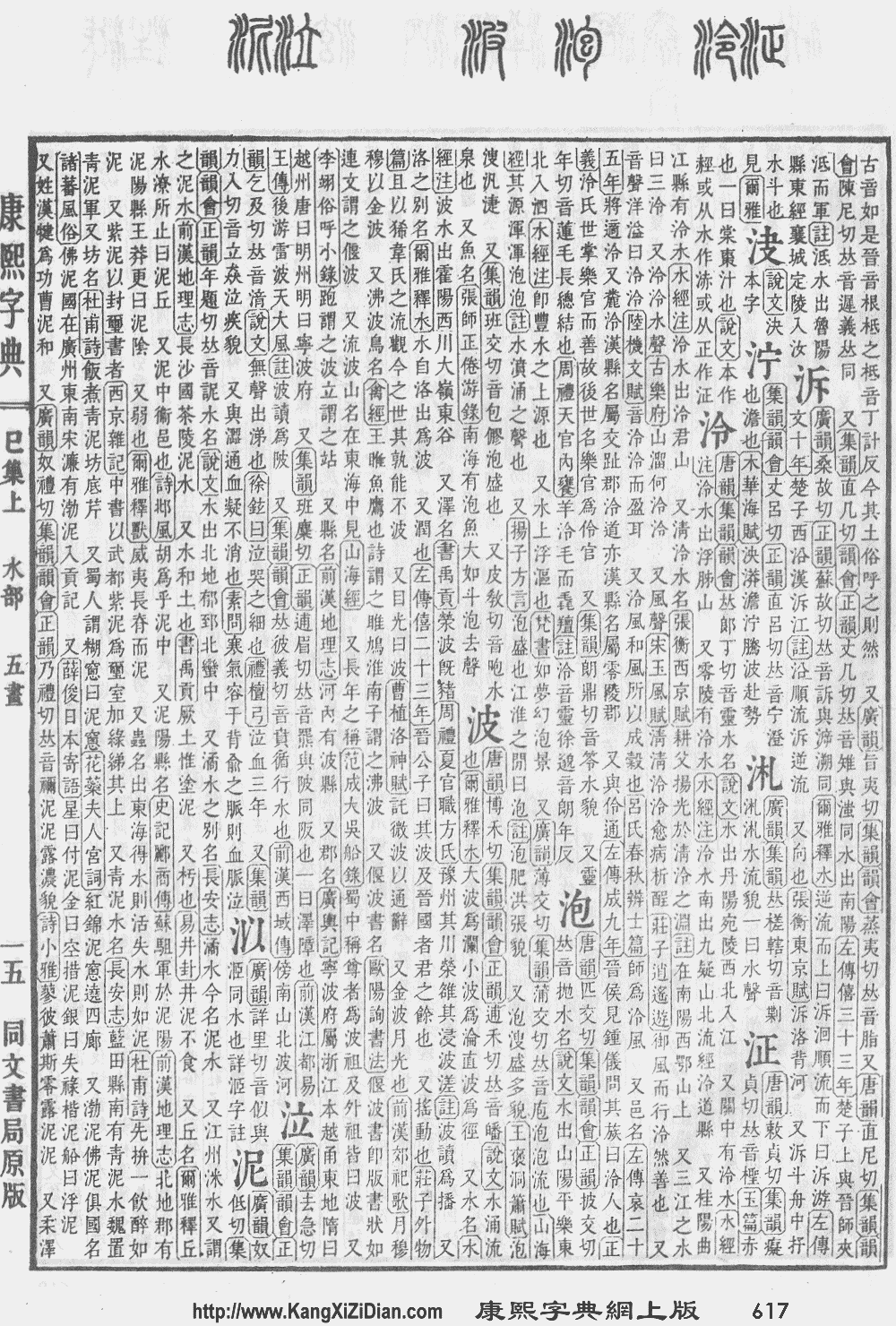
- Kangxi Dictionary: page 617, character 7
- Dai Kanwa Jiten: character 17307
- Dae Jaweon: page 1012, character 5
- Hanyu Da Zidian (first edition): volume 3, page 1591, character 5
- Unihan data for U+6CE1
Chinese
Glyph origin
| Historical forms of the character 泡 |
|---|
| Shuowen Jiezi (compiled in Han) |
| Small seal script |
 |
Characters in the same phonetic series (勹) (Zhengzhang, 2003)
| Old Chinese | |
|---|---|
| 袍 | *buː |
| 袌 | *buː, *buːs |
| 軳 | *buː |
| 抱 | *buːʔ |
| 勽 | *buːs, *mɯnʔ |
| 菢 | *buːs |
| 勹 | *pruː |
| 包 | *pruː |
| 胞 | *pruː, *pʰruː |
| 苞 | *pruː |
| 枹 | *pruː, *bu, *bu |
| 飽 | *pruːʔ |
| 泡 | *pʰruː, *m̥ʰruːs, *bruː |
| 炮 | *pʰruːs, *bruː |
| 皰 | *pʰruːs, *bruːs |
| 疱 | *pʰruːs, *bruːs |
| 跑 | *bruː, *bruːɡ |
| 咆 | *bruː |
| 庖 | *bruː |
| 匏 | *bruː |
| 刨 | *bruː |
| 狍 | *bruː |
| 炰 | *bruː |
| 鉋 | *bruː, *bruːs |
| 瓟 | *bruː, *bruːɡ |
| 颮 | *bruː, *pʰruːɡ |
| 鞄 | *bruː, *bruːʔ, *bruːs, *pʰruːɡ |
| 鮑 | *bruːʔ |
| 骲 | *bruːʔ, *bruːs, *bruːɡ, *pʰoːɡ |
| 玸 | *bu |
| 雹 | *bruːɡ |
| 窇 | *bruːɡ |
Definitions
泡
- bubble
- bubblelike or bulbous object
- blister
- (Taiwanese Hokkien) saliva; spit
- (Wuhan Mandarin, Liannan Hakka) swim bladder
Synonyms
Dialectal synonyms of 魚鰾 (“swim bladder”) [map]
Definitions
泡
Compounds
- 一泡
- 一泡子
- 充氣燈泡/充气灯泡
- 冒泡 (màopào)
- 冒泡兒/冒泡儿 (màopàor)
- 化為泡影/化为泡影 (huàwéi pàoyǐng)
- 卵泡
- 夢幻泡影/梦幻泡影
- 如法泡製/如法泡制
- 娘泡 (niángpào)
- 幻泡
- 打泡
- 氣泡/气泡 (qìpào)
- 氣泡室/气泡室
- 氣泡病/气泡病
- 水泡 (shuǐpào)
- 沖泡/冲泡 (chōngpào)
- 泡妞 (pàoniū)
- 泡幻
- 泡影 (pàoyǐng)
- 泡桐 (pāotóng)
- 泡棉
- 泡水
- 泡泡
- 泡沫 (pàomò)
- 泡沫劑/泡沫剂
- 泡沫塑膠/泡沫塑胶
- 泡沫橡膠/泡沫橡胶
- 泡沫水泥
- 泡沫浴
- 泡沫玻璃
- 泡泡糖 (pàopàotáng)
- 泡沫紅茶/泡沫红茶
- 泡沫經濟/泡沫经济 (pàomò jīngjì)
- 泡沫車/泡沫车
- 泡沫髮膠/泡沫发胶
- 泡湯/泡汤 (pàotāng)
- 泡滾/泡滚
- 泡漩
- 泡燈/泡灯
- 泡疹
- 泡病號/泡病号
- 泡磨菇
- 泡芙 (pàofú)
- 泡茶 (pàochá)
- 泡茶館/泡茶馆
- 泡菜 (pàocài)
- 泡蘑菇 (pào mógu)
- 泡螺
- 泡貨/泡货
- 泡飯/泡饭 (pàofàn)
- 泡麵/泡面 (pàomiàn)
- 泡麵哲學/泡面哲学
- 泡麵市場/泡面市场
- 浸泡 (jìnpào)
- 海泡石
- 液泡 (yèpào)
- 液泡膜
- 潦泡 (liáopào)
- 潦漿泡/潦浆泡
- 濾泡/滤泡
- 濾泡期/滤泡期
- 燎泡 (liáopào)
- 燈泡/灯泡 (dēngpào)
- 燎漿泡/燎浆泡
- 發泡成形/发泡成形
- 眼泡
- 美得冒泡
- 肉眼泡兒/肉眼泡儿
- 肺泡 (fèipào)
- 肥皂泡 (féizàopào)
- 豆泡 (dòupāo)
- 電燈泡/电灯泡 (diàndēngpào)
Japanese
| Shinjitai | 泡 | |
| Kyūjitai [1] |
泡󠄁 泡+ 󠄁?(Adobe-Japan1) |
 |
| 泡󠄃 泡+ 󠄃?(Hanyo-Denshi) (Moji_Joho) | ||
| The displayed kanji may be different from the image due to your environment. See here for details. | ||
Readings
Etymology
| Kanji in this term |
|---|
| 泡 |
| あわ Grade: S |
| kun’yomi |
| Alternative spelling |
|---|
| 沫 |
From Old Japanese. Appears in the Nihon Shoki of 720 CE.[2] From Proto-Japonic *awa.
References
- “泡”, in 漢字ぺディア (Kanjipedia) (in Japanese), 日本漢字能力検定協会, 2015–2024
- 1988, 国語大辞典(新装版) (Kokugo Dai Jiten, Revised Edition) (in Japanese), Tōkyō: Shogakukan
- 2006, 大辞林 (Daijirin), Third Edition (in Japanese), Tōkyō: Sanseidō, →ISBN
Korean
Etymology
From Middle Chinese 泡 (MC phaew). Recorded as Middle Korean 포 (phwo) (Yale: pwo) in Hunmong Jahoe (訓蒙字會 / 훈몽자회), 1527.
Compounds
Okinawan
Pronunciation
- IPA(key): /ʔaː/
References
- “あー【泡・沫】” in JLect - Japonic Languages and Dialects Database Dictionary, 2019.
Vietnamese
This article is issued from Wiktionary. The text is licensed under Creative Commons - Attribution - Sharealike. Additional terms may apply for the media files.