焚
| ||||||||
Translingual
Han character
焚 (Kangxi radical 86, 火+8, 12 strokes, cangjie input 木木火 (DDF), four-corner 44809, composition ⿱林火)
Alternative forms
Derived characters
References
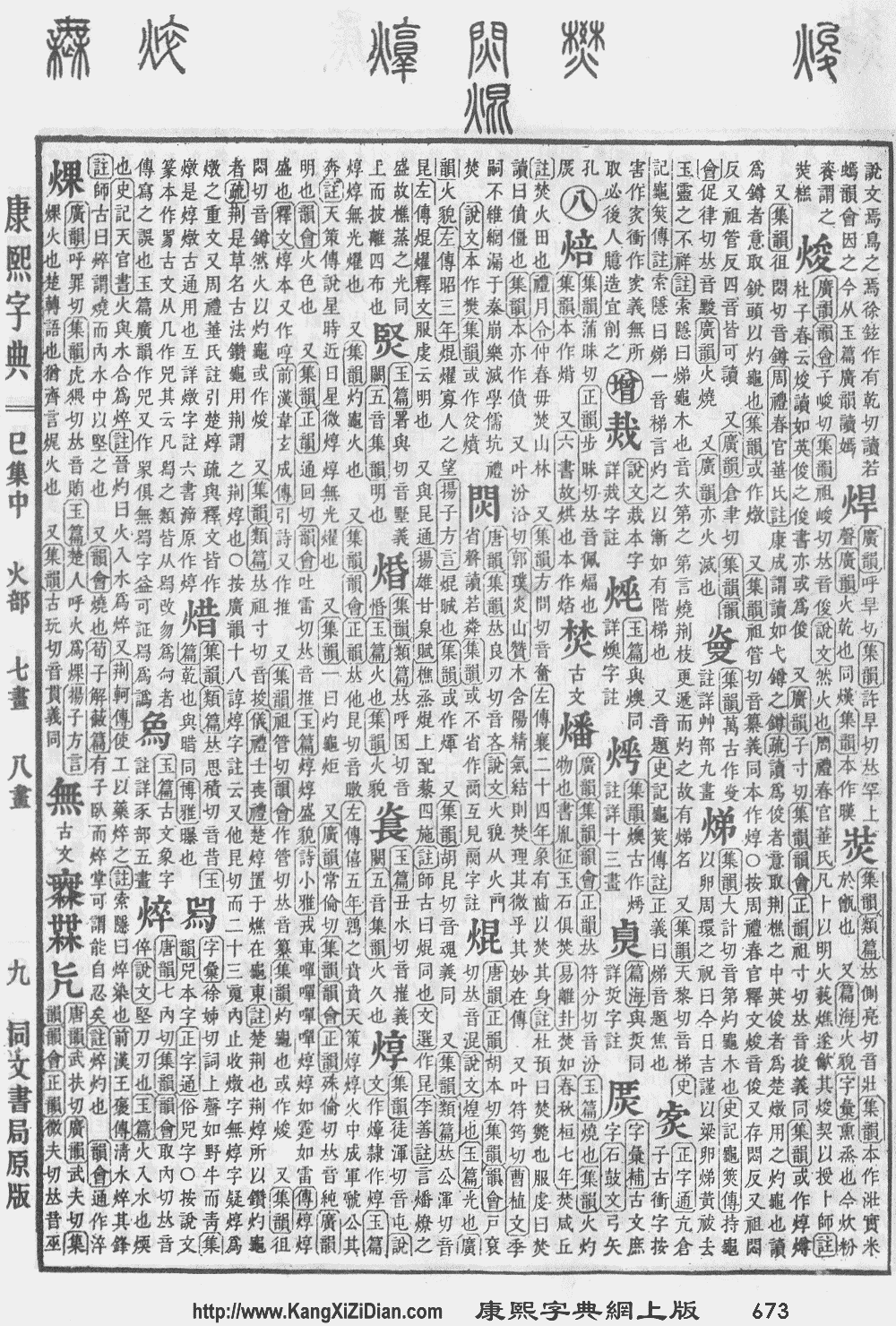
- Kangxi Dictionary: page 673, character 13
- Dai Kanwa Jiten: character 19100
- Dae Jaweon: page 1081, character 15
- Hanyu Da Zidian (first edition): volume 3, page 2208, character 9
- Unihan data for U+711A
Chinese
Lua error in Module:utilities at line 142: attempt to perform arithmetic on local 'h' (a nil value)
Etymology
| Historical forms of the character 焚 | ||
|---|---|---|
| Shang | Western Zhou | Shuowen Jiezi (compiled in Han) |
| Oracle bone script | Bronze inscriptions | Small seal script |
 |
 |
 |
Pronunciation
Definitions
焚
Compounds
- 五內如焚/五内如焚
- 引火自焚
- 心急如焚 (xīnjírúfén)
- 心焦如焚
- 憂心如焚/忧心如焚 (yōuxīnrúfén)
- 慾火焚身/欲火焚身 (yùhuǒfénshēn)
- 抱薪救焚
- 拯溺救焚
- 救焚拯溺
- 未焚徙薪
- 沐浴焚香
- 濟河焚舟/济河焚舟
- 焚修
- 焚劫
- 焚化 (fénhuà)
- 焚化爐/焚化炉 (fénhuàlú)
- 焚如
- 焚如之刑
- 焚如之禍/焚如之祸
- 焚屍揚灰/焚尸扬灰
- 焚掠
- 焚書/焚书 (fénshū)
- 焚書坑儒/焚书坑儒 (fénshūkēngrú)
- 焚林之求
- 焚林而田
- 焚林而畋
- 焚毀/焚毁 (fénhuǐ)
- 焚溺
- 焚燒/焚烧 (fénshāo)
- 焚琴煮鶴/焚琴煮鹤 (fén qín zhǔ hè)
- 焚研
- 焚硯/焚砚
- 煮粥焚鬚/煮粥焚须
- 焚膏繼晷/焚膏继晷 (féngāojìguǐ)
- 焚舟
- 焚舟破釜
- 焚芝
- 焚芝鋤蕙/焚芝锄蕙
- 焚草
- 焚輪/焚轮
- 焚風/焚风 (fénfēng)
- 焚香 (fénxiāng)
- 焚香頂禮/焚香顶礼
- 焚骨揚灰/焚骨扬灰
- 煮鶴焚琴/煮鹤焚琴
- 焚黃/焚黄
- 熯焚
- 玉石俱焚 (yùshíjùfén)
- 玉石同焚
- 玩火自焚 (wánhuǒzìfén)
- 繼晷焚膏/继晷焚膏 (jìguǐféngāo)
- 自焚 (zìfén)
- 芝焚蕙嘆/芝焚蕙叹
- 芝艾俱焚
- 蘭艾俱焚/兰艾俱焚
- 蘭艾同焚/兰艾同焚
- 象齒焚身/象齿焚身
- 飢火中焚/饥火中焚
- 鼓瑟焚香
Japanese
Kanji
焚
(“Jinmeiyō” kanji used for names)
- This term needs a translation to English. Please help out and add a translation, then remove the text
{{rfdef}}.
Korean
Etymology
From Middle Chinese 焚 (MC bjun). Recorded as Middle Korean 분〮 (pwún) (Yale: pwun) in Hunmong Jahoe (訓蒙字會 / 훈몽자회), 1527.
Compounds
Compounds
- 분신 (焚身, bunsin, “set oneself on fire”)
- 분사 (焚死, bunsa, “burning to death”)
- 분향 (焚香, bunhyang, “burning incense”)
- 분탕 (焚蕩, buntang, “squandering”)
- 분살 (焚殺, bunsal, “killing by setting fire”)
- 분화 (焚火, bunhwa, “setting on fire”)
- 분멸 (焚滅, bunmyeol, “incineration”)
- 분서갱유 (焚書坑儒, bunseogaeng'yu)
- 분신자살 (焚身自殺, bunsinjasal)
Vietnamese
This article is issued from Wiktionary. The text is licensed under Creative Commons - Attribution - Sharealike. Additional terms may apply for the media files.