猫
| ||||||||
Translingual
| Stroke order | |||
|---|---|---|---|
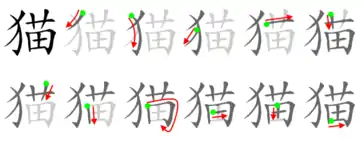 | |||
| Stroke order (Chinese) | |||
|---|---|---|---|
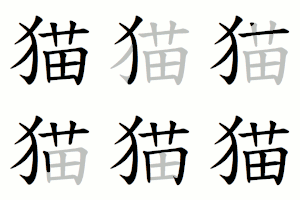 | |||
| Stroke order (Japan) | |||
|---|---|---|---|
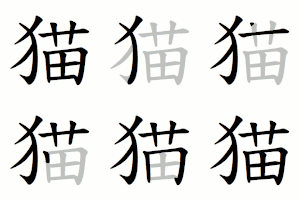 | |||
| Japanese | 猫 |
|---|---|
| Simplified | 猫 |
| Traditional | 貓 |
Han character
猫 (Kangxi radical 94, 犬+8, 11 strokes, cangjie input 大竹廿田 (KHTW), four-corner 44260, composition ⿰犭苗)
Derived characters
- 𢵝, 𫫯
References
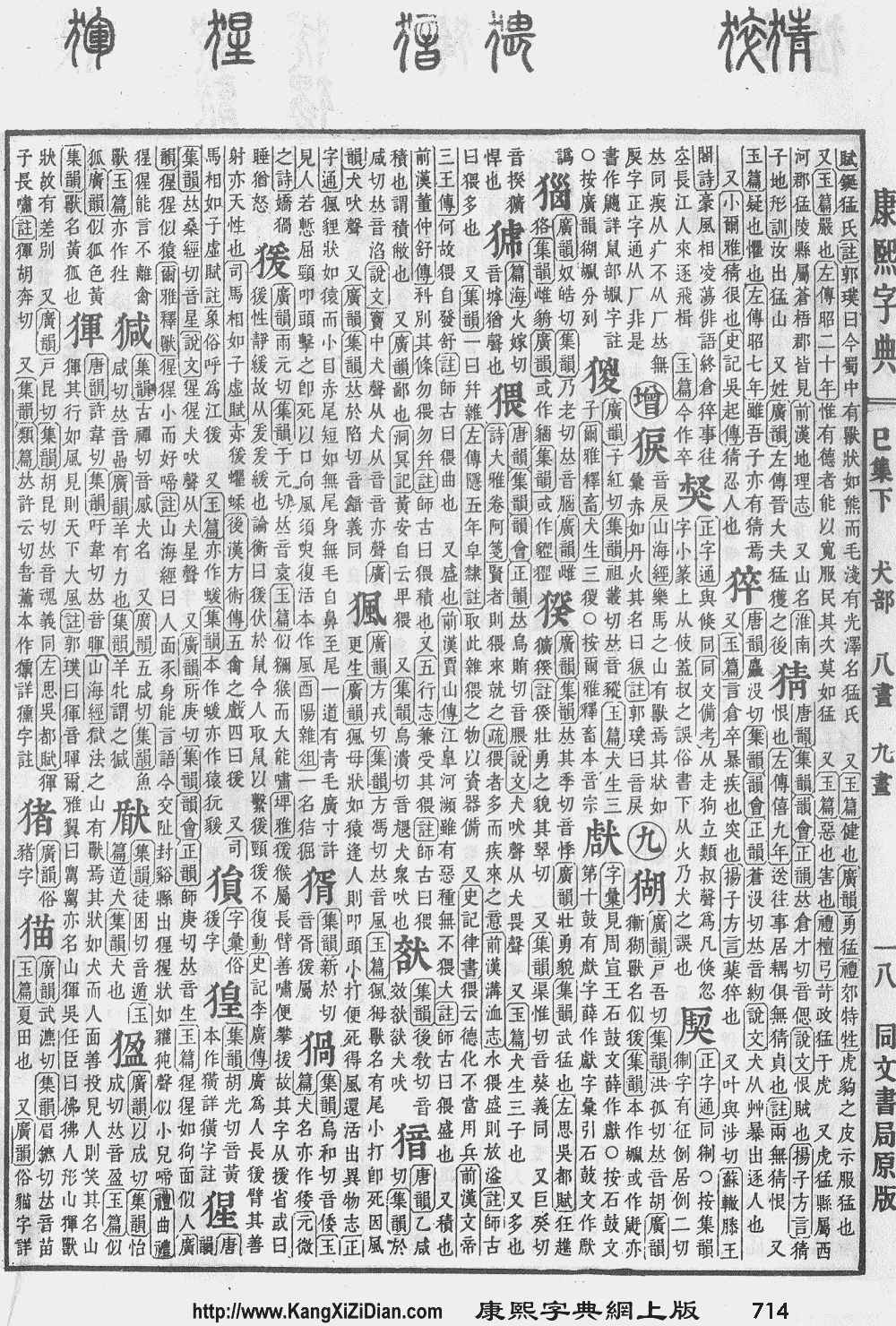
- Kangxi Dictionary: page 714, character 27
- Dai Kanwa Jiten: character 20535
- Dae Jaweon: page 1127, character 1
- Hanyu Da Zidian (first edition): volume 2, page 1352, character 1
- Unihan data for U+732B
Chinese
Glyph origin
Phono-semantic compound (形聲/形声, OC *mrew) : semantic 犬 + phonetic 苗 (OC *mrew).
Definitions
Lua error in Module:utilities at line 142: attempt to perform arithmetic on local 'h' (a nil value)
Japanese
Readings
Lua error in Module:utilities at line 142: attempt to perform arithmetic on local 'h' (a nil value)
Compounds
Etymology 1
| Kanji in this term |
|---|
| 猫 |
| ねこ Grade: S |
| kun’yomi |
⟨neko1⟩ → /neko/
From Old Japanese. Cognate with Miyako にか (nika, “cat”, Tarama and Minna dialects) via unknown Japonic substratum.
A comparison of accent patterns between the dialects shows some confusion: (Can this(+) etymology be sourced?)
- One group of dialects behaves as if <LF> was the Heian Kyoto accent pattern: many dialects with the Tokyo type accent, including the standard Japanese in Tokyo, pronounce this word with an <HL(L)> pitch pattern, and in some non-mainstream Keihan type dialects as well, this word has a corresponding <LF> pitch pattern. (Can this(+) etymology be sourced?)
- Another group of dialects behaves as if <LL> was the Heian Kyoto accent pattern: the mainstream Keihan type dialects pronounce this word with an <HL> pitch pattern, and in a few of the Tokyo type dialects, this word has a corresponding <LH(L)> pitch pattern. (Can this(+) etymology be sourced?)
As a result, this term is one example of words that have the same pitch accent pattern between Tokyo and Osaka/Kyoto. The confusion seems to be due to an impression that the term comes from a compound word origin. (Can this(+) etymology be sourced?)
One theory explains that neko is shortened from earlier Lua error in Module:utilities at line 142: attempt to perform arithmetic on local 'h' (a nil value), but neko has a first appearance in literature earlier than that for nekoma.
First attested in the 新訳華厳経音義私記 (Shin'yaku Kegonkyō Ongi Shiki) of 794.
- 猫狸 [...] ニ又漢云野貍、倭言上尼古、下多〻既
- Cat and raccoon dog, [...] both of them are called 野貍 (yari) in Chinese; the former is called 尼古 (⟨neko1⟩ → neko) while the latter is called 多〻既 (⟨tatake2⟩ → tatake) in Japanese.
Noun
Derived terms
- 子猫 (koneko), 仔猫 (koneko): a kitten
- 黒猫 (kuroneko): a black cat
- 麝香猫 (jakō neko): civet
- シュレーディンガーの猫 (Shurēdingā no neko): Schrödinger's cat
- 猫手 (nekote)
- 猫間 (nekoma)
- 猫又 (nekomata)
- 猫耳 (nekomimi): nekomimi
- 唐猫 (karaneko)
- 化け猫 (bakeneko): a monster cat
- 招き猫 (manekineko)
- 虎猫 (toraneko)
- どら猫 (doraneko)
- 山猫 (yamaneko)
- 猫可愛がり (nekokawaigari)
- 三毛猫 (mikeneko): a calico cat
Idioms
- 猫も杓子も (neko mo shakushi mo)
- 猫の手も借りたい (neko no te mo karitai)
- 猫舌 (nekojita): "cat tongue", someone who is incapable of drinking or eating anything hot due to having an overly sensitive tongue
- 猫に鰹節 (neko ni katsuobushi)
- 猫に小判 (neko ni kohan): pearls before swine
- 猫の額 (neko no hitai)
- 借りてきた猫 (karite kita neko)
- 猫を被る (neko o kaburu): feign innocence
Etymology 2
| Kanji in this term |
|---|
| 猫 |
| ねこま Grade: S |
| kun’yomi |
According to the 和名類聚抄 (Wamyō Ruijushō), 931–938, Lua error in Module:utilities at line 142: attempt to perform arithmetic on local 'h' (a nil value) is short for this word.
- 1648, Minamoto no Shitagō, Wamyō Ruijushō, volume 7, page 56:
- 猫: 野王案、猫、音苗、禰古麻、下總本有和名二字興河海抄引此合、本草和名同訓、或省云禰古、新撰字鏡、狸、禰古、按狸一名猫、見本草和名、似虎而小、熊捕鼠為糧
One theory describes the first mora <ne> as onomatopoeia for the sound a cat makes (cf. にゃ (nya); compare English mew, meow). The last two morae <ko1ma> might accord with 熊 (kuma, “bear”) if it were from Proto-Japonic *kòmà, in the sense of "four-legged animal". (Can this(+) etymology be sourced?) The Heian Kyoto accent of this word is <LHL>; note that in compound words for species names, the pitch pattern may be simplised to <-HL> when the final element is a 2-mora noun (Can this(+) etymology be sourced?), and the presence or absence of this phenomenon could explain the accent confusion in neko. (Can this(+) etymology be sourced?)
However, nekoma is first cited to 918 in the 本草和名 (Honzō Wamyō, the oldest surviving dictionary of medicine in Japan),[3] while neko is first attested in 794.
- c. 918, Honzō Wamyō:
- 家狸、一名猫、和名禰古末
Pronunciation
- IPA(key): [ne̞ko̞ma̠]
References
- Minamoto, Shitagō; Kyōto Daigaku Bungakubu Kokugogaku Kokubungaku Kenkyūshitu (931–938) Shohon Shūsei Wamyō Ruijushō: Honbunhen (in Japanese), Kyōto: Rinsen, published 1968, →ISBN.
Korean
Etymology
From Middle Chinese 猫 (MC mjew). Recorded as Middle Korean 貓/묘 (myo) (Yale: myo) in Hunmong Jahoe (訓蒙字會 / 훈몽자회), 1527.
Okinawan
Readings
Lua error in Module:utilities at line 142: attempt to perform arithmetic on local 'h' (a nil value)
Compounds
References
- “まやー・まやあ【猫】” in JLect - Japonic Languages and Dialects Database Dictionary, 2019.