See also:
U+7C2B, 簫
CJK UNIFIED IDEOGRAPH-7C2B

[U+7C2A]
CJK Unified Ideographs
[U+7C2C]

Translingual

Traditional Lua error in Module:utilities at line 142: attempt to perform arithmetic on local 'h' (a nil value)
Shinjitai
(extended)
Simplified

Han character

(Kangxi radical 118, +12, 18 strokes, cangjie input 竹中X (HLX), four-corner 88227, composition 𥫗)

References

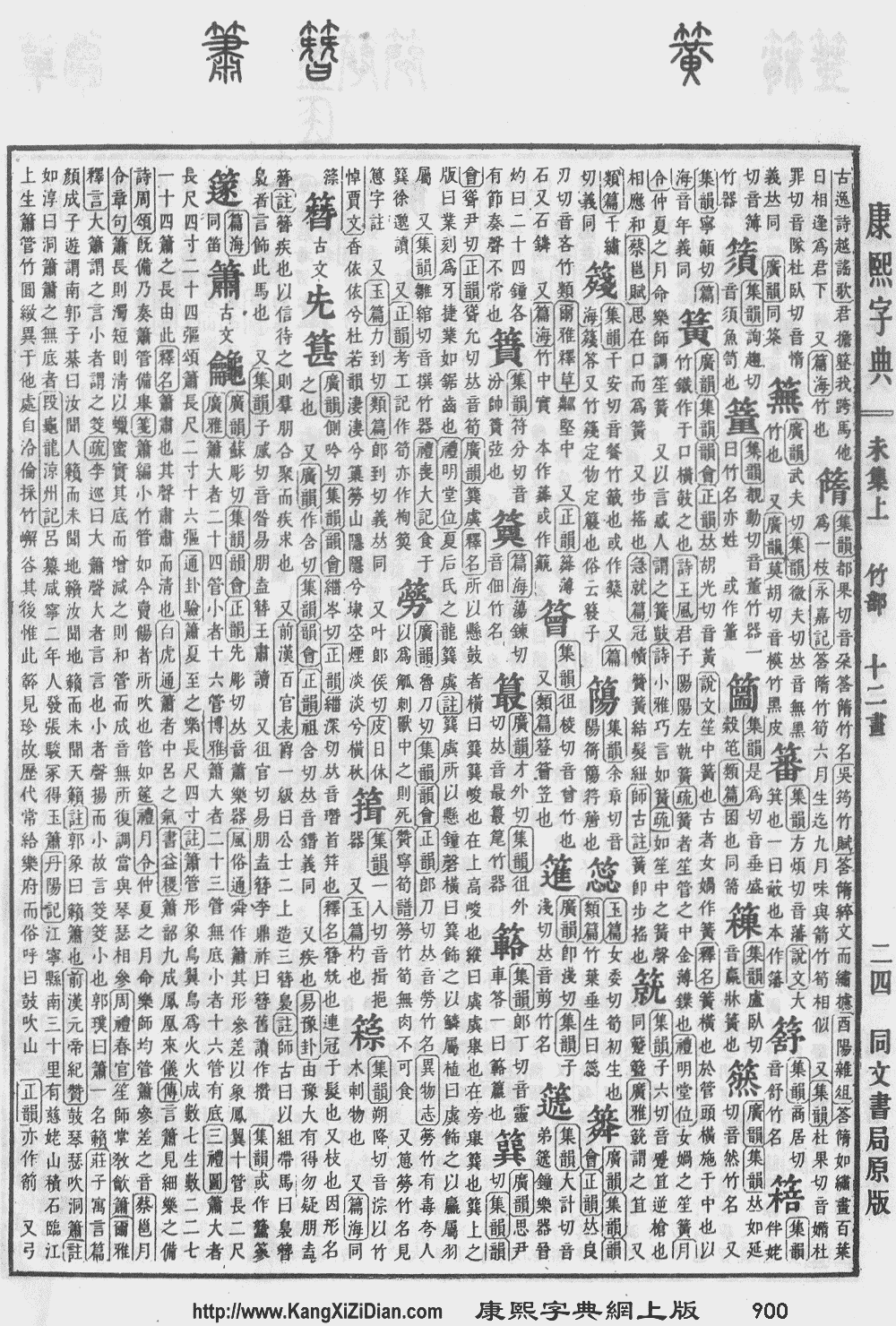
  • Kangxi Dictionary: page 900, character 32
  • Dai Kanwa Jiten: character 26560
  • Dae Jaweon: page 1326, character 16
  • Hanyu Da Zidian (first edition): volume 5, page 3023, character 10
  • Unihan data for U+7C2B

Chinese

Lua error in Module:utilities at line 142: attempt to perform arithmetic on local 'h' (a nil value)

Glyph origin

Phono-semantic compound (形聲形声, OC *sɯːw) : semantic (bamboo) + phonetic (OC *sɯwɢ).

Pronunciation


Note:
  • siao1 - Shantou;
  • siou1 - Chaozhou.

Rime
Character
Reading # 1/1
Initial () (16)
Final () (93)
Tone (調) Level (Ø)
Openness (開合) Open
Division () IV
Fanqie
Baxter sew
Reconstructions
Zhengzhang
Shangfang
/seu/
Pan
Wuyun
/seu/
Shao
Rongfen
/seu/
Edwin
Pulleyblank
/sɛw/
Li
Rong
/seu/
Wang
Li
/sieu/
Bernard
Karlgren
/sieu/
Expected
Mandarin
Reflex
xiāo
Expected
Cantonese
Reflex
siu1
BaxterSagart system 1.1 (2014)
Character
Reading # 1/1
Modern
Beijing
(Pinyin)
xiāo
Middle
Chinese
‹ sew ›
Old
Chinese
/*sˁiw/
English pan-pipe

Notes for Old Chinese notations in the Baxter–Sagart system:

* Parentheses "()" indicate uncertain presence;
* Square brackets "[]" indicate uncertain identity, e.g. *[t] as coda may in fact be *-t or *-p;
* Angle brackets "<>" indicate infix;
* Hyphen "-" indicates morpheme boundary;

* Period "." indicates syllable boundary.
Zhengzhang system (2003)
Character
Reading # 1/1
No. 12113
Phonetic
component
Rime
group
Rime
subdivision
2
Corresponding
MC rime
Old
Chinese
/*sɯːw/

Definitions

  1. (music) xiao, a vertical, notched, end-blown bamboo flute used since ancient times in Chinese traditional and classical music
  2. (music, historical) paixiao; panpipes
  3. (Cantonese, Min Bei, Min Dong) transverse flute
  4. a surname: Xiao

Synonyms

Lua error in Module:utilities at line 142: attempt to perform arithmetic on local 'h' (a nil value) Lua error in Module:utilities at line 142: attempt to perform arithmetic on local 'h' (a nil value)

Compounds

  • 吳市吹簫吴市吹箫
  • 吹簫吹箫 (chuīxiāo)
  • 吹簫吳市吹箫吴市
  • 品簫品箫
  • 夕陽簫鼓夕阳箫鼓
  • 夜簫夜箫
  • 排簫排箫 (páixiāo)
  • 洞簫洞箫 (dòngxiāo)
  • 潘神簫潘神箫
  • 玉簫玉箫 (yùxiāo)
  • 玉簫聲斷玉箫声断
  • 短簫短箫 (duǎnxiāo)
  • 簫管箫管
  • 簫韶箫韶
  • 簫韶九成箫韶九成
  • 簫鼓箫鼓 (xiāogǔ)
  • 鳳凰簫凤凰箫
  • 鳳簫凤箫

Japanese

Shinjitai

Kyūjitai

Lua error in Module:utilities at line 142: attempt to perform arithmetic on local 'h' (a nil value)

Kanji

(uncommon “Hyōgai” kanji, kyūjitai kanji, shinjitai form )

Readings

Lua error in Module:utilities at line 142: attempt to perform arithmetic on local 'h' (a nil value)

Compounds

Kanji in this term
しょう
Hyōgaiji
on’yomi

Etymology

From Middle Chinese Lua error in Module:utilities at line 142: attempt to perform arithmetic on local 'h' (a nil value).

Pronunciation

Noun

(しょう) • (shō) せう (seu)?

  1. xiao (Chinese flute)

Usage notes

Synonymous with the longer phrase 簫の笛 (shō no fue, literally shō flute).[1] However, given the rarity of this kanji in writing, and the large number of possible single-kanji terms pronounced as shō in Japanese, this longer term that specifies (flute) is used to clarify and disambiguate.

References

  1. 2006, 大辞林 (Daijirin), Third Edition (in Japanese), Tōkyō: Sanseidō, →ISBN

Korean

Hanja

• (so) (hangeul , revised so, McCuneReischauer so, Yale so)

  1. This term needs a translation to English. Please help out and add a translation, then remove the text {{rfdef}}.

Compounds

Vietnamese

Han character

: Hán Nôm readings: tiêu, tiu

  1. This term needs a translation to English. Please help out and add a translation, then remove the text {{rfdef}}.
This article is issued from Wiktionary. The text is licensed under Creative Commons - Attribution - Sharealike. Additional terms may apply for the media files.