紺
| ||||||||
Translingual
Han character
紺 (Kangxi radical 120, 糸+5, 11 strokes, cangjie input 女火廿一 (VFTM), four-corner 24970, composition ⿰糹甘)
- dark blue or reddish color
References
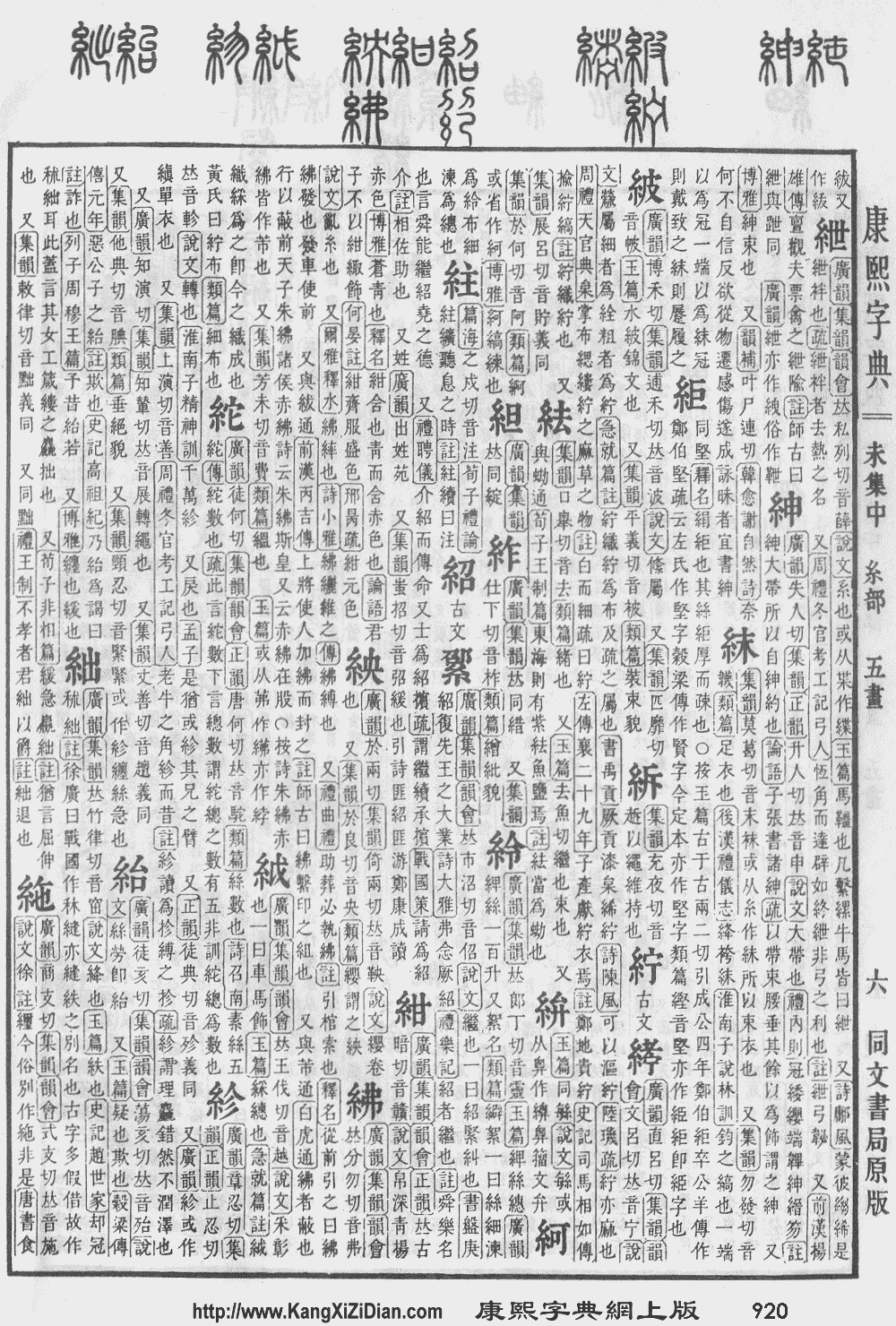
- Kangxi Dictionary: page 920, character 18
- Dai Kanwa Jiten: character 27362
- Dae Jaweon: page 1352, character 14
- Hanyu Da Zidian (first edition): volume 5, page 3378, character 12
- Unihan data for U+7D3A
Chinese
Lua error in Module:utilities at line 142: attempt to perform arithmetic on local 'h' (a nil value)
Glyph origin
| Historical forms of the character 紺 | |
|---|---|
| Shuowen Jiezi (compiled in Han) | Liushutong (compiled in Ming) |
| Small seal script | Transcribed ancient scripts |
 |
 |
Phono-semantic compound (形聲/形声, OC *kɯːms) : semantic 糸 (“silk; thread”) + phonetic 甘 (OC *kaːm).
Etymology 1
An areal word. Compare Proto-Tai *klamᴮ (“dark (red)”) (whence Thai คล้ำ (klám, “dark”)), Proto-Austronesian *kelam (“dark”) (Schuessler, 2007). See also 黔 and 黮.
Pronunciation
Etymology 2
Borrowed from Lua error in Module:utilities at line 142: attempt to perform arithmetic on local 'h' (a nil value), from Lua error in Module:utilities at line 142: attempt to perform arithmetic on local 'h' (a nil value), see previous etymology for detail.
Pronunciation
References
- “紺”, in 漢語多功能字庫 (Multi-function Chinese Character Database), 香港中文大學 (the Chinese University of Hong Kong), 2014–
Japanese
Etymology
| Kanji in this term |
|---|
| 紺 |
| こん Grade: S |
| on’yomi |
Korean
Etymology
From Middle Chinese 紺 (MC komH). Recorded as Middle Korean 감〯 (kǎm) (Yale: kǎm) in Hunmong Jahoe (訓蒙字會 / 훈몽자회), 1527.
Pronunciation
- (SK Standard/Seoul) IPA(key): [ka̠m]
- Phonetic hangul: [감]