繁
See also: 緐
| ||||||||
 | ||||||||
Translingual
Han character
繁 (Kangxi radical 120, 糸+11 in Chinese, 糸+10 in Japanese, 17 strokes in Chinese, 18 strokes in Japanese, cangjie input 人大女戈火 (OKVIF), four-corner 88903, composition ⿱敏糸)
References
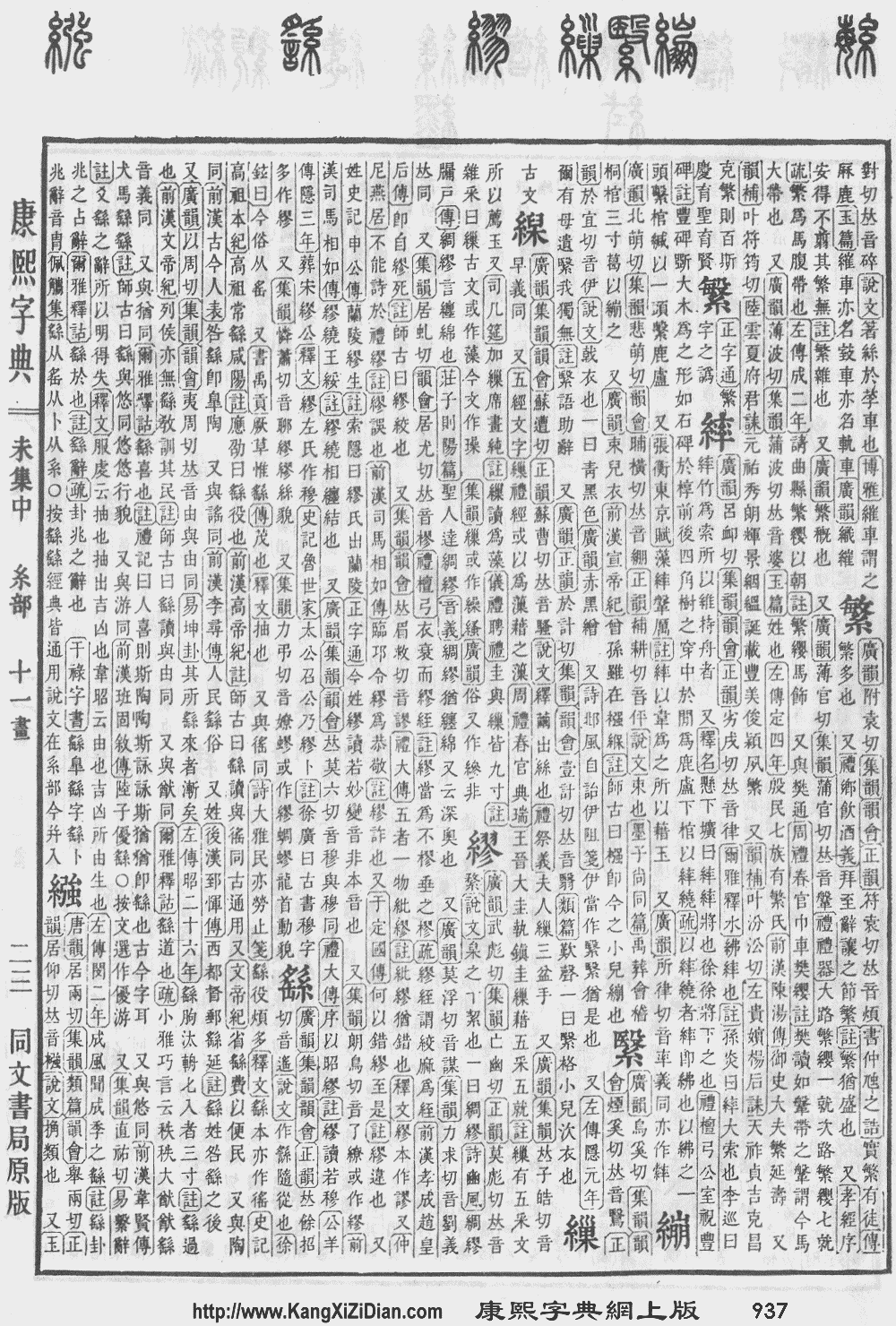
- Kangxi Dictionary: page 937, character 1
- Dai Kanwa Jiten: character 27803
- Dae Jaweon: page 1376, character 5
- Hanyu Da Zidian (first edition): volume 5, page 3444, character 3
- Unihan data for U+7E41
- Unihan data for U+FA59
Chinese
| trad. | 繁 | |
|---|---|---|
| simp. # | 繁 | |
| 2nd round simp. | ⿰纟凡 | |
| alternative forms | ||
Glyph origin
Characters in the same phonetic series (緐) (Zhengzhang, 2003)
Phono-semantic compound (形聲/形声, OC *baːl, *baːn, *ban) : phonetic 敏 (OC *mrɯʔ, *mrɯŋʔ) + semantic 糸 (“silk”)
Etymology
The same word as 蕃 (OC *ban, “luxuriant; numerous”). See there for more.
Pronunciation 1
Definitions
繁
Compounds
- 人工繁殖
- 冗繁
- 分株繁殖
- 刪繁就簡/删繁就简
- 化繁為簡/化繁为简 (huàfánwéijiǎn)
- 卷帙浩繁
- 多言繁稱/多言繁称
- 實繁有徒/实繁有徒
- 急竹繁絲/急竹繁丝
- 急管繁絃/急管繁弦
- 意謂繁句/意谓繁句
- 旌繁
- 春秋繁露
- 有性繁殖
- 枝繁葉茂/枝繁叶茂 (zhīfányèmào)
- 根蘗繁殖
- 浩繁 (hàofán)
- 演繁露
- 生齒日繁/生齿日繁
- 紛繁/纷繁 (fēnfán)
- 繁冗 (fánrǒng)
- 繁分數/繁分数
- 繁刑重斂/繁刑重敛
- 繁刑重賦/繁刑重赋
- 繁劇/繁剧
- 繁博
- 繁句
- 繁囂/繁嚣
- 繁多 (fánduō)
- 繁密 (fánmì)
- 繁富 (fánfù)
- 繁弦急管
- 繁弱
- 繁忙 (fánmáng)
- 繁文末節/繁文末节
- 繁文縟禮/繁文缛礼
- 繁文縟節/繁文缛节
- 繁昌 (fánchāng)
- 繁星 (fánxīng)
- 繁暑
- 繁有徒
- 繁榮/繁荣 (fánróng)
- 繁榮富強/繁荣富强
- 繁榮昌盛/繁荣昌盛
- 繁殖 (fánzhí)
- 繁瑣/繁琐 (fánsuǒ)
- 繁盛 (fánshèng)
- 繁禮多儀/繁礼多仪
- 繁細/繁细 (fánxì)
- 繁絲急管/繁丝急管
- 繁縟/繁缛
- 繁纓/繁缨
- 繁缺
- 繁育 (fányù)
- 繁臺/繁台
- 繁花錦簇/繁花锦簇
- 繁茂 (fánmào)
- 繁華/繁华 (fánhuá)
- 繁華世界/繁华世界
- 繁華損枝/繁华损枝
- 繁蕪/繁芜
- 繁衍 (fányǎn)
- 繁複/繁复 (fánfù)
- 繁言吝嗇/繁言吝啬
- 繁賾/繁赜
- 繁重 (fánzhòng)
- 繁雜/繁杂 (fánzá)
- 繁難/繁难 (fánnán)
- 繁露
- 繁體/繁体 (fántǐ)
- 繁體字/繁体字 (fántǐzì)
- 繁麗/繁丽
- 舉要治繁/举要治繁
- 芟繁就簡/芟繁就简
- 葉塊繁殖/叶块繁殖
- 豐繁/丰繁 (fēngfán)
- 頻繁/频繁 (pínfán)
- 食指浩繁
Descendants
Pronunciation 2
Pronunciation 3
Pronunciation 4
Japanese
| Shinjitai | 繁 |  |
| Kyūjitai [1][2][3][4] |
繁 繁or 繁+ ︀? |
|
| 繁󠄁 繁+ 󠄁?(Adobe-Japan1) | ||
| 繁󠄃 繁+ 󠄃?(Hanyo-Denshi) (Moji_Joho) | ||
| The displayed kanji may be different from the image due to your environment. See here for details. | ||
Readings
Etymology 1
| Kanji in this term |
|---|
| 繁 |
| はん Grade: S |
| kan’on |
| Alternative spelling |
|---|
| 繁 (kyūjitai) |
From Middle Chinese 繁 (MC bjon).
Affix
Derived terms
Derived terms
- 繁委 (han'i)
- 繁蔚 (han'i)
- 繁育 (han'iku) (蕃育 (han'iku))
- 繁陰 (han'in)
- 繁蔚 (han'utsu)
- 繁雲 (han'un)
- 繁英 (han'ei)
- 繁栄 (han'ei)
- 繁纓 (han'ei)
- 繁翳 (han'ei)
- 繁衍 (han'en)
- 繁音 (han'on)
- 繁柯 (hanka)
- 繁科 (hanka)
- 繁苛 (hanka)
- 繁夥 (hanka)
- 繁華 (hanka)
- 繁会 (hankai)
- 繁簡 (hankan) (煩簡 (hankan))
- 繁翰 (hankan)
- 繁詭 (hanki)
- 繁刑 (hankei)
- 繁劇 (hangeki) (煩劇 (hangeki))
- 繁絃 (hangen)
- 繁言 (hangen)
- 繁減 (hangen)
- 繁興 (hankō)
- 繁瑣 (hansa)
- 繁砕 (hansai)
- 繁采 (hansai)
- 繁細 (hansai) (煩細 (hansai))
- 繁錯 (hansaku)
- 繁雑 (hanzatsu) (煩雑 (hanzatsu))
- 繁侈 (hanshi)
- 繁枝 (hanshi)
- 繁祉 (hanshi)
- 繁姿 (hanshi)
- 繁詞 (hanshi)
- 繁熾 (hanshi)
- 繁滋 (hanji)
- 繁辞 (hanji) (煩辞 (hanji))
- 繁庶 (hansho)
- 繁暑 (hansho)
- 繁冗 (hanjō) (煩冗 (hanjō))
- 繁条 (hanjō)
- 繁盛 (hanjō), 繁昌 (hanjō)
- 繁擾 (hanjō)
- 繁穠 (hanjō)
- 繁殖 (hanshoku)
- 繁飾 (hanshoku)
- 繁縟 (hanjoku) (煩縟 (hanjoku))
- 繁声 (hansei)
- 繁省 (hansei)
- 繁盛 (hansei)
- 繁説 (hansetsu)
- 繁節 (hansetsu)
- 繁戦 (hansen)
- 繁然 (hanzen)
- 繁湊 (hansō)
- 繁霜 (hansō)
- 繁息 (hansoku)
- 繁多 (hanta) (煩多 (hanta))
- 繁沢 (hantaku)
- 繁稠 (hanchū)
- 繁農 (hannō)
- 繁葩 (hanpa)
- 繁費 (hanpi)
- 繁蕪 (hanbu)
- 繁廡 (hanbu)
- 繁誣 (hanpu)
- 繁阜 (hanpu)
- 繁富 (hanpu)
- 繁文 (hanbun) (煩文 (hanbun))
- 繁分数 (hanbunsū)
- 繁紊 (hanbō)
- 繁忙 (hanbō)
- 繁法 (hanbō)
- 繁木 (hanboku)
- 繁漫 (hanman)
- 繁密 (hanmitsu)
- 繁務 (hanmu)
- 繁茂 (hanmo)
- 繁約 (han'yaku)
- 繁憂 (han'yū)
- 繁用 (han'yō)
- 繁乱 (hanran) (煩乱 (hanran))
- 繁慮 (hanryo)
- 繁林 (hanrin)
- 繁礼 (hanrei) (煩礼 (hanrei))
- 繁麗 (hanrei)
- 繁露 (hanro)
- 繁猥 (hanwai)
- 陰繁
- 華繁 (kahan)
- 楽繁 (gakuhan)
- 劇繁 (gekihan)
- 喧繁
- 言繁
- 弦繁
- 獄繁 (gokuhan)
- 最繁時 (saihanji)
- 事繁 (jihan)
- 滋繁 (jihan)
- 庶繁 (shohan)
- 昌繁
- 穠繁 (jōhan)
- 世繁
- 声繁 (seihan)
- 旌繁 (seihan)
- 農繁 (nōhan)
- 頻繁 (hinpan)
- 物繁
- 文繁
- 礼繁 (reihan)
- 労繁 (rōhan)
Etymology 2
| Kanji in this term |
|---|
| 繁 |
| しげ Grade: S |
| kun’yomi |
| Alternative spelling |
|---|
| 繁 (kyūjitai) |
⟨sige2⟩ → */siᵑɡəɨ/ → /ɕiɡe/
From Old Japanese.
Pronunciation
- IPA(key): [ɕiɡe̞]
Noun
Derived terms
Etymology 3
| Kanji in this term |
|---|
| 繁 |
| しげ(る) Grade: S |
| kun’yomi |
| Alternative spelling |
|---|
| 繁 (kyūjitai) |
Nominalization of verb 茂る (shigeru, “to grow thick, be luxuriant”).
References
- “繁”, in 漢字ぺディア (Kanjipedia) (in Japanese), 日本漢字能力検定協会, 2015–2024
- 白川静 (Shirakawa Shizuka) (2014), “繁”, in 字通 (Jitsū) (in Japanese), popular edition, Tōkyō: Heibonsha, →ISBN
- 1914, 漢和大辭書 (Kanwa Dai Jisho, “The Great Kanji-Japanese Dictionary”) (in Japanese), page 1682 (paper), page 893 (digital), Tōkyō: 興文社 (Kōbunsha)
- 1927, 新漢和辭典 (Shin Kanwa Jiten, “The New Kanji-Japanese Dictionary”) (in Japanese), page 954 (paper), page 490 (digital), Ōsaka: 松雲堂 (Shōundō)
Korean
Etymology
From Middle Chinese 繁 (MC bjon|ban|ba).
Old Japanese
Derived terms
Descendants
- Japanese: 繁 (shige)
Derived terms
- 繁に (sizi ni)
- 繁貫く (sizinuku)
Descendants
- Japanese: 繁根 (shijine)
This article is issued from Wiktionary. The text is licensed under Creative Commons - Attribution - Sharealike. Additional terms may apply for the media files.