肘
| ||||||||
Translingual
Han character
肘 (Kangxi radical 130, 肉+3, 7 strokes, cangjie input 月木戈 (BDI), four-corner 74200, composition ⿰月寸(GJK) or ⿰⺼寸(HT))
References
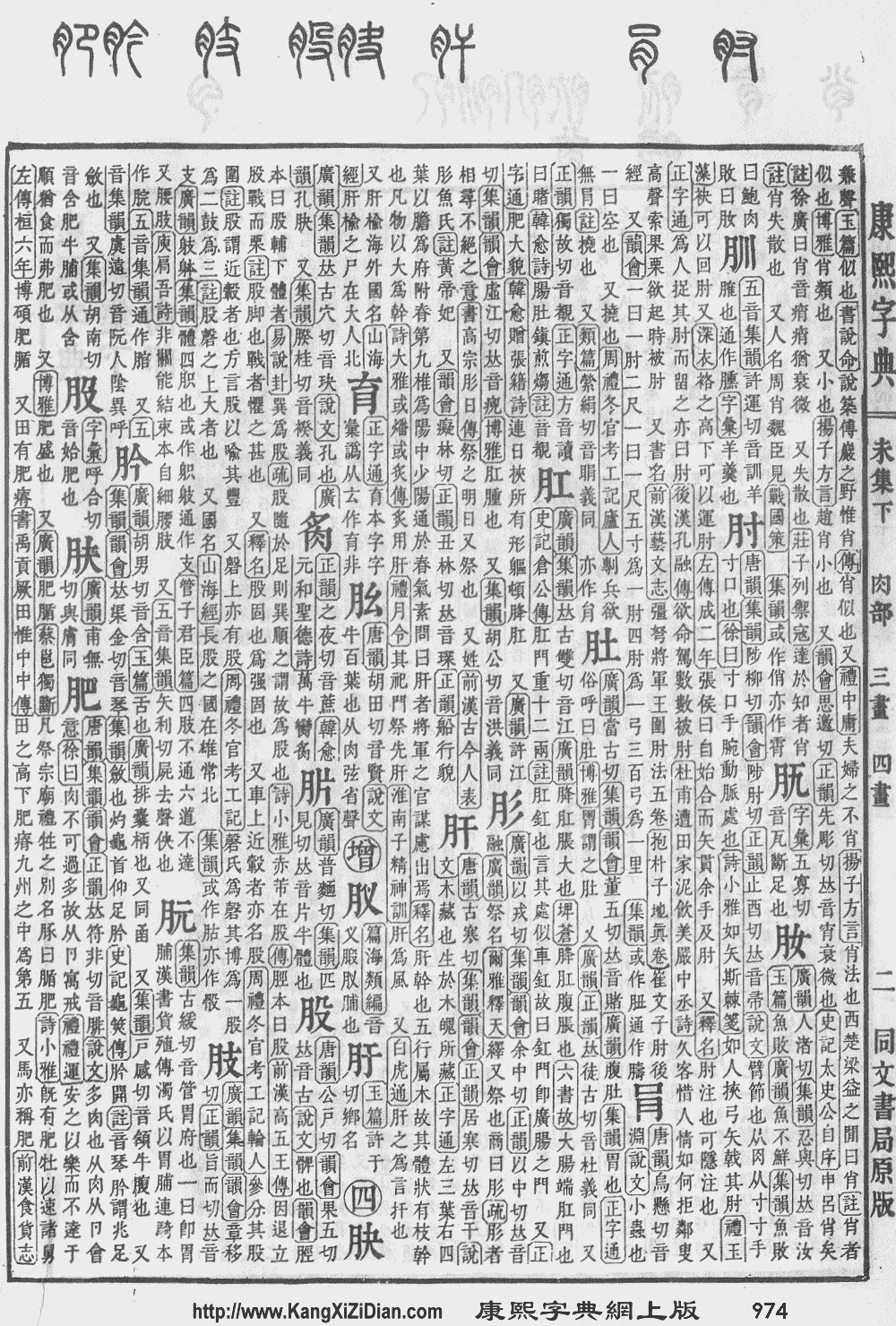
- Kangxi Dictionary: page 974, character 4
- Dai Kanwa Jiten: character 29268
- Dae Jaweon: page 1425, character 26
- Hanyu Da Zidian (first edition): volume 3, page 2044, character 9
- Unihan data for U+8098
Chinese
Lua error in Module:utilities at line 142: attempt to perform arithmetic on local 'h' (a nil value)
Glyph origin
Originally an ideogram (指事) : a hand (又) with a stroke outlining the elbow. This character was distinct from 寸; however, their shapes were too similar, so the radical 肉/⺼ was added to distinguish it, making it an ideogrammic compound (會意/会意) and phono-semantic compound (形聲/形声) .
Etymology
From Proto-Sino-Tibetan *s-g(r)u (“elbow, cubit”).
Pronunciation
Synonyms
Lua error in Module:utilities at line 142: attempt to perform arithmetic on local 'h' (a nil value)
Japanese
Readings
Lua error in Module:utilities at line 142: attempt to perform arithmetic on local 'h' (a nil value)
Etymology
| Kanji in this term |
|---|
| 肘 |
| ひじ Grade: S |
| kun’yomi |
| Alternative spellings |
|---|
| 肱 臂 |
From Old Japanese. First attested in the Nihon Shoki of 720 CE.[1] From Proto-Japonic *penti.
References
- “肘・肱・臂”, in 日本国語大辞典 (Nihon Kokugo Daijiten, “Nihon Kokugo Daijiten”) (in Japanese), concise edition, Tōkyō: Shogakukan, 2000
- 2006, 大辞林 (Daijirin), Third Edition (in Japanese), Tōkyō: Sanseidō, →ISBN
Korean
Etymology
From Middle Chinese 肘 (MC trjuwX). Recorded as Middle Korean 듀〯 (tyǔ) (Yale: tyu) in Hunmong Jahoe (訓蒙字會 / 훈몽자회), 1527.
Compounds
- 주액 (肘腋, juaek)
- 주관절 (肘關節, jugwanjeol)
Vietnamese
Han character
肘: Hán Nôm readings: khuỷu, trửu
- This term needs a translation to English. Please help out and add a translation, then remove the text
{{rfdef}}.