茸
| ||||||||
Translingual
Han character
茸 (Kangxi radical 140, 艸+6, 9 strokes in traditional Chinese and Korean, 8 strokes in mainland China and Japanese, cangjie input 廿尸十 (TSJ), four-corner 44401, composition ⿱艹耳)
References
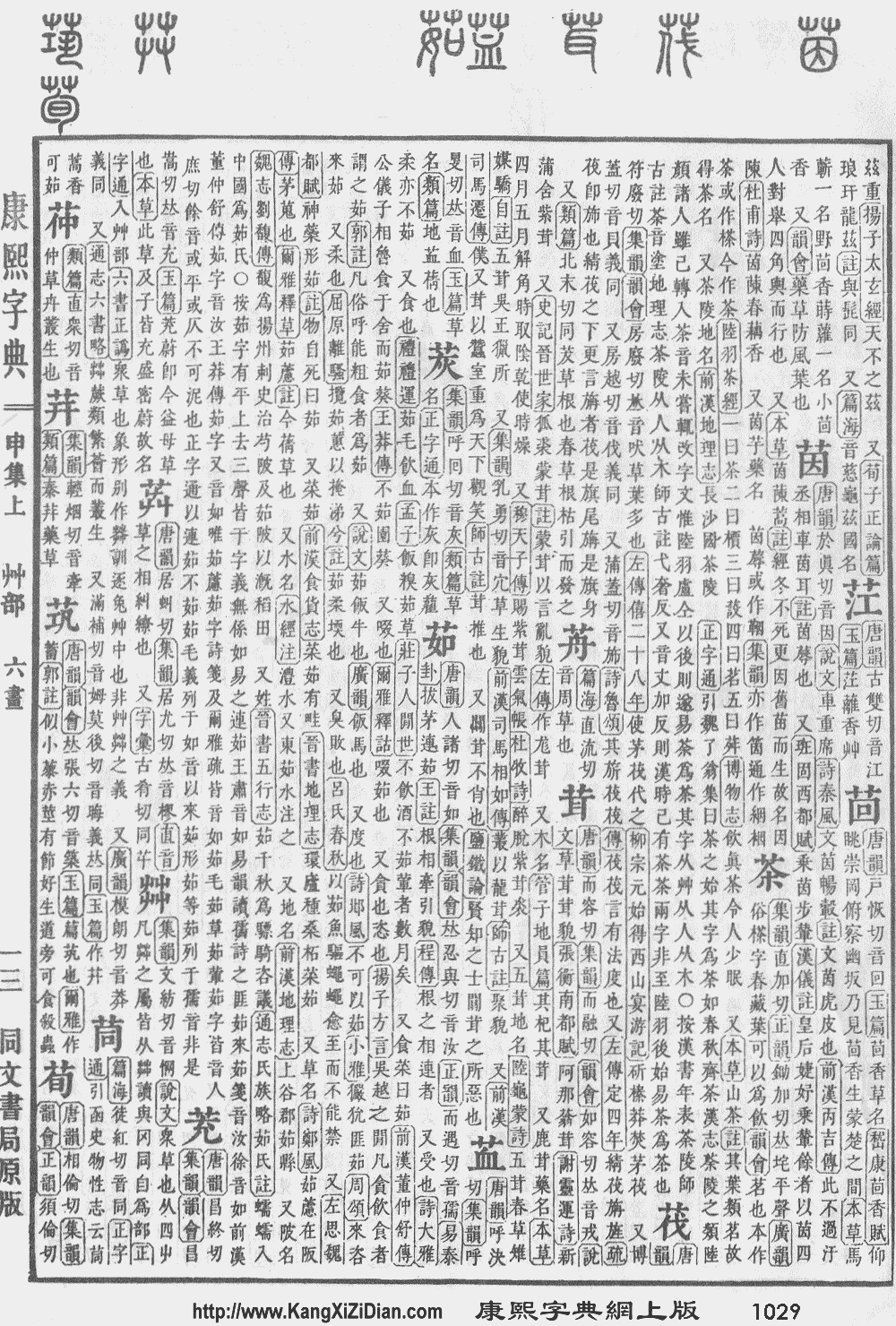
- Kangxi Dictionary: page 1029, character 7
- Dai Kanwa Jiten: character 30918
- Dae Jaweon: page 1488, character 3
- Hanyu Da Zidian (first edition): volume 5, page 3200, character 3
- Unihan data for U+8338
Chinese
| trad. | 茸 | |
|---|---|---|
| simp. # | 茸 | |
| alternative forms | 𦶪 | |
Glyph origin
Shuowen: Phono-semantic compound (形聲/形声, OC *njoŋ) : semantic 艸 (“grass”) + abbreviated phonetic 聰 (OC *sʰloːŋ) (Shuowen).
Etymology
(This etymology is missing or incomplete. Please add to it, or discuss it at the Etymology scriptorium. Particularly: “←→絨?”)
Pronunciation 1
Definitions
茸
Compounds
Pronunciation 2
Compounds
- 茸闒/茸阘
- 蓊茸
- 闒茸/阘茸
References
- (Hakka) Lau, Chun-fat. Hakka Pinyin Dictionary (Chinese). Hong Kong: The Chinese University Press, 1997 (Chinese IME supplement) →ISBN.
- (Min Nan) “Query for 茸”, in 臺灣閩南語常用詞辭典 [Dictionary of Frequently-Used Taiwan Minnan] (in Min Nan), Ministry of Education, R.O.C., 2023.
- “茸”, in 漢語多功能字庫 (Multi-function Chinese Character Database), 香港中文大學 (the Chinese University of Hong Kong), 2014–
Japanese
Etymology 1
Originally a compound of 木 (ki, “tree”) + の (no, attributive or possessive particle) + 子 (ko, “child”).[1][2][3][4]
Etymology 2
| Kanji in this term |
|---|
| 茸 |
| たけ Jinmeiyō |
| kun’yomi |
Noun
Derived terms
- 榎茸 (enokidake, “enokidake mushroom, velvet shank”)
- 椎茸 (shiitake, “shiitake”)
- 平茸 (hiratake, “oyster mushroom”)
- ポルチーニ茸 (poruchīni-dake, “Porcini mushroom”)
- 舞茸 (maitake, “maitake mushroom, hen of the woods”)
- 松茸 (matsutake, “matsutake”)
- モリーユ茸 (morīyu-dake, “Morille mushroom”)
See also
Etymology 3
| Kanji in this term |
|---|
| 茸 |
| くさびら Jinmeiyō |
| irregular |
| Alternative spellings |
|---|
| 草片 蔬 菌 |
Extension of 草片 (kusabira, “edible plant or green”), a compound of 草 (kusa, “grass”) + 片 (hira, “something flat”). According to one theory, the historical reading of this word was kusahira, without rendaku, but it's now exclusively pronounced as kusabira.
Noun
茸 or 茸 • (kusabira or kusahira)
See also
- 斎宮の忌み詞 (Saigū no imikotoba)
Etymology 4
From NTT Docomo's mascot character having mushroom motif.
Pronunciation
- IPA(key): [kʲino̞ko̞]
References
- 1988, 国語大辞典(新装版) (Kokugo Dai Jiten, Revised Edition) (in Japanese), Tōkyō: Shogakukan
- 1995, 大辞泉 (Daijisen) (in Japanese), Tōkyō: Shogakukan, →ISBN
- 1998, 広辞苑 (Kōjien), Fifth Edition (in Japanese), Tōkyō: Iwanami Shoten, →ISBN
- 2006, 大辞林 (Daijirin), Third Edition (in Japanese), Tōkyō: Sanseidō, →ISBN
- 1997, 新明解国語辞典 (Shin Meikai Kokugo Jiten), Fifth Edition (in Japanese), Tōkyō: Sanseidō, →ISBN
- 1998, NHK日本語発音アクセント辞典 (NHK Japanese Pronunciation Accent Dictionary) (in Japanese), Tōkyō: NHK, →ISBN
Korean
Hanja
茸 • (yong) (hangeul 용, revised yong, McCune–Reischauer yong, Yale yong)
- This term needs a translation to English. Please help out and add a translation, then remove the text
{{rfdef}}.