蟹
| ||||||||
Translingual
Han character
蟹 (Kangxi radical 142, 虫+13, 19 strokes, cangjie input 弓手中一戈 (NQLMI), four-corner 27136, composition ⿱解虫)
References
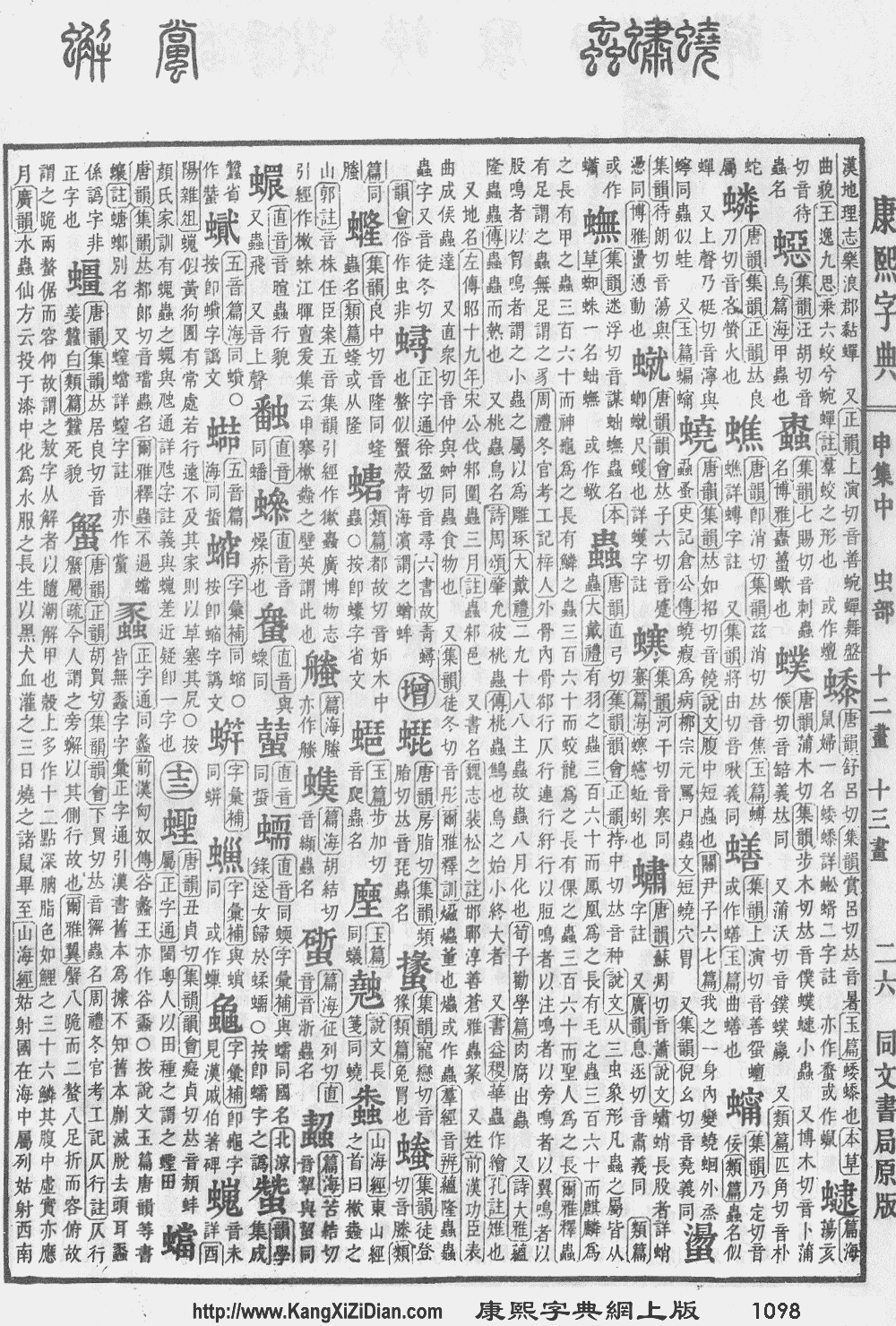
- Kangxi Dictionary: page 1098, character 49
- Dai Kanwa Jiten: character 33668
- Dae Jaweon: page 1563, character 5
- Hanyu Da Zidian (first edition): volume 4, page 2898, character 2
- Unihan data for U+87F9
Chinese
Lua error in Module:utilities at line 142: attempt to perform arithmetic on local 'h' (a nil value)
Glyph origin
| Historical forms of the character 蟹 |
|---|
| Shuowen Jiezi (compiled in Han) |
| Small seal script |
 |
Phono-semantic compound (形聲/形声, OC *ɡreːʔ) : phonetic 解 (OC *kreːʔ, *kreːs, *ɡreːʔ, *ɡreːs) + semantic 虫. Originally written as 蠏.
Etymology
From Proto-Sino-Tibetan *d-k(j)aːj (“crab”). Compare S'gaw Karen ဆွဲၣ် (hsweh̀).
Pronunciation
Definitions
蟹
- crab (Classifier: 隻/只 c)
- 大蟹在海中。 [Classical Chinese, trad. and simp.]
- From: The Classic of Mountains and Seas
- Dàxiè zài hǎizhōng. [Pinyin]
- A great crab is in the middle of the sea.
- 蟹六跪而二螯,非蛇蟺之穴,無可寄託者,用心躁也。 [Classical Chinese, trad.]
- From: Xunzi, c. 3rd century BCE
- Xiè liù guì ér èr áo, fēi shéshàn zhī xué, wúkě jìtuō zhě, yòngxīn zào yě. [Pinyin]
- The crab has six legs and two pincers; yet without the snake's or the eel's hole, it cannot have a shelter; for its mind is restless.
蟹六跪而二螯,非蛇蟺之穴,无可寄托者,用心躁也。 [Classical Chinese, simp.]
- (Cantonese, slang, of stocks, goods, etc.) to decrease in value, such that selling it will result in loss
Synonyms
Lua error in Module:utilities at line 142: attempt to perform arithmetic on local 'h' (a nil value)
Compounds
- 一蟹不如一蟹 (yī xiè bùrú yī xiè)
- 上山捉蟹——難/上山捉蟹——难 (shàngshān zhuō xiè, nán)
- 大煠蟹 (dàzháxiè)
- 大石砸死蟹
- 大閘蟹/大闸蟹 (dàzháxiè)
- 寄居蟹 (jìjūxiè)
- 巨蟹座 (Jùxièzuò)
- 快蟹船
- 扮蟹
- 旭蟹
- 梭子蟹 (suōzixiè)
- 毛蟹 (máoxiè)
- 沒腳蟹/没脚蟹
- 沙蟹
- 河蟹 (héxiè)
- 海蟹
- 炒蝦拆蟹/炒虾拆蟹
- 無腳蟹/无脚蟹
- 百足蟹
- 紅蟹/红蟹
- 蘆洲蟹舍/芦洲蟹舍
- 蝦兵蟹將/虾兵蟹将 (xiābīngxièjiàng)
- 蝦荒蟹亂/虾荒蟹乱
- 螃蟹 (pángxiè)
- 蟹匡蟬緌/蟹匡蝉𮉫
- 蟹殼臉/蟹壳脸
- 蟹狀星雲/蟹状星云
- 蟹箝
- 蟹股
- 蟹螯 (xiè'áo)
- 蟹行 (xièxíng)
- 蟹行文字
- 蟹貨/蟹货
- 蟹貨/蟹货
- 蟹青
- 蟹黃/蟹黄 (xièhuáng)
- 蠶績蟹匡/蚕绩蟹匡 (cánjìxièkuāng)
- 軟腳蟹/软脚蟹 (ruǎnjiǎoxiè)
- 醉蟹
- 青蟹
- 魚蝦蟹/鱼虾蟹
Japanese
Readings
Lua error in Module:utilities at line 142: attempt to perform arithmetic on local 'h' (a nil value)
Etymology
.jpg.webp)
| Kanji in this term |
|---|
| 蟹 |
| かに Jinmeiyō |
| kun’yomi |
From Old Japanese, from Proto-Japonic *kani.
Possibly a compound of 殻 (kara, “shell”) + 丹 (ni, “red”).
Possibly cognate with Korean 게 (ge, “crab”); compare Jeju 깅이 (ging'i, “crab”).
Usage notes
As with many terms that name organisms, this term is often spelled in katakana, especially in biological contexts (where katakana is customary), as カニ.
Kikai
Miyako
Oki-No-Erabu
Okinawan
Vietnamese
Yoron
Etymology
Cognate with Lua error in Module:utilities at line 142: attempt to perform arithmetic on local 'h' (a nil value).